
Blog
Open Topics Are Shrinking. Here Is How to Keep Funding Moving When You Have Demand.
The customer now shows up before the topic does. Founders who keep talking to new users, and who know the routes beyond the next open topic, can keep funding moving.
For years, a broad open topic let a founder bring almost any dual-use technology to the Air Force and let the government decide whether it fit. That door is narrowing. More of the money now starts with a customer who has already defined the problem.
What changed
When AFWERX and SpaceWERX reopened SBIR and STTR solicitations after reauthorization this spring, they organized them around seven focus areas and a cohort-based model that groups related technologies against specific capability gaps. AFWERX describes its specific topics as having "clearly-defined requirements and a known Air Force customer built into the topic solicitation." The current DoW SBIR/STTR Release 6 window runs through October 21.
The practical effect is simple. The customer shows up before the topic does. If you wait for a solicitation to meet your first user, you are starting after the people who helped shape it.
Talk to new users before there is a topic
The companies that keep funding moving treat user conversations as continuous work, not a pre-proposal step. Two reasons.
First, one champion isn't a pipeline. Government advocates rotate, retire and move to new jobs. A single relationship can disappear in a PCS cycle.
Second, different users open different money. An operational unit, a program office, a lab and a sustainment organization each use different funding and different contracting routes.
In every conversation, try to leave knowing:
What problem this person owns, and how they measure it today.
Who else feels the same problem, in their organization or another one.
Whether money exists this fiscal year or next, and what kind.
Which contracting routes their office actually uses.
What evidence they would need to see before acting.
When you already have demand
A user who wants your technology is the asset. The question is which route turns that interest into a contract. Here are the main ones, and what each needs.
A sponsored topic. Specific topics come from government customers. If your user has a real gap, ask whether they would sponsor a topic in a future release. It takes time, but it points a solicitation at the problem you solve.
TACFI and STRATFI. For companies with a current or recent Phase II, AFWERX matches SBIR funds with government or private dollars. TACFI provides $375,000 to $2 million with 1:1 cost share. STRATFI provides $3 million to $15 million in SBIR funds matched by $6 million to $45 million. Both need a government customer committed enough to put up money.
A public example: in 2020, the Texas Military Department secured $7.5 million from the National Guard Bureau, plus $6 million from AFRL and the Rapid Sustainment Office, to back an additive manufacturing startup through STRATFI, with the SBIR program matching those funds. The relationship began a year earlier, when an Air National Guard metals technician met the Phase I company during a customer discovery session.
SBIR Phase III. If the new work derives from, extends or completes earlier SBIR work, an agency can award a Phase III without a new competition. Phase III uses non-SBIR money, so the customer still has to find the funds.
Commercial Solutions Openings and OT consortia. These let a program office fund a prototype outside the SBIR calendar. They work best when the user can point the contracting office to an existing opening or consortium.
APFIT. For production-ready technology, APFIT provides $10 million to $50 million in procurement funding per project. Only a government organization can submit, on behalf of an eligible small business or nontraditional contractor. Companies can't apply directly.
The common requirement
Every route above needs a government person willing to act for you: sponsor a topic, commit matching funds, find Phase III money or submit a nomination. That is why the user conversations matter more now than the proposal writing.
Checklist
List every government user you have spoken with in the last 90 days, and mark the ones who own a problem and a budget.
Add at least two new users outside your current champion's organization.
For each interested user, identify the money (type and fiscal year) and the contracting route their office uses.
Match your stage to the route: Phase II for TACFI or STRATFI, prior SBIR work for Phase III, production readiness for APFIT.
Decide what evidence you need to produce before the user can act.
Have demand? Let's talk
If you have a government user who wants what you've built and you're not sure which route fits, send me a message. I'm glad to talk it through.
Sources
DVIDS, "AFWERX, SpaceWERX open new SBIR/STTR solicitations following reauthorization," Apr. 29, 2026
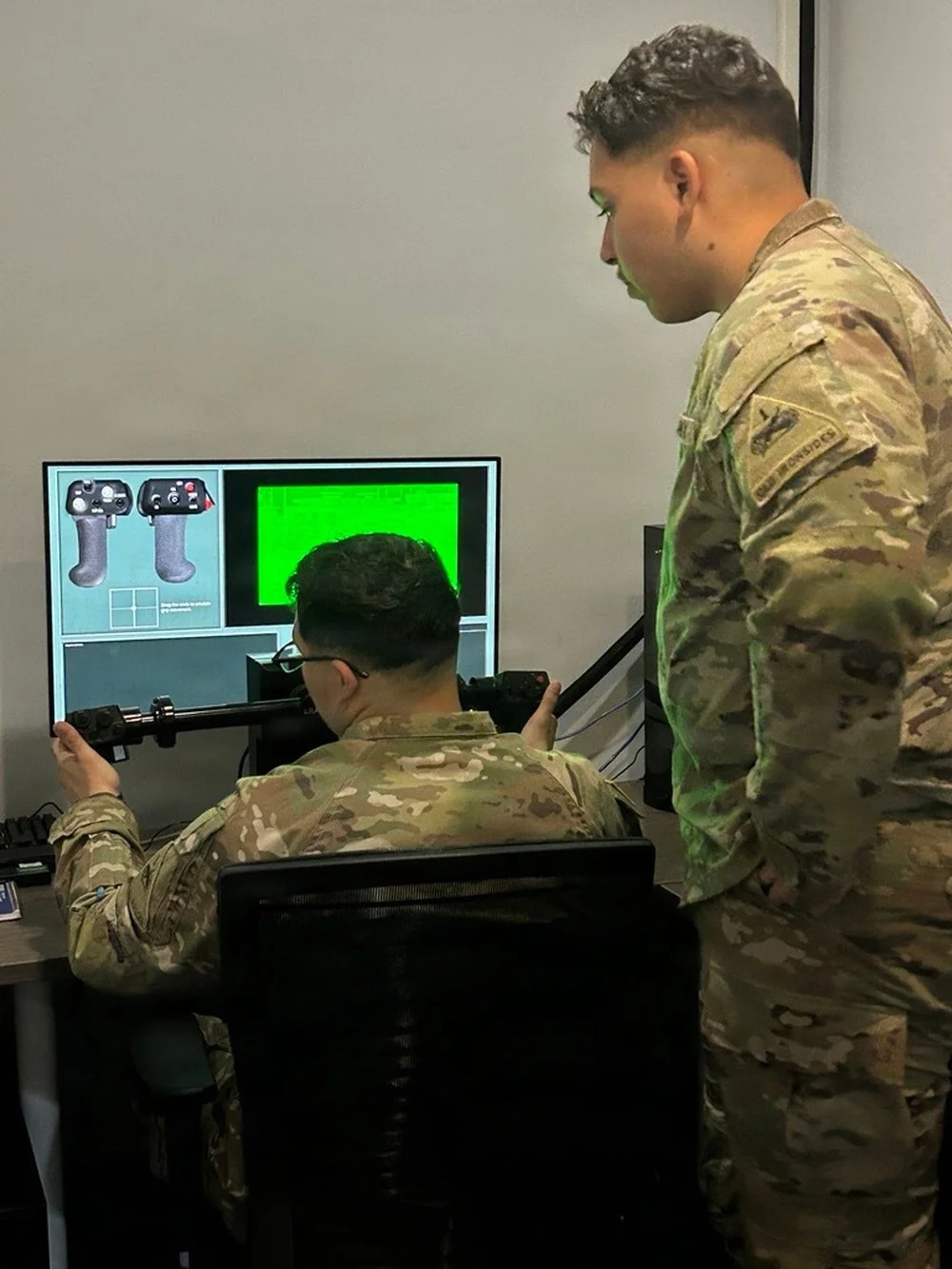
Featured photo: Soldiers familiarize themselves with legacy LRAS3 hand grips before evaluating FALCONS sensor prototypes during a Soldier Touch Point, February 2026. U.S. Army photo by M. Scott Bortot, via DVIDS. The appearance of U.S. Department of War visual information does not imply or constitute DoW endorsement.
Does the Continuing Resolution Mean My SBIR Won’t Be Funded?
No. SBIR is authorized through 2031 and funded as a share of agency R&D budgets that continue under the CR. The real risk is slower award decisions.
No. FY2027 starts October 1 under a continuing resolution, and SBIR and STTR keep running. What can change is how fast agencies make award decisions.
Why this year is different from last year
Last fall, SBIR stopped because the program's legal authorization expired on September 30, 2025. Agencies couldn't issue new solicitations until Congress passed the Small Business Innovation and Economic Security Act, which was signed on April 13, 2026. That law authorizes SBIR and STTR through September 30, 2031.
The CR that starts October 1 is a funding question, not an authorization question. It keeps agencies funded at FY2026 rates through December 11, 2026.
Why SBIR money keeps flowing under a CR
SBIR doesn't have its own appropriation. Every agency with more than $100 million in extramural R&D must set aside 3.2% of that budget for SBIR. Agencies above $1 billion also set aside 0.45% for STTR. The 2026 reauthorization left those percentages unchanged.
So the SBIR budget follows the agency's R&D budget. Under the CR, that budget continues at the FY2026 rate, and the SBIR share continues with it. That applies to DoW, NIH, NSF, DOE, NASA and the other participating agencies.
The CR also blocks agencies from starting projects that had no FY2026 funding. SBIR isn't a new program, so that restriction doesn't stop it.
Where you may feel it
The practical risk is timing. Agencies often hold back on new commitments until they know their full-year budget. During last year's CR, NIH told grantees its institutes could issue continuing awards below the committed level.
For a founder, that can mean a longer gap between a positive review and a signed award, or a later start date than you planned.
The CR also ends on December 11. Congress will need to pass full-year funding or another CR by then.
What to do now
Keep submitting. Open solicitations remain open. The current DoW SBIR/STTR release, for example, closes October 21.
Ask about timing on pending awards. Ask your program officer whether they expect to fund your award before or after December 11.
Plan cash around the later date. If a delay of a month or two would put your company in trouble, line up bridge options now rather than in December.
Check whether you depend on anything new. A follow-on that requires a brand-new federal program or a larger production buy is more exposed than an SBIR award, because the CR bars those new starts.
The short version: a CR is a reason to plan for slower decisions, not a reason to stop applying.
This article is general information, not legal or financial advice.
Sources
Crowell & Moring, "SBIR/STTR Programs Reauthorized After Six-Month Lapse," April 14, 2026: https://www.crowell.com/en/insights/client-alerts/sbirsttr-programs-reauthorized-after-six-month-lapse
The White House, "Congressional Bill H.R. 6500 Signed into Law," September 2, 2026: https://www.whitehouse.gov/briefings-statements/2026/09/congressional-bill-h-r-6500-signed-into-law/
Continuing Appropriations and Extensions Act, 2027, enrolled bill text, GovInfo: https://www.govinfo.gov/app/details/BILLS-119hr6500enr
NIH, "NIH Operates Under a Continuing Resolution," NOT-OD-26-011, November 21, 2025: https://www.grants.nih.gov/grants/guide/notice-files/NOT-OD-26-011.html
BW&CO, "DoW SBIR/STTR FY26 Release 6 Topics": https://www.bwcoconsulting.com/programs/dow-sbir-sttr-release-6
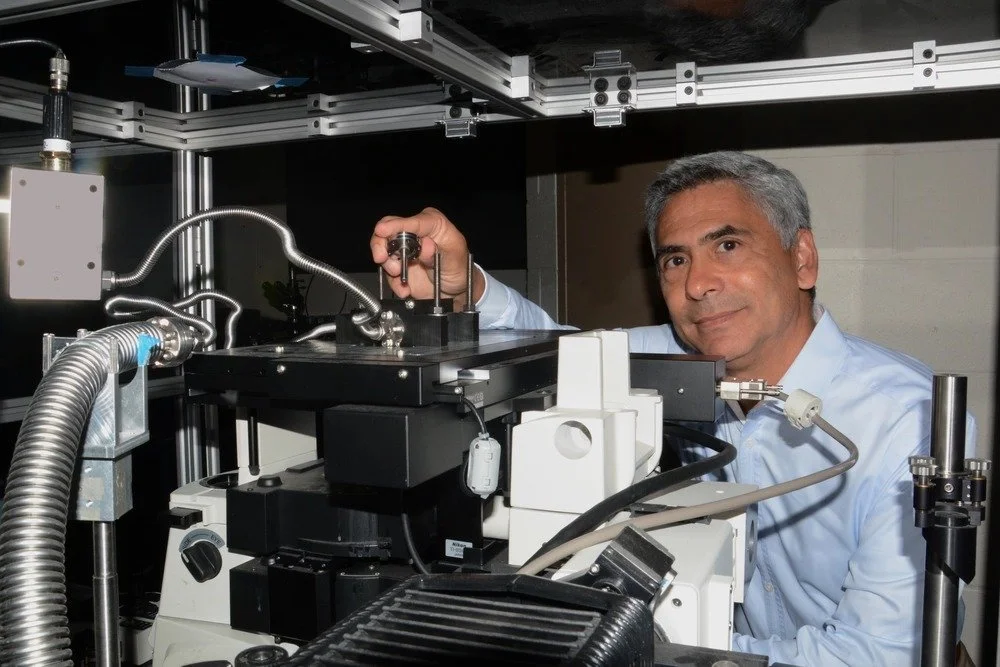
Photo: U.S. Air Force photo by David Dixon, via DVIDS. The appearance of U.S. Department of War visual information does not imply or constitute DoW endorsement.