
Blog
Does the Continuing Resolution Mean My SBIR Won’t Be Funded?
No. SBIR is authorized through 2031 and funded as a share of agency R&D budgets that continue under the CR. The real risk is slower award decisions.
No. FY2027 starts October 1 under a continuing resolution, and SBIR and STTR keep running. What can change is how fast agencies make award decisions.
Why this year is different from last year
Last fall, SBIR stopped because the program's legal authorization expired on September 30, 2025. Agencies couldn't issue new solicitations until Congress passed the Small Business Innovation and Economic Security Act, which was signed on April 13, 2026. That law authorizes SBIR and STTR through September 30, 2031.
The CR that starts October 1 is a funding question, not an authorization question. It keeps agencies funded at FY2026 rates through December 11, 2026.
Why SBIR money keeps flowing under a CR
SBIR doesn't have its own appropriation. Every agency with more than $100 million in extramural R&D must set aside 3.2% of that budget for SBIR. Agencies above $1 billion also set aside 0.45% for STTR. The 2026 reauthorization left those percentages unchanged.
So the SBIR budget follows the agency's R&D budget. Under the CR, that budget continues at the FY2026 rate, and the SBIR share continues with it. That applies to DoW, NIH, NSF, DOE, NASA and the other participating agencies.
The CR also blocks agencies from starting projects that had no FY2026 funding. SBIR isn't a new program, so that restriction doesn't stop it.
Where you may feel it
The practical risk is timing. Agencies often hold back on new commitments until they know their full-year budget. During last year's CR, NIH told grantees its institutes could issue continuing awards below the committed level.
For a founder, that can mean a longer gap between a positive review and a signed award, or a later start date than you planned.
The CR also ends on December 11. Congress will need to pass full-year funding or another CR by then.
What to do now
Keep submitting. Open solicitations remain open. The current DoW SBIR/STTR release, for example, closes October 21.
Ask about timing on pending awards. Ask your program officer whether they expect to fund your award before or after December 11.
Plan cash around the later date. If a delay of a month or two would put your company in trouble, line up bridge options now rather than in December.
Check whether you depend on anything new. A follow-on that requires a brand-new federal program or a larger production buy is more exposed than an SBIR award, because the CR bars those new starts.
The short version: a CR is a reason to plan for slower decisions, not a reason to stop applying.
This article is general information, not legal or financial advice.
Sources
Crowell & Moring, "SBIR/STTR Programs Reauthorized After Six-Month Lapse," April 14, 2026: https://www.crowell.com/en/insights/client-alerts/sbirsttr-programs-reauthorized-after-six-month-lapse
The White House, "Congressional Bill H.R. 6500 Signed into Law," September 2, 2026: https://www.whitehouse.gov/briefings-statements/2026/09/congressional-bill-h-r-6500-signed-into-law/
Continuing Appropriations and Extensions Act, 2027, enrolled bill text, GovInfo: https://www.govinfo.gov/app/details/BILLS-119hr6500enr
NIH, "NIH Operates Under a Continuing Resolution," NOT-OD-26-011, November 21, 2025: https://www.grants.nih.gov/grants/guide/notice-files/NOT-OD-26-011.html
BW&CO, "DoW SBIR/STTR FY26 Release 6 Topics": https://www.bwcoconsulting.com/programs/dow-sbir-sttr-release-6
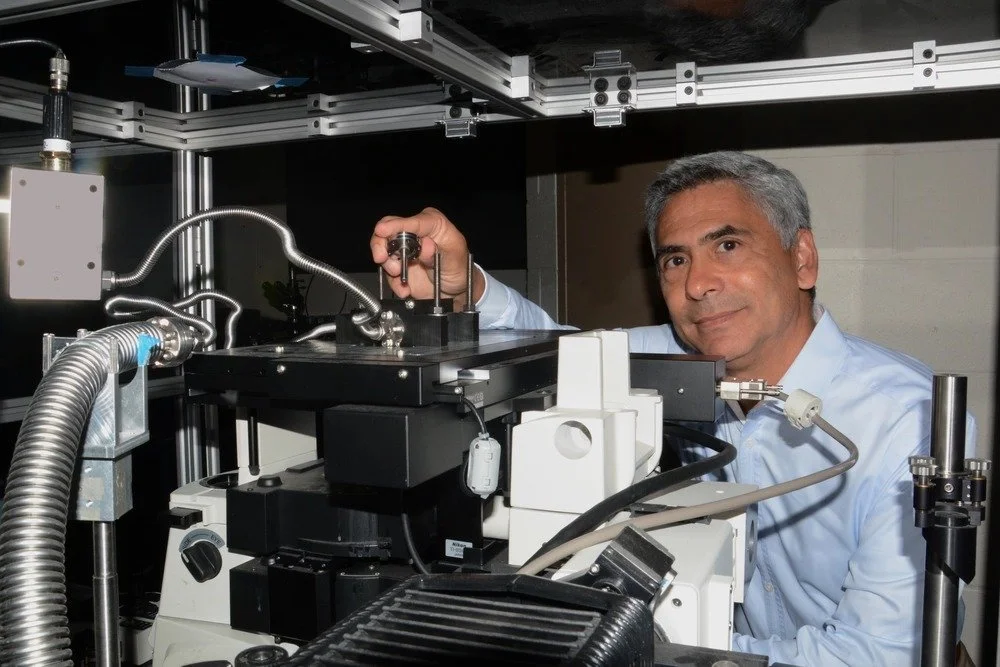
Photo: U.S. Air Force photo by David Dixon, via DVIDS. The appearance of U.S. Department of War visual information does not imply or constitute DoW endorsement.
What 44 FY2026 NCI SBIR Awards Tell Cancer Diagnostic Device Founders About the Next Round
An analysis of 44 FY2026 NCI SBIR and STTR awards, and what the funding, study section, and timing patterns mean for cancer diagnostic device founders.
Executive summary
Across 44 NCI SBIR and STTR awards recorded in fiscal year 2026, totaling $34.9 million, roughly 71 percent of the dollars went to non-competing continuations of projects already underway. Only 16 awards, worth $10.0 million, were new starts. Of those new starts, nine were Phase II level R44s with a median award of $912,125, while only four were Phase I R43s, every one of which landed between $305,368 and $400,000. Diagnostics, imaging, instrumentation, and clinical software accounted for 15 of the 44 awards and 36 percent of the dollars, with a median award of $900,350, effectively identical to the therapeutics median of $888,779.
For a founder commercializing a cancer diagnostic device, the four decisions the data actually rewards are these. Enter at Phase II rather than Phase I when the feasibility data already exists. Frame the application so it routes to the imaging and instrumentation review panel rather than a therapeutics panel. Write aims around a named clinical decision the device changes, not around the technology itself. Design the Phase II milestone set so it doubles as the evidence package a third party investor will match against, because the NCI follow-on lane now requires that match.
What data is this analysis based on?
This analysis uses a NIH RePORTER export pulled on August 28, 2026, filtered to fiscal year 2026, administering institute NCI, and funding mechanism SBIR or STTR. The export returned 44 award records with award notice dates between May 14, 2026 and August 18, 2026.
Two caveats matter for interpretation. First, this is a late fiscal year slice rather than a complete twelve month picture, so the counts should be read as directional rather than as full year totals. Second, RePORTER reports fiscal year obligations, so a figure attached to a multi year Phase II reflects that year's funding rather than the total award value. Every dollar figure below is a fiscal year 2026 obligation.
How much of NCI's SBIR budget is actually available to new applicants?
Less than a third of it in any given cycle.
Of the 44 records, 28 are type 5 non-competing continuations representing $24,942,874. Only 16 are type 1 new awards representing $9,986,484, or 29 percent of the dollars in the slice. Support years run as high as year nine, and 15 of the continuations are in their third year or beyond.
The practical consequence is that the pool a first time applicant competes for is much smaller than headline institute budget numbers suggest. Most of what NCI spends on small business in a given year is servicing commitments it already made. Planning a company's capital strategy around the assumption that a large institute budget equals a large addressable pool is the most common structural mistake founders make with this program.
Does NCI fund more Phase I or Phase II applications?
New Phase II awards outnumbered new Phase I awards more than two to one in this slice.
Breaking the 16 new awards down by activity code:
Nine R44 awards, SBIR Phase II, with a median of $912,125 and a range from $306,872 to $1,216,515
Four R43 awards, SBIR Phase I, ranging from $305,368 to $400,000
Two R41 awards, STTR Phase I, at $399,855 and $400,000
One R42 award, STTR Phase II, at $348,352
Several of those new R44s are structurally interesting. Awards in the $306,000 to $404,000 range with an R44 activity code and a twelve month first budget period are Fast-Track applications sitting in their Phase I year. Awards near $900,000 to $1.2 million with a twenty four month budget period are Direct to Phase II or Fast-Track applications that went straight to Phase II scope. Intus Biosciences received $404,338 for a non-invasive bacterial-based early onset colorectal screen under the first pattern. Informed Medical Decisions received $1,216,515 to commercialize and integrate a hereditary cancer screening tool into electronic health records under the second.
For a diagnostic device company that has already generated analytical validation data outside of federal funding, Direct to Phase II is the mechanism the data points toward. It is accepted under the current parent SBIR announcement, it carries three to four times the budget of a Phase I, and in this slice it was the more common new award path.
How large are NCI SBIR Phase I awards in practice?
Every Phase I level award in this dataset fell between $305,368 and $404,338, clustering near $400,000.
This gap between ceiling and practice is worth understanding. Standard NIH budget guidelines for the current cycle sit near $323,090 for Phase I and $2,153,927 for Phase II, and those are guidelines rather than statutory caps. Individual institutes hold approval to exceed them, and NCI is among the institutes listing a Phase I limit as high as $700,000 for qualifying topics in the participating component table of the parent announcement.
Not one award in this slice used that headroom. The realistic planning number for an NCI SBIR Phase I is approximately $400,000 for twelve months. Founders who build a program plan around a waivered Phase I are budgeting against an outcome that did not occur once in 44 records. The place where NCI writes larger checks is Phase II, where fiscal year 2026 obligations in this slice reached $1,271,776 for a single year of one award.
Are diagnostics and devices funded as well as therapeutics at NCI?
On a per award dollar basis, yes.
Classifying the 44 awards by product type, 15 are diagnostics, imaging systems, instrumentation, or clinical software. Those 15 account for $12,649,547, which is 36 percent of the dollars in the slice, with a median award of $900,350. The remaining 29 awards, dominated by therapeutics, have a median of $888,779. There is no per award dollar penalty for being a device or diagnostic company at NCI.
Representative diagnostics and device awards in the slice include:
Surgivance, $1,271,776, rapid three dimensional point of care digital cancer pathology using confocal microscopy and downstream artificial intelligence
Rivanna Medical, $1,104,515, an artificial intelligence assisted ultrasound guidance platform to reduce traumatic lumbar puncture rates in pediatric oncology patients
AM Operating, $1,096,097, a visualization, labeling, and tracking engine for human anatomy
EpiCypher, $1,047,610, epigenomic analysis of cell-free nucleosomes
Leuko Labs, $991,877, PointCheck, a portable non-invasive neutropenia analyzer
LifeGene-BioMarks, $900,350, a precision DNA methylation test to reduce oral cancer disparities
Envisagenics, $889,653, a machine learning tool for identifying alternative splicing events
NE Scientific, $689,478, computer guided microwave liver ablation
RareCyte, $658,336, adaptive imaging for multiplexed spatial profiling of tumors and tissues
ONC.AI, $313,742, deep learning serial radiomics for cancer therapy response assessment
Where therapeutics do dominate is new award count. Among the 16 new starts, the therapeutics oriented review panels absorbed the majority of activity, which means the competitive density inside the diagnostics and device lane is thinner than the raw award split implies.
Which study section will review a cancer diagnostic device application?
Routing is the highest leverage decision in the entire application, and this dataset makes the routing map unusually legible.
Every imaging, instrumentation, and device guidance award in the slice was reviewed by the same special emphasis panel, ZRG1 ISB-Z (10) B. That panel handled Surgivance, Rivanna Medical, NE Scientific, RareCyte, and ONC.AI. It is the single most concentrated destination for hardware and imaging oriented cancer technology in the file.
Assay and biomarker diagnostics went somewhere else entirely. Intus Biosciences went to ZRG1 CDPT-F (11). Medara, developing a longitudinal multimodal risk prediction platform for personalized breast cancer screening, went to ZRG1 CDPT-A (13).
Diagnostics framed around care delivery, workflow integration, or health disparities went to the health services panels. LifeGene-BioMarks went to ZRG1 HSS-J (10) B, AM Operating to ZRG1 HSS-K (10) B, and Informed Medical Decisions to ZRG1 HSS-N (10).
Therapeutics clustered heavily in ZRG1 CDPT-E (12), which accounted for six awards, and the CTH and CDPT-V panels.
The same cancer diagnostic device, described three different ways, will be evaluated by three different reviewer pools with three different definitions of rigor. An instrumentation panel will interrogate optical performance, reproducibility, and manufacturability. A diagnostics panel will interrogate analytical and clinical validity, cohort design, and comparator assays. A health services panel will interrogate implementation, workflow, and outcome measurement. Choose the panel deliberately, write the specific aims to match its evaluative frame, and request the assignment explicitly in the cover letter rather than leaving referral to chance.
How concentrated is the NCI program officer landscape?
Eleven program officials of record cover all 44 awards.
Within the 15 diagnostics and device awards, one program official, Ming Zhao, is attached to five of them, covering ONC.AI, NE Scientific, Surgivance, LifeGene-BioMarks, and Envisagenics. Xing-Jian Lou is attached to three, and Linda Zane and Swamy Tripurani to two each.
This is a small and mappable group. Because every field used here is public in NIH RePORTER, a founder can identify the program officials who have actually managed portfolios resembling their technology, read the funded projects those officials oversee, and arrive at a pre-submission conversation with a specific, evidence grounded question rather than a general introduction. That conversation is where institute fit, mechanism choice, and budget headroom get resolved, and it is the single highest return hour of preparation available before submission.
What does the language of funded projects have in common?
Funded titles in this dataset describe a clinical delta rather than a technology.
Rivanna Medical did not sell an ultrasound platform. It sold reduced traumatic lumbar puncture rates in pediatric oncology patients. Leuko Labs did not sell a neutropenia analyzer. It sold a reduction in the incidence of febrile neutropenia in patients receiving chemotherapy. LifeGene-BioMarks did not sell a methylation assay. It sold reduced oral cancer disparities among African American patients in low resource settings. Informed Medical Decisions did not sell a screening tool. It sold commercialization and electronic health record integration of one.
Three recurring elements show up in the strongest diagnostics and device titles in the file. There is a named clinical decision or clinical event the device changes. There is a specified population, frequently pediatric, rare, underserved, or otherwise a documented NCI priority. And there is an outcome direction, usually a reduction in harm, delay, or disparity.
A title or aims page that leads with the sensor, the model architecture, or the platform is the exception in this dataset rather than the pattern.
Where does follow-on capital come from after Phase II?
The two longest running awards in the entire file are both follow-on bridge awards, and the mechanism that produced them has changed.
Leuko Labs appears at support year six with $991,877, and PRIVO Technologies appears at support year nine with $1,170,285 supporting a registration enabling Phase 3 clinical trial. Both sit under legacy NCI Phase IIB bridge announcements. That lane is the reason a small number of NCI small business projects reach registrational scale, and it is the part of the pathway most founders fail to plan for at the time they write their Phase I.
The current version is the NIH SBIR Phase IIB Strategic Breakthrough Award, PA-27-101. Two features drive strategy. First, applicants must secure third party matching funds equal to 100 percent of the NIH funds requested, from new private capital or new non-SBIR government funding. Second, NCI's implementation of the program is scoped more narrowly than the historical bridge, emphasizing late stage clinical development of therapeutic and medical device technologies addressing pediatric or rare cancer indications.
For a cancer diagnostic device, the implications are concrete. If the indication can be legitimately positioned in pediatric or rare cancer territory, the Strategic Breakthrough lane is available and the Phase II milestone plan should be designed to produce exactly the evidence a matching investor would underwrite. If it cannot, the Commercialization Readiness Pilot program, PAR-27-098, is the alternative, and it does not carry the third party match requirement. Either way, the decision belongs in the Phase I planning conversation, not in year two of Phase II.
How long does it take to get from submission to funding?
Roughly seven to nine months, and the award notice arrives with almost no lead time before the start date.
All 16 new awards in this slice carry notice dates between July 17 and August 18, 2026, with project start dates falling between zero and fifteen days after the notice. New Phase I budget periods almost uniformly end July 31, 2027. That is the signature of a January 5 submission moving through spring review, summer council, and an August 1 start, compressed against the end of the federal fiscal year.
Two operational implications follow. Companies must carry payroll and vendor costs through a seven to nine month gap with no certainty of an award, which is a working capital question rather than a grant writing question. And the notice to start interval is short enough that hiring, subcontracts, institutional review board submissions, and long lead equipment orders need to be staged before the notice arrives rather than after.
Which announcement should a cancer diagnostic device company apply to now?
Every opportunity number in this dataset is retired. The PA-24-245 through PA-24-248 omnibus series, which accounted for 23 of the 44 awards including 17 under PA-24-245 alone, has been replaced.
The current slate consists of PA-27-100, the parent SBIR announcement for R43 and R44 applications on a clinical trial optional basis, accepting Phase I, Phase II, Fast-Track, and Direct to Phase II submissions. PA-27-102 is the parallel parent STTR announcement for R41 and R42 applications where a nonprofit research institution partner carries a defined share of the work. PA-27-101 is the Phase IIB Strategic Breakthrough Award. PAR-27-098 is the Commercialization Readiness Pilot program.
Standard due dates are September 5, January 5, and April 5. In 2026, September 5 falls on a Saturday and the following Monday is the Labor Day federal holiday, which moves the operative receipt date to the next business day, Tuesday September 8, 2026. Applicants should confirm the date in the announcement itself before building a submission calendar around it.
For most companies reading this in late August, that September date is not a realistic target unless a complete package is already drafted, registrations are active, and letters of support are in hand. The achievable target is January 5, 2027, which by the timing pattern above implies an award start around August 2027. That is the schedule a founder should be capitalizing against.
Action checklist for a cancer diagnostic device company
Confirm whether existing feasibility and analytical validation data supports a Direct to Phase II submission rather than a Phase I, since that is where both the dollars and the new award volume sit
Budget a Phase I at approximately $400,000 for twelve months, and treat any larger figure as requiring explicit institute confirmation
Decide which review panel should evaluate the application, instrumentation, diagnostics, or health services, and write the specific aims to match that panel's evaluative frame
Request the study section assignment and the administering institute explicitly in the cover letter
Identify the program officials of record on funded projects resembling the technology, using public RePORTER fields, and schedule a pre-submission conversation with a specific question
Write the title and aims around a named clinical decision the device changes, a specified population, and a directional outcome
Determine now whether the indication can support a Phase IIB Strategic Breakthrough application, and if not, plan toward the Commercialization Readiness Pilot instead
Structure Phase II milestones so that completion produces the evidence package a third party investor would match
Verify SAM.gov, SBA company registry, eRA Commons, and Grants.gov registrations are active and current, since these routinely add weeks to a first submission
Plan working capital across a seven to nine month submission to funding gap, and stage hiring and subcontracts before the notice of award arrives
Frequently asked questions
How much can a cancer diagnostic device company receive from an NCI SBIR award? In this fiscal year 2026 dataset, Phase I level awards ranged from $305,368 to $404,338 and Phase II fiscal year obligations ranged from $271,378 to $1,271,776. Standard NIH budget guidelines for the current cycle sit near $323,090 for Phase I and $2,153,927 for Phase II, with institute specific waivers permitting higher amounts for qualifying topics.
Does NCI fund diagnostics and medical devices, or mainly therapeutics? Both. Diagnostics, imaging, instrumentation, and clinical software represented 15 of 44 awards and 36 percent of the dollars in this dataset, with a median award of $900,350 compared with $888,779 for the remaining, largely therapeutic, awards.
Which study section reviews cancer imaging and device SBIR applications? In this dataset, every imaging, instrumentation, and device guidance award was reviewed by special emphasis panel ZRG1 ISB-Z (10) B. Assay and biomarker diagnostics were reviewed by CDPT-A and CDPT-F panels, and diagnostics framed around workflow or disparities were reviewed by HSS panels.
Can a company skip Phase I and apply directly for Phase II? Yes. NIH accepts Direct to Phase II applications under the parent SBIR announcement for participating institutes when the company has already demonstrated the feasibility that a Phase I would otherwise establish. In this dataset, new Phase II level awards outnumbered new Phase I awards by more than two to one.
What is the next NIH SBIR deadline? Standard due dates are September 5, January 5, and April 5. Because September 5, 2026 falls on a Saturday ahead of the Labor Day holiday, the operative receipt date moves to the next business day, September 8, 2026. Applicants should confirm the date in the announcement.
How long does it take to receive funding after submitting? Roughly seven to nine months. In this dataset, new awards issued from a January submission carried notice dates in July and August with project starts within two weeks of the notice.
What comes after an NCI SBIR Phase II award? The Phase IIB Strategic Breakthrough Award, PA-27-101, provides follow-on funding but requires 100 percent third party matching funds, and NCI's implementation emphasizes pediatric and rare cancer indications for therapeutics and medical devices. Companies without a match, or needing technical assistance rather than a second Phase II, should evaluate the Commercialization Readiness Pilot program, PAR-27-098.
Does company location affect the odds of an NCI SBIR award? Not in a way this dataset supports. Awards went to companies in North Carolina, California, Massachusetts, and New York, and also to companies in Puerto Rico, Alabama, Wisconsin, Indiana, Delaware, South Carolina, Ohio, and Rhode Island.
About BW&CO
BW&CO is a non-dilutive federal funding advisory firm. We help deep-tech, biotech, medtech, and dual-use founders win SBIR, STTR, and related government funding without giving up equity. Our team has supported more than $350 million in funding secured across NIH, NSF, DoD, NASA, DOE, and ARPA-H.
Innovation Funding Simplified.
If you are developing a cancer diagnostic or medical device and evaluating the January 5, 2027 NIH cycle, we can assess mechanism fit, institute and study section routing, and budget strategy before you commit writing resources. Contact BW&CO to start that conversation.
The NIH SBIR Regulatory Plan: What It Is, Who Needs One, and What Goes In It
What the NIH SBIR/STTR Regulatory Plan attachment requires, who must submit it, and what belongs in all eight sections. Free 2-page template from BW&CO.
Quick Answer
The NIH SBIR/STTR Regulatory Plan is a two page attachment, named RegulatoryPlan.pdf, that is required for any SBIR or STTR application proposing a clinical trial. It describes the regulatory pathway you are pursuing, the approvals needed to run the proposed trial, your interactions with FDA, and a dated milestone timeline. Applications that do not propose a clinical trial must not submit it.
That is the short answer. This is what NIH actually asks for, why reviewers weigh it more heavily than most founders expect, and a free template that maps to every requirement.
What is the NIH SBIR Regulatory Plan?
The Regulatory Plan is a standalone narrative attachment in the Other Attachments section of the Research and Related Other Project Information form. It is capped at two pages for the entire attachment, and the file must be named RegulatoryPlan.pdf.
It is not part of your Research Strategy and it is not your Commercialization Plan. It answers a narrower question: what regulatory clearance does this trial require, and do you know how to get it.
Who has to submit a Regulatory Plan?
You must include it if your application proposes a clinical trial under the NIH definition. You must not include it if your application does not propose a clinical trial.
This requirement appears in the parent SBIR and STTR clinical trial optional notices, the SBIR Phase IIB Strategic Breakthrough Award, and the SBIR/STTR Commercialization Readiness Pilot. Because the wording is repeated across NOFOs but not identical in every one, read your specific NOFO before you build the attachment. The NOFO always governs.
If you are unsure whether your aims meet NIH's clinical trial definition, resolve that first using NIH's clinical trial decision tree. Getting the determination wrong means either a missing required attachment or an attachment that should never have been submitted.
What does NIH require the plan to cover?
At minimum, the plan must address the regulatory requirements needed to conduct the proposed clinical trial. NIH strongly encourages, but does not strictly require, a discussion of the requirements for marketing approval.
Beyond that minimum, NIH asks applicants to:
Describe the regulatory pathway being pursued or planned, with a timeline to regulatory approval built on discrete milestones
Provide details of interactions with the appropriate regulatory authority, including the specific contact and the date of each interaction
Describe any outside assistance obtained or planned to develop and execute the plan
One detail founders routinely get wrong: the supporting evidence of those interactions, meaning letters, emails, and meeting minutes, is not submitted with the application. NIH may request it after submission, and it must be furnished on request. Attaching that correspondence to the application is a common and avoidable error.
Why founders applying to NIH SBIR need this attachment done well
Three reasons it carries weight beyond its two pages.
It is a completeness check. A required attachment that is missing, misnamed, or over the page limit creates administrative risk before your science is ever discussed. RegulatoryPlan.pdf is an exact filename requirement, not a suggestion.
Reviewers read it as evidence of feasibility. A trial that cannot legally start on the timeline in your Statement of Work is a scored weakness, no matter how strong the underlying science. Naming your pathway, your IND or IDE determination, and your IRB route shows the trial is executable in the project period.
It separates teams that have talked to FDA from teams that have not. A plan citing a specific pre-submission number and date reads very differently from one referencing ongoing dialogue with the agency. In two pages, specificity is the entire signal.
For deep tech and biomedical founders, the regulatory plan is also where a genuinely novel product gets to make its strongest argument. When no predicate or cleared alternative exists, stating that plainly is often the best available justification for a De Novo pathway or a breakthrough designation.
What the BW&CO Regulatory Plan Template covers
Our free template is built to the two page limit and structured in the order NIH expects. It includes eight sections, each with an instruction on what belongs there and a bracketed prompt to fill in:
Regulatory Objective and Product Overview, covering intended use and target pathway
Current Regulatory Landscape and Pathway Rationale, including product code and predicate analysis
Regulatory Requirements to Conduct the Proposed Clinical Trial, covering IND and IDE determination, the IRB and human subjects pathway, and other trial enabling requirements
Pathway to Marketing Approval, including expedited program status
Regulatory Authority Interactions, logged with dates, contacts, interaction types, and outcomes
Outside Regulatory Assistance
Regulatory Milestones and Timeline, tied to project months
Supporting Documentation Statement, the standing language confirming evidence is on file
It also includes a compliance summary covering the page limit, the required filename, and the exact form field, plus drafting tips drawn from plans we have prepared for funded applicants.
Common Regulatory Plan mistakes
Submitting the attachment when the application does not propose a clinical trial
Renaming the file to something other than RegulatoryPlan.pdf
Running past two pages, which is a hard cap for the entire attachment
Attaching FDA correspondence or meeting minutes that NIH did not ask for
Referring vaguely to agency contact without a submission number, contact, or date
Writing narrative prose instead of dated milestones tied to the Statement of Work
Spending the two pages on marketing approval while underserving the requirements to actually start the trial
Frequently asked questions
Is the Regulatory Plan required for every NIH SBIR application? No. It is required only for applications proposing a clinical trial. Applications that do not propose a clinical trial must not submit it.
What is the page limit for the NIH Regulatory Plan? Two pages maximum for the entire attachment.
What should the file be named? RegulatoryPlan.pdf, attached in the Other Attachments section of the Research and Related Other Project Information form.
Do I need to attach FDA correspondence as proof of our interactions? No. Letters, emails, and meeting minutes are not submitted with the application. Keep them on file and furnish them if the NIH awarding component requests them.
Do I need to have met with FDA before applying? It is not an absolute prerequisite, but documented interaction with the regulatory authority strengthens the plan considerably. Applicants may be asked to submit evidence that they contacted the authority and that their research plan follows its guidance.
Is the Regulatory Plan the same as the Commercialization Plan? No. The Commercialization Plan is a separate twelve page attachment required for Phase II, Direct to Phase II, Phase IIB, Fast Track, and CRP applications. The Regulatory Plan is two pages and is specific to clinical trial applications.
Does the Regulatory Plan apply to Phase IIB and CRP applications? Yes, the requirement appears in the Phase IIB Strategic Breakthrough and Commercialization Readiness Pilot notices as well. Always confirm against your specific NOFO.
Get the template, or get help
Download the BW&CO NIH SBIR/STTR Regulatory Plan Template and build the attachment section by section.
If you would rather have it reviewed, or you are still deciding whether your aims trigger NIH's clinical trial definition, our team has helped clients secure more than $350M in non-dilutive funding.
2026 NIH SBIR/STTR Program Changes: Reauthorization, Submission Caps, and Phase IIB
NIH SBIR/STTR rules have moved recently: the programs were reauthorized through 2031, HHS now caps submissions per fiscal year, and a new Phase IIB award sits above the standard Phase II ceiling. Here is what changed and what it means for your planning.
Quick Answer
Several NIH SBIR/STTR program rules have moved recently, and each one affects planning rather than science or formatting. The programs were reauthorized through 2031 after a lapse in late 2025, HHS now limits each small business to nine SBIR/STTR submissions per fiscal year, a new Phase IIB Strategic Breakthrough award supports larger later-stage funding above the standard Phase II ceiling, and standard receipt dates remain September 5, January 5, and April 5. If you are planning a slate of submissions or a later-stage award, these four changes should shape your timeline now.
The Programs Are Active Again Through 2031
SBIR and STTR were reauthorized through 2031 after a lapse in late 2025. This matters less as a headline and more as a planning fact: the programs are active, and applicants should not be operating under lingering uncertainty about whether SBIR or STTR funding is available going forward. If you paused planning during the lapse, this is the signal to resume it.
HHS Now Caps Submissions at Nine Per Fiscal Year
This is the change most likely to affect an active pipeline. HHS now limits each small business to nine SBIR/STTR submissions per fiscal year. If your company is running multiple concurrent proposals, whether across different Institutes, different topics, or different phases, this cap needs to be built into your planning from the start rather than discovered mid-cycle. Map your intended slate of submissions against this limit early, particularly if you support multiple portfolio companies or manage several proposals under one small business entity.
A New Phase IIB Strategic Breakthrough Award
NIH has introduced a Phase IIB Strategic Breakthrough award that supports larger, later-stage funding with private matching. This sits above the standard Phase II ceiling rather than replacing it, which means it is an additional pathway for companies with a later-stage project and access to private matching funds, not a substitute for the standard Phase II award most applicants are familiar with. If your project has matured past a standard Phase II and you have private capital lined up to match federal funding, this is worth exploring as a distinct award type rather than assuming your only options are Phase II or nothing.
Standard Receipt Dates
Standard receipt dates are September 5, January 5, and April 5, moving to the next business day when they fall on a weekend or holiday. These are the standard dates, but your specific NOFO can set different ones, so confirm your NOFO's actual deadline rather than assuming the standard schedule applies to your submission.
What This Means for Your Planning
None of these four changes affect how you write your Research Strategy or Commercialization Plan. They affect timing and structure instead: how many submissions you can plan in a given year, whether a later-stage award like Phase IIB is a better fit than a standard Phase II, and confirming your actual deadline rather than assuming the standard one applies. Build these into your planning calendar now, particularly the nine-submission cap if you are supporting an active pipeline of proposals.
FAQ
Are NIH SBIR and STTR still active programs? Yes. They were reauthorized through 2031 after a lapse in late 2025, so the programs are active again.
How many SBIR/STTR applications can one company submit per year? HHS limits each small business to nine SBIR/STTR submissions per fiscal year. If you are managing multiple proposals, plan your slate against this cap early.
What is the new Phase IIB Strategic Breakthrough award? It is a new award that supports larger, later-stage funding with private matching. It sits above the standard Phase II ceiling rather than replacing it, so it functions as an additional pathway for more mature projects with private capital lined up, not a substitute for standard Phase II.
What are the standard NIH SBIR/STTR receipt dates? September 5, January 5, and April 5, moving to the next business day when they fall on a weekend or holiday. Confirm your specific NOFO, since it can set different dates.
Does the nine-submission cap apply per Institute or across all of NIH? The cap applies per small business per fiscal year across SBIR/STTR submissions overall, so it is worth mapping your full intended slate against this limit rather than assuming each Institute has its own separate allowance.
The Complete List of NIH SBIR/STTR Application Forms (And Which Ones to Skip)
An NIH SBIR/STTR application uses a specific set of forms in a specific order, and several forms in NIH's general application guide do not apply at all. Here is the full list, plus what to skip with confidence.
Quick Answer
An NIH SBIR/STTR application is built from a specific set of standardized forms, most of which live in NIH's general application guide alongside forms for grant types you will never use. Knowing which forms actually apply, in what order, and which ones to skip with confidence saves real time and avoids the confusion of trying to figure out whether a Modular Budget Form or a Training Budget form belongs in your package. It does not.
The Forms Your Application Actually Uses
SF 424 (R&R) Form. The cover form: applicant identity, project title, dates, and contacts. If you are submitting a Phase II or later application following an earlier award, this is where you enter the prior Phase I or Phase II grant number, in the Federal Identifier field.
PHS 398 Cover Page Supplement. Supplemental cover information beyond the SF 424, including program income and certain certifications. Short and structured, with little room for interpretation.
R&R Other Project Information. This form holds several attachments you write yourself: the Project Summary/Abstract, the Project Narrative, Facilities, and Equipment, along with human-subjects and vertebrate-animal flags. If your business is majority owned by a VC, hedge fund, or private equity firm, the VCOC certification attaches here as well.
Project/Performance Site Location(s). Where the work physically happens. This needs to line up with your U.S.-performance certification and your work-split percentages, since a mismatch between where you say the work happens and where your budget or personnel are located is the kind of inconsistency reviewers notice.
R&R Senior/Key Person Profile (Expanded). Profiles and biosketches for your PD/PI and key personnel. Remember the SBIR PD/PI primary-employment rule here, and that biosketches must now come from SciENcv rather than being built by hand. Budget real time for this step, since SciENcv setup can take longer than expected for personnel who have never used it.
R&R Budget Form (detailed). The budget SBIR/STTR applications actually use: personnel, equipment, travel, other direct costs, and indirect costs, plus fee, with a written justification. Any TABA request is entered here under Other Direct Costs, and your number needs to stay within your Institute's specific cap.
R&R Subaward Budget Attachment(s). Only required if you have a subaward, such as the research-institution partner required in an STTR project or a consultant organization. Each subaward gets its own detailed budget.
PHS 398 Research Plan Form. This is where the application is won or lost. It holds your Specific Aims and Research Strategy, plus attachments for vertebrate animals, letters of support, consortium arrangements, and resource sharing. Investor or partner commitment letters supporting your commercialization story go in the Letters of Support attachment here.
SBIR/STTR Information Form. The form that makes this an SBIR/STTR application rather than a standard research grant: your program and phase, your SBC Control ID, your eligibility certifications, and your Commercialization Plan. This form deserves its own dedicated read, since several of its answers are legal certifications rather than simple checkboxes.
PHS Human Subjects and Clinical Trials Information. Required even when you have no human subjects, since you complete it to formally record that determination. If your project does involve human subjects or a clinical trial, this form becomes substantial, so start it early rather than treating it as a late-stage checkbox.
PHS Assignment Request Form. Optional. Use it to request a specific Institute and study section, and to name individuals who should not review your application. Only NIH referral staff see this form, so it has no bearing on how reviewers read your science.
Forms You Can Skip With Confidence
Most of NIH's general application guide covers grant types that are not small business awards. Unless your specific NOFO calls for one of these, you can skip them entirely:
PHS 398 Modular Budget Form. Use the detailed R&R budget instead.
PHS 398 Training Budget and Training Subaward Budget.
PHS Additional Indirect Costs Form. Rare and situational.
SF 424C Construction Budget. Construction programs only.
PHS 398 Career Development Award Supplemental. This is for "K" awards.
PHS 398 Research Training Program Plan. This is for "T" programs.
PHS Fellowship Supplemental Form. This is for individual "F" fellowships.
Why the Order Matters
These forms are not independent of each other. Your Performance Site Location needs to match your work-split percentages. Your budget needs to reflect your finalized Research Plan and personnel. Your SBIR/STTR Information Form certifications need to match facts established earlier in the process, not be treated as a final step you fill in quickly at the end. Working through these forms in order, rather than jumping around, is what keeps the whole package internally consistent by the time you submit.
FAQ
Which NIH form actually makes an application an SBIR or STTR application? The SBIR/STTR Information Form. It carries your program and phase designation, your SBC Control ID, your eligibility certifications, and your Commercialization Plan.
Do I need to complete the Human Subjects form if my project has no human subjects? Yes. It is required even when you have no human subjects, since completing it is how you formally record that determination for NIH.
Is the PHS Assignment Request Form required? No, it is optional. It lets you request a specific Institute and study section and name individuals who should not review your application, but only NIH referral staff see it.
Should I use the Modular Budget Form for my SBIR application? No. The Modular Budget Form is for certain other research grants, not SBIR/STTR. Use the detailed R&R Budget Form instead.
Where do investor or partner commitment letters go in the application? In the Letters of Support attachment within the PHS 398 Research Plan Form, alongside your Specific Aims and Research Strategy.
NIH SBIR/STTR Budget Caps for 2026: What You Can Actually Request
NIH SBIR/STTR budgets follow SBA guideline totals, but the number that actually governs your request is often your Institute's own ceiling. Here is how to build a budget that will not get stuck at submission.
Quick Answer
SBIR/STTR applications use the detailed R&R budget, not the modular form. For the current cycle, the SBA guideline totals, meaning direct costs, indirect costs, and fee combined, are approximately $323,090 for Phase I and $2,153,927 for Phase II. But these are guidelines, not universal ceilings. Individual NIH Institutes set their own budget caps, and the number that actually governs your application is your Institute's figure, not a single NIH-wide one. Confirm the exact current figures on NIH's SBIR page before you build your budget, since these adjust annually.
Why the Modular Budget Form Is the Wrong Form
This is the single place applicants most often pick the wrong form. NIH's application guide includes a Modular Budget Form, but it is built for certain research grants, not for SBIR/STTR. SBIR/STTR applications use the detailed R&R Budget Form instead, which itemizes personnel, equipment, travel, other direct costs, and indirect costs, plus fee, along with a written justification. If you have a subaward, such as the research-institution partner required in an STTR project or a consultant organization, that gets its own detailed budget on a separate R&R Subaward Budget Attachment.
If you request Technical and Business Assistance (TABA) funds, those are entered under Other Direct Costs on this same detailed budget form.
Two Things That Trip Up First-Time Applicants
Your Institute's cap governs, not the SBA guideline. The SBA guideline totals are a starting reference point, not the number every NIH Institute follows. Some Institutes allow markedly higher Phase I and Phase II budgets on specific topics. Others sit at or below the SBA guideline. The number that actually governs your application is set by the Institute you are applying to, so check your specific Institute and topic before you assume the SBA figure applies to you.
NIH will not raise a budget after submission. If your requested budget sits at or above the applicable cap, it must be well justified in your application. NIH does not increase a budget after the fact, so there is no opportunity to correct an underestimate once you have submitted. Request the right amount the first time. If your project is anywhere near or above the cap, talk to program staff before you submit rather than after.
Building the Budget in the Right Order
Get your scope stable before you build the detailed budget. A budget built around a moving research plan tends to need last-minute changes, which is exactly the situation that produces underestimated costs or justification gaps. Confirm your Institute's specific ceiling, build your detailed R&R budget against your finalized scope, and if your number is close to or above the cap, get in touch with your program officer well ahead of the deadline rather than hoping it resolves itself during review.
FAQ
What is the current NIH SBIR Phase I budget guideline? For the current cycle, the SBA guideline total, combining direct costs, indirect costs, and fee, is approximately $323,090 for Phase I. Confirm the exact current figure on NIH's SBIR page, since these are reset annually.
What is the current NIH SBIR Phase II budget guideline? Approximately $2,153,927 for Phase II under the current cycle's SBA guideline. As with the Phase I figure, confirm the exact current number before building your budget, since it changes each year.
Does every NIH Institute use the same budget cap? No. Individual NIH Institutes set their own ceilings. Some allow markedly higher Phase I and Phase II budgets on specific topics, while others sit at or below the SBA guideline. The figure that actually governs your application is your Institute's, not a single NIH-wide number.
Should I use the Modular Budget Form or the detailed R&R Budget Form? Use the detailed R&R Budget Form. The Modular Budget Form is for certain other research grants, not SBIR/STTR applications.
Can NIH increase our budget after we submit if we underestimated costs? No. NIH will not raise a budget after submission. If your request is at or above your applicable cap, it needs to be well justified in the application itself, and it is worth speaking with program staff before you submit if you are anywhere near that threshold.
NIH SBIR/STTR Formatting Rules and Page Limits (2026)
NIH SBIR/STTR applications are held to strict formatting and page limit rules, and exceeding them is one of the most common triggers for automatic rejection. Here is what to follow before you start writing.
Quick Answer
NIH SBIR/STTR applications must follow specific font, spacing, margin, and file rules, along with page limits for each attachment. These live on NIH's Format Attachments page and the Table of Page Limits, and they are most heavily scrutinized on page-limited sections like the Specific Aims and Research Strategy. Exceeding a page limit is one of the most common triggers for automatic rejection, so build every attachment to these rules from the start rather than reformatting at the end. As always, your NOFO can set different numbers, and where it does, the NOFO wins.
Formatting Rules
Font. Arial, Georgia, Helvetica, or Palatino Linotype, 11 point or larger. Figure captions, equations, and symbols may drop below 11 point, but only if they remain legible at 100 percent zoom.
Density and spacing. No more than 15 characters per linear inch and no more than 6 lines per vertical inch, which works out to roughly single spacing.
Margins. At least one-half inch on all four sides, on every page. Nothing you supply may appear in the margins, headers, or footers, and you should not add your own page numbers. Pagination is system-generated.
Paper size. No larger than standard U.S. letter, 8.5 by 11 inches. A single-column layout is strongly preferred.
Filenames. Descriptive and unique, 50 characters or fewer including spaces, with one space between words, and avoiding the ampersand and other special characters. A small number of attachments require an exact filename, such as the VCOC certification. Do not rename those.
PDFs. Generate your PDFs from your word processor rather than by scanning. No password protection or security settings, and no embedded bookmarks or active links except where the NOFO specifically allows them.
Hyperlinks and URLs. Not allowed unless the NOFO specifically permits them, and effectively never inside page-limited sections. Reviewers are instructed to ignore off-page material, so a hyperlink inside a page-limited attachment does nothing for you and can create a compliance issue.
Page Limits
Specific Aims: one page, exactly.
Research Strategy: six pages for Phase I, twelve pages for Phase II, Fast-Track, and Direct to Phase II. A Fast-Track application must cover both phases within that single twelve-page limit.
Commercialization Plan: twelve pages, required for Phase II, Direct to Phase II, Phase IIB, Fast-Track, and CRP applications.
Project Summary/Abstract: 30 lines of text.
Project Narrative: two to three sentences on public health relevance.
Biosketch: five pages per senior or key person. As of January 25, 2026, biosketches must be produced through SciENcv. A hand-built biosketch is no longer accepted.
Why This Is Worth Getting Right the First Time
None of these rules are about the strength of your science or your commercialization story. That is exactly what makes them dangerous. Exceeding a page limit, especially on Specific Aims or the Research Strategy, is one of the most common triggers for automatic rejection, which means a compelling project can be returned without ever reaching a reviewer over something as avoidable as font size or margin width.
Build every attachment to these specifications from the start. Reformatting a nearly finished document to fit a page limit almost always costs you substance you did not intend to cut, and it invites exactly the kind of last-minute error these rules are designed to catch.
FAQ
What fonts are allowed in an NIH SBIR/STTR application? Arial, Georgia, Helvetica, or Palatino Linotype, at 11 point or larger. Figure captions, equations, and symbols may go smaller only if they stay legible at 100 percent zoom.
How long can the Research Strategy be? Six pages for Phase I applications. Twelve pages for Phase II, Fast-Track, and Direct to Phase II applications, with a Fast-Track needing to cover both phases inside that same twelve-page limit.
Can I include hyperlinks in my application? Not unless your NOFO specifically permits them, and even then, effectively never inside page-limited sections. Reviewers are instructed to ignore off-page material, so hyperlinks inside page-limited attachments serve no purpose and risk a compliance flag.
Do biosketches still need to be built by hand? No. As of January 25, 2026, biosketches must be produced through SciENcv, and a hand-built biosketch is no longer accepted.
What happens if my Research Strategy or Specific Aims goes over the page limit? It is one of the most common triggers for automatic rejection. The application can be returned without review, regardless of the quality of the science inside it.
NIH SBIR/STTR Eligibility Requirements: Ownership, PD/PI, and Work-Split Rules
NIH SBIR/STTR eligibility comes down to four facts about your company: ownership, PD/PI employment, work-split percentages, and where the R&D happens. Here is how each one is certified and where it trips up first-time applicants.
Quick Answer
NIH SBIR and STTR eligibility rests on four facts about your company: who owns it, where your PD/PI is employed, how the work is split between your business and any partners, and where the R&D physically happens. These are certified on the SBIR/STTR Information Form, but they are not something that form can fix if you get them wrong. Confirm all four before you write a single page of your application, because an eligibility problem discovered late is not a formatting fix, it is a disqualifying one.
Ownership: Who Can Own Your Company
To qualify, your business must be a for-profit U.S. small business, majority-owned by U.S. citizens or permanent residents. That said, majority ownership by venture capital firms, hedge funds, or private equity is allowed for SBIR under some NOFOs. It just comes with a catch: it triggers an additional VCOC certification that must be attached to your application. If any part of your cap table involves institutional investors, confirm your ownership structure against your specific NOFO before you assume you qualify, and be ready to include that certification if it applies to you.
PD/PI Primary Employment
Your Program Director or Principal Investigator's employment status is one of the most commonly misunderstood eligibility rules, and it differs by program.
For SBIR, your PD/PI must be primarily employed by the small business, meaning more than half time, at the time of award. This gets certified directly as question 10 on the Information Form. It is easy to overlook if your PD/PI splits time with a university lab or another employer, so confirm this early rather than assuming it will sort itself out by award time.
For STTR, the rule is more flexible. Your PD/PI may be employed by either the small business or the partner research institution. This flexibility exists because STTR is structured around a formal partnership with a nonprofit research institution in the first place.
Work-Split Requirements
SBIR and STTR divide required work differently between your company and any partners, and mixing up the two program's rules is a common and entirely avoidable mistake.
SBIR requires the small business to perform at least two-thirds of the work in Phase I and at least half in Phase II. STTR requires at least 40 percent of the work performed by the small business and at least 30 percent by the research-institution partner. These percentages are not a suggestion. They define whether your project structure is even eligible for the program you are applying under.
U.S. Performance
All R&D is normally expected to be performed in the United States. If any part of your project requires an exception, that exception must be explained in a written attachment rather than assumed or left unaddressed. This is one of the certifications on the Information Form, so if any portion of your work happens outside the U.S., plan for that explanation before you submit rather than after a reviewer flags it.
Why These Facts Come Before the Writing
Every one of these eligibility points is a fact about your business, not a matter of how the application is written or formatted. A strong Research Strategy and Commercialization Plan cannot compensate for a company that does not actually meet the ownership, employment, work-split, or performance-location requirements of the program it applied under. Confirm eligibility first, ideally before you invest time drafting anything, and treat these four facts as the gate your project needs to clear before the writing begins.
FAQ
Can a venture-backed company apply for NIH SBIR funding? Yes, under some NOFOs. Majority ownership by VCs, hedge funds, or private equity is permitted for SBIR, but it requires an additional VCOC certification attached to your application. Confirm this against your specific NOFO, since not all of them allow it in the same way.
Does my PD/PI need to work for my company full time? For SBIR, your PD/PI must be primarily employed by the small business, meaning more than half time, at the time of award. For STTR, the PD/PI may instead be employed by the partner research institution, since STTR is built around that formal partnership.
What is the difference between SBIR and STTR work-split requirements? SBIR requires your small business to perform at least two-thirds of the work in Phase I and at least half in Phase II. STTR requires at least 40 percent by the small business and at least 30 percent by the research-institution partner.
Can any part of our SBIR project be performed outside the United States? All R&D is normally expected to be performed in the U.S. Any exception must be explained in a written attachment as part of your application rather than left unaddressed.
Where are these eligibility facts actually certified? On the SBIR/STTR Information Form. But these are facts about your company that should be confirmed before you begin writing, not questions to work out while filling in the form itself.
What Registrations Do You Need Before Applying for NIH SBIR/STTR Funding?
A first-time NIH SBIR/STTR applicant needs four active registrations before submission: SAM, the SBA Company Registry, eRA Commons, and Grants.gov. Here is what each one does and when to start.
Quick Answer
Before you can submit an NIH SBIR or STTR application, your company needs four active registrations: SAM, the SBA Company Registry, eRA Commons, and Grants.gov. None of these can be completed at the last minute, and a missing or expired registration will keep your application from being submitted at all, regardless of how strong the science is. Start all four the same week you decide to apply.
The Four Registrations, in Plain Terms
SAM (System for Award Management)
SAM is your company's federal entity registration. It is the foundational registration every federal applicant needs, not something specific to SBIR or STTR, and it must be active and renewed annually. If your SAM registration has lapsed, nothing downstream works until it is fixed.
SBA Company Registry
This one is specific to small business applicants. Completing it produces your nine digit SBC Control ID, which the SBIR/STTR Information Form requires before you can submit. There is no way around this step and no substitute identifier. If you do not have your SBC Control ID in hand, you are not ready to complete the Information Form.
eRA Commons
Your Program Director or Principal Investigator (PD/PI) needs an eRA Commons ID. Without it, NIH cannot process the application at all. This is worth flagging early if your PD/PI has never worked with NIH before, since setting up a new Commons ID takes coordination and is not something you want to discover you are missing during the final week before a deadline.
Grants.gov is the federal government's submission portal. For SBIR/STTR applications specifically, NIH recommends using its ASSIST system to prepare and submit, which sits on top of Grants.gov and is generally the smoother path for applicants.
Why This Matters More Than It Looks Like It Should
None of these four registrations touch your science or your commercialization story. That is exactly why they trip up first-time applicants. Teams pour their energy into the Research Plan and the Commercialization Plan, and treat registrations as an administrative afterthought, only to find out that SAM renewal takes longer than expected or that eRA Commons account setup is stuck in a verification queue with days left before the deadline.
There is no rushing any of these systems at the deadline. Build them into your project timeline the same day you decide to apply, well before you start drafting.
FAQ
How long does SAM registration take? SAM registration and renewal can take longer than applicants expect, particularly if any information needs verification. Do not wait until your submission window to check on it. If your company has an existing SAM registration, confirm it is active and not expired before you begin anything else.
What is an SBC Control ID and where do I get it? It is a nine digit identifier produced when you complete the SBA Company Registry. You will need to enter it on the SBIR/STTR Information Form, so this registration should be finished well before you sit down to complete that form.
Does my PD/PI need their own eRA Commons ID, or can we use the company's account? Your PD/PI needs their own eRA Commons ID. This is tied to the individual, not the company, and the application cannot be processed without it.
Should we use Grants.gov directly or NIH's ASSIST system? NIH recommends ASSIST for preparing and submitting SBIR/STTR applications. It is built specifically to work with NIH's forms and requirements, which generally makes it the more reliable path compared to working through Grants.gov directly.
What happens if one of these registrations lapses right before our deadline? Your application cannot be submitted until it is resolved, and NIH will not extend a deadline to accommodate a lapsed registration. This is precisely why all four should be checked and started the same week you decide to apply, not the week before submission.
What the Data Says About NIH SBIR/STTR-Funded Companies
See what National Academies data shows about NIH SBIR/STTR-funded companies, including higher venture capital activity, patenting, publications, and median raises.
For biotech and medtech startups, NIH SBIR/STTR funding is often discussed as a way to finance research without giving up equity.
That is true, but it is only part of the story.
A National Academies assessment of the NIH SBIR/STTR programs found that funded companies also showed higher rates of venture capital activity, patenting, and publishing than applicants that were not funded.
The findings do not prove that an SBIR/STTR award caused those outcomes. Funded companies may have been stronger companies to begin with. But the data provide useful context for founders deciding whether pursuing NIH funding is worth the effort.
Funded companies were twice as likely to record venture capital funding
During the ten years following a company's first NIH SBIR/STTR application, venture capital appeared in:
4% of funded company-year observations
2% of unfunded applicant company-year observations
In other words, funded companies recorded venture capital activity at about twice the rate of unfunded applicants.
There was another difference.
When venture capital was raised, the median amount was:
$5 million for funded companies
$3.5 million for unfunded applicants
That is approximately 43% higher for funded companies.
For founders, the takeaway is not that an NIH award guarantees a venture round.
It is that SBIR/STTR funding can help a company generate the technical evidence and development progress that later financing often depends on.
Funded companies showed more than twice the patent activity
Patent activity also differed.
Patents appeared in:
9% of funded company-year observations
4% of unfunded applicant company-year observations
That works out to approximately 2.25 times the patent activity.
For a biotech or medtech company, that can matter. A stronger intellectual property position can support investor diligence, licensing discussions, strategic partnerships, and eventually acquisition value.
An SBIR/STTR project can be particularly useful when the funded work is expected to create new patentable technology or strengthen an existing platform.
Funded companies showed more than twice the publication activity
The same study found that publications appeared in:
26% of funded company-year observations
11% of unfunded applicant company-year observations
That is approximately 2.36 times the publication activity.
Publications are not the same thing as commercialization, but they can help establish scientific credibility and provide additional evidence supporting a technology.
That can be especially relevant for companies raising capital around a novel therapeutic, diagnostic, medical device, or research platform.
What founders should take from the data
Taken together, the findings are fairly straightforward:
NIH SBIR/STTR-funded companies showed:
2x the incidence of venture capital funding
43% higher median venture raises when funding occurred
2.25x the patent activity
2.36x the publication activity
These numbers should not be interpreted as guaranteed outcomes from receiving a grant.
The National Academies noted that funded companies also appeared stronger before receiving funding, so the analysis could not determine how much of the difference was caused by the award itself.
But for a biotech or medtech startup considering whether to pursue NIH SBIR/STTR funding, the findings are still relevant.
The program can provide non-dilutive capital to generate data, develop intellectual property, validate technology, and reach milestones that may matter in future investor and strategic-partner conversations.
The practical question
The question for a founder should not simply be:
"Can we apply for an SBIR?"
A better question is:
"Could SBIR/STTR funding help us reach a milestone that makes the company more valuable or easier to finance?"
If the answer is yes, the program may be worth pursuing.
NIH SBIR/STTR | The Last Mile
A free step-by-step guide to submitting a compliant NIH SBIR/STTR application before the September 8 deadline. Every required form, page limit, and rejection trigger in one place.
Don't get returned without review.
Most first-time NIH SBIR applications that fail never reach a reviewer. They get returned for a missing registration, an overrun page limit, or a certification error. This free navigator walks you through every required form, formatting rule, and rejection trigger, in order, so nothing common slips past you before you submit.
What the navigator covers
Every required form for a Phase I, Phase II, Fast-Track, or Direct to Phase II submission, in the order you complete them, with the exact page in the NIH guide to open for each one.
The four registrations that cannot be rushed at the deadline, and why you have to start them the week you decide to apply.
The formatting and page-limit rules that trigger automatic rejection, including the current Specific Aims, Research Strategy, and Commercialization Plan limits.
The 2026 program changes most guides have not caught up to yet, including reauthorization through 2031, the nine-submissions-per-fiscal-year HHS limit, the new Phase IIB award, and the SciENcv biosketch requirement.
A pre-submission checklist that maps line by line to what NIH checks administratively before review.
Preview:
What are the four registrations you need before you can submit an NIH SBIR application?
SAM, the SBA Company Registry, eRA Commons, and Grants.gov all have to be active before you can submit, and none of them can be turned around at the last minute. The SBA Company Registry produces the nine-digit SBC Control ID your Information Form requires, and your PD/PI cannot be processed without an eRA Commons ID. Applicants who wait until the final week are the ones who miss the deadline. The navigator tells you what each one is for and what order to start them in.
What gets an NIH SBIR application rejected before a reviewer sees it?
Exceeding a page limit on the Specific Aims or Research Strategy is one of the most common automatic-rejection triggers. So is an expired SAM registration, a biosketch that was not generated through SciENcv, a missing VCOC certification for investor-owned companies, and using the modular budget form instead of the detailed R&R budget. Each of these is checkable before you submit. The navigator gives you the full punch list.
Which NIH SBIR rules changed in 2026?
The programs were reauthorized through 2031 after a lapse in late 2025. HHS now caps each small business at nine SBIR/STTR submissions per fiscal year. A new Phase IIB Strategic Breakthrough award sits above the standard Phase II ceiling. And as of January 2026, biosketches must be produced through SciENcv. The navigator flags each change where it affects your planning.
From Stealth to Seed Fund: Detecting Pre-Public Biotech Startups and Choosing Between NIH and NSF SBIR/STTR
Learn how to spot stealth-mode biotech startups and decide between NIH and NSF SBIR/STTR Phase I funding, with 2026 caps, criteria, and fit checklists.
TL;DR
Stealth detection is a mosaic exercise, not a single signal. The strongest inferential indicators that a biotech/deep-tech company is still pre-public are: a filed-but-not-yet-published patent (a provisional, or a non-provisional inside the 18-month publication window), an SEC Form D or PitchBook/Crunchbase funding entry with no press release, incorporation records with no live website, "Stealth" LinkedIn titles, and simultaneous absence from NIH RePORTER and ClinicalTrials.gov. Cross-reference at least three signals before concluding a company is genuinely stealth.
NIH vs. NSF comes down to whether your value proposition is a specific disease/health outcome or a broadly enabling platform. Choose NIH if your project is tied to a named disease, requires preclinical/human-subjects or FDA-regulated translation, and you can name the institute whose mission you serve. Choose NSF if your innovation is a high-risk, broadly applicable platform with strong intellectual and commercial merit and no clinical-study component (NSF explicitly returns clinical-study proposals without review).
The dollars and mechanics differ materially in 2026. NIH's standard guideline caps (as of April 2026, per NIH SEED) are $323,090 (Phase I) and $2,153,927 (Phase II), with institute waiver ceilings up to $700,000 / $3,000,000; NSF Phase I is capped at $305,000 and Phase II at $1,250,000. NIH accepts unsolicited applications three times a year and lets you self-define the project; NSF requires an invited Project Pitch first and takes no clinical work. Both programs were reauthorized through September 30, 2031 by the Small Business Innovation and Economic Security Act (S. 3971 / P.L. 119-83), signed by President Trump on April 13, 2026.
PART 1 — HOW TO TELL IF A BIOTECH COMPANY IS STILL IN STEALTH
What "stealth" means and how long it lasts
Stealth mode is a deliberate strategy of minimal public exposure — no website, no press, minimal LinkedIn presence — while a company builds foundational science, IP, or go-to-market strategy. Analysts distinguish "total stealth" (no public-facing information at all; "Stealth Biotech" listed on LinkedIn) from "partial stealth" (a basic website or vague messaging exists but the core IP or business model is hidden). Deep-tech, AI, and biotech companies commonly run long-term stealth of one to five years because of extended R&D and regulatory timelines. The primary rationale is IP protection during the window before patents are secured, plus quiet talent recruitment and undistracted product development.
Signal 1 — Patent filing patterns (the most reliable inferable signal)
A provisional application is never published by the USPTO and automatically lapses at 12 months if not converted, so a company relying only on provisionals leaves no searchable patent footprint. A non-provisional (utility) application publishes 18 months after the earliest priority date under federal law — critically, that clock runs from the provisional filing date, so a converted application can publish sooner than founders expect. A company can therefore be operating with filed IP that is not yet public. Non-publication requests can also keep an application secret until it grants, but this binds the applicant to a US-only filing strategy.
Practical method: search USPTO Patent Public Search and Google Patents by inventor or founder name, not company name, since stealth entities often file under founders or assign the patent later. A named founder-inventor with no assignee, or an assignee shell with no web presence, is a strong stealth indicator.
Signal 2 — Funding records without public announcement
An SEC Form D must be filed within 15 days of the first sale of securities in a private raise, and it appears on EDGAR before any press coverage typically follows. However, research from Lehigh University finance professors documents that the majority of venture-capital-backed financing rounds are not accompanied by a Form D filing at all, and that rounds by firms with more proprietary information — especially early-stage, biotech, pharmaceutical, and high-tech companies — are less likely to file one. So a Form D is a positive signal when present, but its absence is not disconfirming for exactly the biotech companies you most want to find.
PitchBook and Crunchbase entries labeled "Stealth," "Stealth Mode," or "Stealth Biotech," or a round marked "Series Unknown" or undisclosed with no press release, are direct tells. Monitoring keyword filters on "stealth mode" in company descriptions can surface self-labeled companies even with free-tier database access.
Signal 3 — Incorporation vs. public disclosure gap
A live entity in a state's corporate registry (such as Delaware) with a reserved domain but no live website is a leading indicator. In the UK, a "dormant" status on Companies House can similarly signal a company quietly in development.
Signal 4 — Registry absences (the biotech-specific mosaic)
A genuinely stealth therapeutics or diagnostics company will typically be absent from all of the following: NIH RePORTER (no federal grants), ClinicalTrials.gov (no registered trials), SEC EDGAR (no public filings or Form D), FDA databases, and press or PR wires — while present in incorporation records and possibly a venture capital firm's portfolio. The combination of absences is the signal; any one absence alone is weak evidence.
Signal 5 — Team and LinkedIn hints
Founders listing "Stealth," "Stealth Startup," or "Building something new" alongside a real employment start date; senior scientific hires (VP of Research, Chief Scientific Officer) with no named employer; and job postings referencing NDAs all indicate an active but undisclosed company.
De-anonymizing tool — NIH RePORTER
The moment a stealth company accepts an NIH SBIR or STTR award, RePORTER exposes its legal name, principal investigator, project abstract, funding institute, and dollar amount. RePORTER's "similar projects" feature and activity-code filters (R41/R42 for STTR, R43/R44 for SBIR) let researchers map a company's technology, competitors, and assigned program officers. Several commercial lead-intelligence services now productize exactly this approach — mining SBIR.gov, NIH RePORTER, NSF Award Search, and SEC Form D data into daily "just-emerged" lead boards.
Checklist — is this company still in stealth? Score the mosaic across these indicators:
- No public website, or only a one-page holding page
- "Stealth" LinkedIn titles, or an unnamed employer for senior hires
- An active incorporation record with no product information
- Funding visible in PitchBook or Crunchbase but no press release, or a Form D on EDGAR with no announcement
- Provisional or unpublished (under 18 months old) patents filed under founder names, with no published applications
- Absent from NIH RePORTER
- Absent from ClinicalTrials.gov
- Present in a sector-focused VC's portfolio
Three or more of these present at once is high confidence the company is genuinely pre-public.
PART 2 — NIH SBIR/STTR: STRUCTURE, MONEY, CRITERIA, TRL
Structure
NIH is the dominant health-focused SBIR funder, awarding over $1.2 billion per year across its 27 institutes and centers. SBIR awards are coded R43 (Phase I) and R44 (Phase II or Fast-Track); STTR awards are coded R41 and R42. Applicants respond either to the Omnibus/parent solicitation or to targeted institute funding opportunity announcements, and can pursue Phase I, Fast-Track, or Direct-to-Phase-II pathways. The award always goes to the small business; STTR requires a subaward to a nonprofit research institution and permits a principal investigator who is not primarily employed by the company.
2026 funding amounts (per NIH's SEED program office, effective April 2026)
Phase I standard guideline (soft cap): $323,090 total costs, over six months to two years.
Phase II standard guideline: $2,153,927 total costs, over one to three years.
Commercialization Readiness Pilot: up to $4,191,495, over up to three years.
Institute waiver ceilings: up to $700,000 for Phase I and up to $3,000,000 for Phase II at institutes such as NINDS, NIDA, and NIDCD for SBA-approved waiver topics, plus a newer Phase IIB Strategic Breakthrough funding lane.
Budget guidelines are identical for SBIR and STTR, but each institute sets its own limits, so checking the funding document for your target institute can meaningfully change your available budget. Note that older sources may still cite the previous, now-superseded caps of $314,363 and $2,095,748.
Review criteria (2025 Simplified Framework)
Five regulatory criteria — Significance, Investigators, Innovation, Approach, and Environment — are now organized into three review factors: Factor 1, Importance of the Research (combining Significance and Innovation, scored 1 to 9); Factor 2, Rigor and Feasibility (Approach, scored 1 to 9); and Factor 3, Expertise and Resources (combining Investigators and Environment, evaluated as sufficient or insufficient). Scoring runs from 1 (exceptional) to 9 (poor), and the overall impact score is not a simple arithmetic average — a fatal flaw in the Approach criterion can sink an otherwise strong application. Approach is empirically the strongest predictor of whether an application gets funded. Study sections typically include 15 to 20 domain scientists, with about three reviewers assigned per application.
TRL expectations
NIH Phase I typically supports technology readiness levels 2 through 4 — exploratory research and feasibility work for medical technologies — aligning closely with the FDA approval pathway. Phase II moves toward prototype and validation work, roughly TRL 4 to 6. NIH study sections generally expect preliminary data even at Phase I, such as in vitro results, animal model data, or a published proof of concept; unlike some other agencies, topic responsiveness alone cannot compensate for a thin data package. Common rejection causes for biotech applicants include proposing Phase II-level scope within a Phase I application, and failing to address the FDA regulatory pathway in the commercialization plan.
Success rates
NIH is widely regarded as the most competitive SBIR program in the federal government. Phase I success rates have historically run roughly 15 to 18 percent, with institutes like NCI and NIAID being especially competitive; some more recent analyses cite an overall rate closer to 12 percent (roughly 10 percent for Phase I and 18 percent for Phase II). Resubmission materially improves odds — one historical NCI dataset showed roughly 14 percent success for original submissions versus roughly 24 percent for resubmissions.
PART 3 — NSF SBIR/STTR: STRUCTURE, MONEY, CRITERIA, TRL
Structure
NSF's SBIR/STTR program, branded "America's Seed Fund," awards about $200 million annually and funds roughly 400 companies per year, administered by the Directorate for Technology, Innovation and Partnerships. Awardees from fiscal years 2014 through 2023 raised an estimated $28 billion in private investment combined, with roughly 450 exits. NSF takes no equity and awardees retain full ownership of their intellectual property. The defining structural feature is the mandatory Project Pitch: applicants must submit a short pitch and receive an invitation from a program director before submitting a full proposal; uninvited proposals are returned without review. NSF funds broadly across nearly every technology area rather than soliciting specific topics.
2026 funding amounts (per NSF's May 2026 solicitation)
Phase I: up to $305,000, over six to eighteen months, inclusive of all direct and indirect costs, fee, technical assistance funding, and optional entrepreneurial training.
Phase II: up to $1,250,000, typically over 24 months.
Fast-Track pilot: up to $400,000 for Phase I plus up to $1,155,000 for Phase II.
Technical assistance: up to $6,500 in Phase I for commercialization activities, plus roughly $25,000 budgetable for entrepreneurial training programs.
Relevant life-science topic areas include Biological Technologies (covering synthetic biology and metabolic engineering, bioinstruments and biosensors, cell and tissue engineering, life-science research tools, microbiome work, and plant or animal biotechnology) and Biomedical Technologies (covering diagnostics, drug delivery methods, materials for biomedical applications, medical imaging, and monitoring devices).
Review criteria
NSF reviews proposals on three criteria: Intellectual Merit (the potential to advance knowledge via fundamental science or engineering that overcomes real technical risk), Broader Impacts (societal or economic benefit), and Commercial Impact or Commercialization Potential. Reviewers classify novelty into tiers, with a genuinely new scientific principle scoring highest and pure engineering optimization rarely scoring competitively. Proposals to NSF are kept confidential and do not constitute public disclosure — only a funded company's abstract eventually becomes public. Letters of support from customers are not allowed at the Phase I stage, but are required at Phase II; as of June 2026, these letters have returned as a requirement for NSF Phase II proposals.
TRL expectations
NSF Phase I typically starts around TRL 1 to 3 and advances to roughly TRL 3 to 4. The program is explicitly intended for high-risk research and development, not straightforward engineering or incremental product development. Crucially, clinical studies are considered non-compliant with NSF's scope — limited human-subjects work is allowed only for feasibility or proof-of-concept purposes, not clinical trials.
Success rates
NSF funds roughly 12 to 20 percent of Phase I applications historically, with Phase II rates considerably higher in some years. In one recent five-year window, 85 percent of Phase I awards went to companies with five or fewer employees, and 72 percent went to companies founded within the prior three years.
PART 4 — WHICH AGENCY FITS WHICH BIOTECH PROJECT
The core distinction is orientation: NIH is organized around a specific disease or health outcome and institute mission, while NSF is organized around broadly enabling platforms judged on intellectual and commercial merit.
On funding size, NIH's 2026 caps are higher — $323,090 for Phase I (up to $700,000 for waiver topics) and $2,153,927 for Phase II (up to $3,000,000 for waiver topics) — compared with NSF's $305,000 Phase I and $1,250,000 Phase II caps.
On timing, NIH Phase I projects run six months to two years, while NSF Phase I runs six to eighteen months.
On entry process, NIH accepts direct applications with no pre-invitation required, while NSF requires a mandatory invited Project Pitch before a full proposal can be submitted.
On deadlines, NIH has three standard cycles per year (roughly September, January, and April), while NSF ties deadlines to when a Project Pitch invitation is issued, with several windows across the year.
On review criteria, NIH scores Significance, Investigators, Innovation, Approach, and Environment on a 1-to-9 scale, while NSF scores Intellectual Merit, Broader Impacts, and Commercial Impact.
On clinical and human-subjects work, NIH actively supports it through Clinical Trial Optional funding announcements, while NSF does not allow it and returns such proposals without review.
On preliminary data, NIH generally expects it even at Phase I, while NSF is more tolerant of early-stage, high-risk concepts with less preliminary data.
On majority venture-capital ownership, both agencies allow it under specific conditions, with NIH having formally opted into this eligibility authority.
On typical technology readiness level at Phase I, NIH sits around TRL 2 to 4, while NSF sits around TRL 1 to 3.
Neither program takes equity; both are structured as grants.
Project-fit heuristics
Choose NIH if your product is a therapeutic, diagnostic, or device tied to a named disease or condition; if you need preclinical, animal-model, or human-subjects work; if your commercialization path runs through an FDA regulatory pathway such as an IND, 505(b)(2), 510(k), or PMA; if you can name the specific institute whose mission your work serves (searching RePORTER for similar prior awards can identify the right institute and program officer); if you want access to a larger Phase I or Phase II budget; or if your company is majority-owned by venture capital.
Choose NSF if your innovation is a broadly applicable platform or enabling tool — a research instrument, biosensor, synthetic-biology chassis, computational biology tool, or manufacturing and biomanufacturing process — whose value isn't tied to one specific disease; if you are pre-preliminary-data and carrying high technical risk; if there is no clinical-study component to your work; and if you can clearly articulate both fundamental technical risk (intellectual merit) and a genuine commercial market.
A note on pursuing both agencies: it is illegal to accept duplicate funding for the same work, and both agencies require disclosure of overlapping or equivalent proposals on Current and Pending Support forms. Program officers at NIH and NSF do coordinate on overlap. You may pursue genuinely distinct projects at each agency — for example, an NSF-funded enabling platform alongside an NIH-funded disease-specific application — but the scope of each must be clearly delineated. NIH will not review duplicate or highly overlapping applications simultaneously, even across different activity codes, allows one resubmission within a 37-month window, and HHS now caps submissions at nine per small business per fiscal year. NSF allows only one proposal per principal investigator under review at a time, and permits resubmission of a returned-without-review proposal under the same Project Pitch within two subsequent deadlines.
CASE EXAMPLES
NSF — platform and enabling technology fit: Shasqi, a company developing targeted "click chemistry" drug activation led by a physician-chemist founder, began with an NSF SBIR grant when it was too early-stage for venture capital. Yesse Technologies, developer of a "nose on a chip" odor-sensing platform, progressed from a $225,000 Phase I award to a $750,000 Phase II award. Azitra, which engineers the skin microbiome to treat skin disease, and Caption Health, which built an AI-guided ultrasound platform, are both NSF-funded life-science companies. These companies share the broad-platform, high-merit profile that NSF tends to reward.
NIH — disease-specific translation fit: An economic-impact study of NCI's SBIR program found that 444 companies received NCI Phase II funding across 690 projects between fiscal years 1998 and 2010, against an NCI investment of $787 million; 53 percent of those projects resulted in product or service sales, generating an estimated $9.1 billion in total sales and roughly 108,000 jobs. As a representative example, one company received a $1.5 million Phase II award from NINDS in 2018 to develop a bioabsorbable surgical clip, using the funding to accelerate development and cover commercialization costs. Therapeutics and diagnostics tied to a specific condition — cancer, neurological disease, infectious disease — represent the NIH sweet spot.
RECENT POLICY CHANGES EVERY BIOTECH APPLICANT SHOULD KNOW (2025-2026)
Reauthorization through 2031: After the prior authorization lapsed on September 30, 2025 — halting new awards during roughly a six-month freeze — the Small Business Innovation and Economic Security Act passed the Senate by voice vote on March 3, 2026, passed the House 345 to 41 on March 17, 2026, and was signed into law by President Trump on April 13, 2026, extending SBIR/STTR through September 30, 2031. The roughly $6 billion measure also created a new "strategic breakthrough award" of up to $30 million, requiring a 100 percent private-capital match.
New national-security and foreign-influence rules: National-security reviews are now mandatory, and awards are prohibited to companies with specified foreign ties. HHS due diligence now covers cybersecurity, patent analysis, employee analysis, foreign ownership and affiliations, investment relationships, licensing, joint ventures, and business relationships with countries of concern. Applicants must be prepared to document ownership structure, capital origin, IP control, and any foreign affiliations of key talent.
NIH-specific changes: HHS now limits SBIR/STTR submissions to nine per small business per fiscal year, and small-business applications are no longer eligible for NIH's late-submission policy. NIH reissued its parent funding announcements in late May 2026, with the submission window reopening August 5, 2026, and the first standard deadline around September 5 or 8, 2026, followed by January 5, 2027, and April 5, 2027. NIH maintained its study-section infrastructure through the funding freeze, allowing a fast restart.
NSF-specific changes: NSF released a new solicitation in May 2026, reframed around developing deep technologies that advance U.S. competitiveness and security, replacing the prior solicitation series. New Project Pitch submissions opened June 2, 2026, with full-proposal deadlines including late July 2026 and early November 2026, then settling into a recurring pattern of the first Wednesday in November, first Thursday in March, and first Wednesday in July annually. Letters of support also returned as a requirement for NSF Phase II proposals as of June 2026.
Budget-environment caveat: The administration's FY2026 discretionary budget request proposed a roughly 37 percent cut to NIH and more than a 50 percent cut to NSF. Because each agency's SBIR/STTR set-aside is a fixed percentage of extramural R&D spending under the 2026 reauthorization, enacted cuts of that scale would proportionally shrink these programs. As of this writing, these are proposals, not enacted appropriations, and should be treated as a risk factor rather than a certainty.
RECOMMENDATIONS
For founders deciding between NIH and NSF, a staged approach works well:
First, classify your value proposition. Write one sentence: "Our technology enables or treats ___." If the blank is a named disease or an FDA-regulated product, start with NIH. If it's a broadly applicable capability, start with NSF. If any Phase I aim involves a clinical study, NSF is disqualified outright — go to NIH.
Second, for NIH candidates, run the RePORTER test. Search NIH RePORTER for prior R43/R44 awards matching your keywords. If several overlapping projects were funded by one institute, that institute is your target, and it's worth contacting its SBIR program officer at least a month before the deadline.
Third, for NSF candidates, run the Project Pitch test early. Draft and submit the pitch as soon as possible; the invitation — or its absence — is a fast, free signal of fit. Without an invitation, a full proposal isn't worth the effort.
Fourth, match your technology readiness level and data package to the agency. If you have preliminary in vitro or animal data and a clear regulatory story, NIH rewards it. If you're pre-data with high technical risk and a genuinely fundamental science question, NSF is the better home.
Fifth, optimize the budget ask. NIH candidates should check whether their target institute has waiver topics allowing requests up to $700,000 for Phase I or $3,000,000 for Phase II without a separate individual waiver. NSF candidates should budget the $6,500 in technical assistance funding and roughly $25,000 in entrepreneurial training within the $305,000 cap.
Sixth, consider a deliberate dual-agency strategy for more advanced situations — funding an enabling platform at NSF and a specific disease application at NIH — but delineate the scope of each precisely and disclose both on Current and Pending Support forms to avoid overlap issues.
For consultants qualifying stealth-company prospects, build a mosaic score using the eight-point checklist above, treating any single signal as weak evidence and requiring at least three simultaneous signals for a "genuinely stealth" classification. Automate a primary-source sweep across SEC EDGAR Form D filings, USPTO and Google Patents searches by founder name, state incorporation records, NIH RePORTER, NSF Award Search, and ClinicalTrials.gov. The transition from stealth to public visibility is often first detectable through a RePORTER award or a Form D filing — sometimes days or weeks before any press coverage follows. Time outreach to that emergence moment: a newly posted SBIR award, a first published patent, or a first Form D filing marks the window when a stealth biotech becomes a warm prospect for funding-strategy help.
Two benchmarks worth watching: if enacted FY2026 or FY2027 appropriations cut NIH or NSF R&D funding substantially, expect paylines to tighten and success rates to fall below the historical 15-to-18-percent (NIH) and 12-to-20-percent (NSF) ranges, which would argue for prioritizing resubmission quality and earlier-cycle submissions. And if a company becomes majority-owned by a single VC or private equity firm at more than 50 percent, it loses SBIR eligibility at most agencies — restructuring the cap table so no single investor exceeds 50 percent ownership should happen before applying.
CAVEATS
Cap figures move over time. The most current NIH guideline caps as described here — $323,090 for Phase I and $2,153,927 for Phase II — reflect NIH's SEED program office guidance as of April 2026; older sources still cite the previous $314,363 and $2,095,748 figures, or direct-cost-only figures that understate the true total. Always confirm against the live solicitation before finalizing a budget.
Success-rate figures vary by source and year, and are sometimes conflated across grants versus contracts, or Phase I versus Phase II. Treat the ranges given here as directional rather than precise.
Stealth detection is inferential by nature. Absence from a registry can reflect genuine stealth, or simply reflect a company that hasn't yet needed federal funding or registered a trial. False positives are common, and no single signal should be treated as proof — notably, the biotech firms most worth finding are also the least likely to file a Form D.
Policy is in flux following the recent reauthorization. New foreign-influence and national-security due-diligence rules, the nine-submission HHS cap, and reissued funding-announcement numbers are all recent developments — verify current deadlines and requirements directly against the agencies before relying on them.
Finally, the FY2026 budget cuts described above are proposals, not enacted law. Any statement about future NIH or NSF SBIR funding shrinkage is contingent on appropriations that had not been enacted as of this writing.
One of the Best AI Prompts for Finding Non-Dilutive Funding for Your Startup
Receive the best AI Prompt for finding funding opportunities for your innovative tech!
There is a lot of grant money out there for innovative tech. You do not have to give up any equity to get it.
The problem? It is scattered across dozens of websites. No single place pulls it all together.
Founders miss out all the time
I recently spoke with a founder building a niche technology. He just missed the perfect grant. It would have funded his work. He simply never knew it existed.
AI tools help, but they miss things
Plenty of AI tools try to solve this. We have never found one that catches everything.
So we use a prompt as a backup. It is one of the same prompts we use to find opportunities for our clients.
How the prompt works
It is simple:
It asks about your technology and your company.
It searches the funding sites we recommend.
It gives you a list of the 10 best grant and contract opportunities for your tech.
It works with all the major models. Claude Opus 4.8, ChatGPT, Gemini, take your pick.
Want it?
Does NSF SBIR/STTR Fund Research, Not Development? Here's the 2026 Answer
A viral Reddit claim says NSF SBIR/STTR only funds research, not development. Here's what NSF's 2026 solicitation, Project Pitch rules, and merit review criteria actually require.
Short answer: No — not in the absolute sense the claim implies. NSF SBIR/STTR funds commercialization-oriented R&D. A Phase I proposal wins when it centers on resolving high-risk technical uncertainty, not when it simply avoids the word "development." The real dividing line isn't research vs. development — it's high-risk R&D vs. straightforward engineering or incremental product build-out.
This is a common question for founders scoping their first NSF Phase I proposal, usually triggered by a widely shared Reddit thread claiming NSF proposals get rejected for being "too developmental." Below is what NSF's own 2026 guidance says, where that popular claim holds up, and where it oversimplifies.
Where the "research, not development" claim comes from
The claim traces back to a real document: George A. Hazelrigg's Research 101 for Engineers, hosted on NSF's America's Seed Fund site. After reviewing "many hundreds" of panels and thousands of proposals over 30 years at NSF, Hazelrigg concluded that proposals framed around new knowledge outperformed those framed around building an artifact. He defines research as the process of finding out something not already known, and argues that artifact-centered proposals tend to read as development and score lower.
That's a real and useful data point. But the same document includes a caveat easy to lose in a social-media summary: it explicitly states the views are the author's own and don't necessarily reflect NSF or federal policy. It's applicant guidance from deep institutional experience — not a binding statement of current program rules.
What does NSF actually fund in 2026?
NSF funds high-risk technical R&D with a credible path to commercialization — not research in a purely academic sense, and not routine engineering. The 2026 SBIR/STTR solicitation frames the program as relaunching to help startups and small businesses turn high-risk technologies into products and services with commercial impact, offering up to $2 million total across Phase I (up to $305,000, 6–18 months) and Phase II (up to $1.25 million).
NSF's own "What is R&D?" guidance sharpens the target further: the project should determine the scientific and technical feasibility of a new concept that could become a product, process, or service. That definition is broad enough to include design, development, and improvement of prototypes — so "development" itself isn't disqualifying. What NSF screens out is work that's really just execution: building something whose feasibility is already known.
Where exactly is the line between R&D and disqualifying "development"?
The line is between resolving genuine technical risk and doing predetermined engineering work. NSF's Project Pitch — required before any Phase I full proposal — asks applicants to show the work will prove technical feasibility or significantly reduce technical risk, and states plainly that proposed work must be R&D "rather than straightforward engineering or incremental product development tasks." Describing product features or customer benefits isn't sufficient; applicants have to name the specific high-risk technical innovation and the R&D needed to prove it out.
This shows up again in the full proposal instructions: the project summary must identify the technical hurdles the R&D addresses and why they're crucial to commercialization, and the project description needs a detailed R&D plan with milestones, risk mitigation, and quantitative success criteria — a generic task list can get a proposal returned without review.
So is "avoid development framing" the main reason proposals get rejected?
No — and treating it as the single dominant failure mode is the biggest way this popular claim oversimplifies things. NSF's merit review runs on three explicit criteria: Intellectual Merit, Broader Impacts, and Commercial Impact. Reviewers also weigh market opportunity, durable technical advantage, business model strength, and team readiness. NSF doesn't publish a ranked list of decline reasons — only the criteria proposals are judged against — so any claim about "the number one reason" should be treated with caution.
Consulting sources reinforce that rejections are usually multifactorial, not single-cause:
The NC Small Business and Technology Development Center flags poor agency fit, overpromising against the available budget/timeline, unclear measurable milestones, and insufficient innovation (a tweak rather than a genuine advance) as recurring pitfalls.
A University of Wisconsin Center for Technology Commercialization recap of a BBCetc workshop quotes consultant Megan Varnum on NSF wanting "revolutionary, not evolutionary" technology, paired with aggressive commercialization plans and real market understanding — plus credible letters of support tied to actual partners or customers.
E.B. Howard Consulting points to a more mundane but increasingly costly failure mode: teams working from stale templates instead of treating the solicitation, the America's Seed Fund instructions, Research.gov materials, and NSF's Critical Information page as one connected system.
What changed in the 2026 NSF SBIR/STTR cycle?
NSF consolidated its solicitation structure and tightened the pipeline rules teams need to plan around. NSF 26-510 (posted May 2026) merged the old separate Phase I, Phase II, and Fast-Track solicitations into one. Full proposal deadlines are now July 27, 2026; November 4, 2026; and March 4, 2027, with annual cycles after that. Phase I proposers still need an invited Project Pitch before a full proposal is reviewed.
Three practical changes matter most for founders scoping applications:
One active project, two pitches, two proposals. A company can have only one Phase I or Fast-Track project under review at a time, may submit at most two Project Pitches in any 12-month window, and at most two full proposals per fiscal year — making early screening and timing strategy more important than in looser prior cycles.
Letters of support are mandatory again. Standard Phase I and Phase II proposals need at least one Letter of Support (Fast-Track needs three), and letters must come from real stakeholders — potential customers, strategic partners, investors — not consultants or subcontractors. NSF wants these letters to validate market demand and reduce non-technical risk.
Post-award scrutiny is real. Successful proposals now face a due diligence process that can include clarification requests, research-security checks, and legal certifications, plus a separate financial capability review for Phase II that can take months and affect final budget.
The bottom line for founders writing a Phase I proposal
A winning NSF SBIR/STTR narrative has to hold up on three fronts simultaneously, not just one:
A technically substantive R&D plan with measurable milestones and quantitative success criteria that clearly targets unresolved technical risk, not assumed-solved engineering.
A broader impacts case showing tangible societal benefit.
A commercialization case with real market opportunity, technical defensibility, and a credible business model — backed by letters of support from actual market stakeholders.
The fastest way to sink an NSF SBIR/STTR application is to pitch routine product development when NSF is looking for high-risk, commercialization-relevant R&D that proves technical feasibility — but that's only one failure mode inside a broader scoring framework that also weighs market, impact, team, and execution. Get the research-vs-development framing right, and you've cleared the entry bar. The proposal still has to win on the other three criteria.
FAQ
Does NSF SBIR/STTR fund development work at all? Yes. NSF's own R&D definition explicitly includes design, development, and improvement of prototypes and new processes. Development isn't disqualifying — development without an unresolved technical-risk question behind it is.
Is the Hazelrigg "Research 101" paper official NSF policy? No. It's NSF-hosted applicant guidance from a former NSF program veteran, but the document itself states the views are the author's and don't necessarily reflect NSF or federal policy.
What are NSF's three merit review criteria? Intellectual Merit, Broader Impacts, and Commercial Impact.
Do NSF SBIR/STTR proposals need letters of support in 2026? Yes. At least one is required for standard Phase I and Phase II proposals, and at least three for Fast-Track. Letters must come from stakeholders like customers, partners, or investors — not consultants or subcontractors.
How many NSF Project Pitches or proposals can one company submit per year? Up to two Project Pitches in any 12-month window and up to two full proposals per fiscal year, with only one Phase I or Fast-Track project under consideration at a time.
What are the 2026 NSF SBIR/STTR full proposal deadlines? July 27, 2026; November 4, 2026; and March 4, 2027, under the consolidated NSF 26-510 solicitation, with annual cycles thereafter.
Free Patents. Free Money to Develop Them. Yes, Really.
The T3CP Patent Holiday SBIR lets small businesses license Department of War patents for free, then win up to $2.4M in SBIR funding to develop them into commercial products and defense prototypes. Learn how this rare government IP licensing and SBIR funding opportunity works in four simple steps, and whether your company qualifies.
The T3CP Patent Holiday SBIR is one of the most unusual opportunities in defense R&D, and it likely won’t be around again.
If your company has two things, strong R&D capability and the ability to commercialize new technology, this program hands you a business strategy that's hard to beat:
The government gives you a patent. Then the government pays you to develop it.
Here's how it works, in four steps.
The Play in 4 Steps
Step 1: Find a government patent you could develop
The Department of War holds thousands of patents from government-funded research. The Patent Holiday Initiative curates the priority ones — in microelectronics, advanced materials, energetics, munitions, critical minerals, biomanufacturing, and other priority tech areas — and puts them on the table for industry.
You don't start from a blank page. You start from an invention the government already paid to create and patent.
Step 2: Get a license — totally free
Through the Patent Holiday, you can get a Commercial Evaluation License (CEL) at no cost. The CEL lets you evaluate the patent before committing to anything long-term:
Can this become a commercial product?
Can we adapt it into a defense-relevant prototype?
What modifications, customers, and regulatory issues are involved?
No licensing fees. No expensive diligence before you know if it's worth it.
Step 3: Apply for SBIR funding to develop it
T3CP is soliciting proposals to turn Patent Holiday IP into prototypes:
Phase I: up to $250,000 to do the feasibility work — connect the patent to a product concept, define the prototype, and map the transition path.
Phase II: up to $2,153,927 over up to 24 months to build a functional prototype, validate performance, and drive toward commercialization.
Already done the feasibility work? Direct to Phase II (D2P2) lets you skip Phase I entirely and go straight for the larger award.
Step 4: You now have a patent AND the money to develop it — all funded
Put it together and the math is remarkable:
Government patent → free evaluation license → up to $250K in Phase I funding → up to $2.15M in Phase II funding → a new product line.
Is This Right for Your Company?
This opportunity fits companies that can answer yes to two questions:
Do you have strong R&D capability to adapt and mature an existing invention?
Can you commercialize — take a technology to real customers, commercial or defense?
If so, the next moves are simple: identify which Department of War patents match your capabilities, pursue a free CEL, and build the strongest single patent-to-product case for Phase I (or D2P2).
Want help figuring out where you fit? Contact our team for a Patent Holiday SBIR fit assessment. We'll help you identify relevant patents, evaluate the business case, and map the path from free license to funded prototype.
When Should a University Spinout Choose an NSF STTR Instead of an NSF SBIR? Understanding the Principal Investigator Employment Rules
Many faculty founders, postdoctoral researchers, and university scientists assume they must immediately leave their university position to pursue NSF funding. Others incorrectly assume that simply being a founder qualifies them to serve as the Principal Investigator (PI) on an SBIR proposal.
Last updated: July 2026 · BW&CO Consulting — non-dilutive federal funding for deep-tech founders
Launching a company around university-developed technology is exciting, but it also creates one of the most common eligibility questions we hear from founders pursuing NSF funding:
"Our Principal Investigator still works at the university. Can we apply for an NSF SBIR?"
The answer is: sometimes—but often an NSF STTR is the better fit.
Many faculty founders, postdoctoral researchers, and university scientists assume they must immediately leave their university position to pursue NSF funding. Others incorrectly assume that simply being a founder qualifies them to serve as the Principal Investigator (PI) on an SBIR proposal.
Neither assumption is necessarily correct.
Understanding the differences between NSF SBIR and NSF STTR—particularly the PI employment requirements—can save months of planning, prevent eligibility issues, and allow a startup to pursue funding without forcing major employment decisions too early.
Why PI Employment Matters
Although NSF SBIR and NSF STTR are closely related programs, they were created to solve slightly different commercialization challenges.
SBIR is designed for research primarily conducted within the small business.
STTR was specifically created to encourage commercialization of technologies emerging from research institutions.
That distinction shows up most clearly in the rules governing the Principal Investigator.
NSF SBIR: The PI Must Primarily Work for the Company
For NSF SBIR awards, the Principal Investigator must be primarily employed by the small business.
In practical terms, that means the PI's principal professional commitment must be to the startup during the award period—not to a university, national laboratory, or another employer.
This requirement often surprises faculty founders.
Owning equity in a startup is not enough.
Serving as CEO is not enough.
Even being the inventor of the technology is not enough.
If the PI's primary employment remains with the university, the company generally cannot use that individual as the PI for an NSF SBIR award.
The Challenge for University Spinouts
This becomes particularly difficult during the earliest stages of commercialization.
Many founders are still:
Tenure-track faculty
Research professors
Postdoctoral researchers
Staff scientists
Research engineers
Clinical investigators
They may be spending nearly all of their working hours at the university while simultaneously building a startup around licensed intellectual property.
From a commercialization perspective, this is perfectly normal.
From an SBIR eligibility standpoint, however, it can create complications.
NSF STTR Was Built for Exactly This Situation
The NSF STTR program recognizes that commercialization often begins before the inventor is ready to leave academia.
Unlike SBIR, the STTR program allows the Principal Investigator to be primarily employed by either:
the small business or
the partnering nonprofit research institution.
This flexibility removes one of the biggest barriers facing university spinouts.
A faculty member can continue fulfilling university responsibilities while leading the technical direction of the startup's STTR project.
For many early-stage companies, this provides a much smoother transition from laboratory research to commercial development.
Why This Matters for Faculty Founders
Imagine a professor who has developed a breakthrough medical device.
The university licenses the technology into a newly formed startup.
The professor wants to remain on faculty while the company validates the technology.
Under an NSF SBIR, that employment arrangement may prevent the professor from serving as PI.
Under an NSF STTR, however, the professor may be able to remain at the university while leading the project, provided all NSF eligibility requirements are satisfied.
That difference alone makes STTR the better option for many university spinouts.
STTR Requires a University Partnership
Of course, this flexibility comes with tradeoffs.
Unlike SBIR, STTR requires a formal collaboration with a nonprofit research institution.
That institution may be:
a university
a nonprofit research institute
a federally funded research and development center (where eligible)
The relationship is not informal.
It requires documented cooperation between the startup and the research institution, including agreements governing intellectual property and the conduct of the research.
Research Responsibilities Are Shared
Another major distinction is how the work must be divided.
Under NSF STTR:
the small business must perform at least 40% of the research effort
the partnering research institution must perform at least 30%
This structure reflects the collaborative nature of the STTR program.
Rather than outsourcing university work under a standard subcontract, STTR treats both organizations as active research partners.
Common Misconceptions
"I'm the founder, so I can automatically be the PI."
Not necessarily.
Founder status and PI eligibility are two separate issues.
Employment requirements still apply.
"I'll just keep my university job while running an SBIR."
That may create eligibility problems if your primary employment remains with the university during the award.
"We should always choose SBIR."
Not always.
Many university spinouts are actually stronger STTR candidates during their earliest stages.
"Once we're a company, we no longer need the university."
In many cases, the university remains critical because it provides:
laboratory facilities
specialized equipment
graduate student support
ongoing technical expertise
access to the original inventors
STTR is specifically designed to leverage those strengths.
Practical Paths Companies Can Consider
Every spinout is different, but several common approaches emerge.
Option 1: Apply Through NSF STTR
This is often the cleanest solution when:
the inventor remains employed by the university
significant research will continue on campus
the company is just beginning commercialization
Advantages
PI can remain at the university.
Strong alignment with university-developed IP.
Preserves research continuity.
Considerations
Requires a formal university partnership.
Must meet STTR work allocation requirements.
Additional coordination with the university's technology transfer office is often necessary.
Option 2: Transition the PI to the Startup
Some founders decide to leave the university—or significantly change their employment status—before the award begins.
This can position the company for an NSF SBIR application.
Advantages
Greater flexibility in project management.
No mandatory university research allocation.
Considerations
Major career decision.
May affect university responsibilities, benefits, or tenure progression.
Timing must align with NSF requirements.
Option 3: Appoint a Different PI
Some companies designate another qualified individual whose primary employment is already with the startup.
The faculty founder continues contributing as a senior technical advisor or key personnel.
Advantages
Preserves SBIR eligibility.
Founder remains scientifically involved.
Considerations
The designated PI must genuinely lead the technical project.
Titles alone are insufficient if they do not reflect actual project leadership.
Option 4: Start with STTR, Then Pursue SBIR Later
Some companies begin with an STTR while the technology is still closely tied to the university.
As the company matures, hires staff, and builds its own research capabilities, future projects may fit more naturally under SBIR.
For many university spinouts, this progression mirrors the company's evolution from academic research to independent commercialization.
Questions Every University Spinout Should Ask
Before deciding between NSF SBIR and NSF STTR, founders should consider:
Where is the PI's primary employment today?
Will that employment change before the award begins?
How much research still depends on university facilities?
Is the university expected to remain a major research partner?
Would changing the PI strengthen the application?
Does STTR better reflect how the project will actually be performed?
These questions are often more important than the technology itself when determining program eligibility.
The Bottom Line
For university spinouts, the decision between NSF SBIR and NSF STTR is rarely just about funding—it is about organizational readiness.
If the Principal Investigator is still primarily employed by the university, the startup should carefully evaluate whether an NSF STTR is the more appropriate path. The program was created specifically to bridge the gap between academic discovery and commercial innovation, allowing university researchers and startups to collaborate while new companies establish themselves.
Choosing the right mechanism early can reduce eligibility risks, simplify project planning, and position the company for long-term success as it transitions from the laboratory to the marketplace.
Need Help Determining Whether SBIR or STTR Is the Better Fit?
At BW&CO, we regularly work with faculty founders, university spinouts, and first-time entrepreneurs navigating the complexities of NSF funding. From evaluating PI eligibility and selecting the right funding mechanism to coordinating with technology transfer offices and developing competitive proposals, our team helps companies build a commercialization strategy that aligns with NSF requirements from day one.
Schedule a free consultation to discuss your technology and determine whether NSF SBIR or NSF STTR is the strongest path for your company.
How to Write the NSF Project Pitch "Technical Objectives and Challenges" Field (2026 Guide)
The Technical Objectives and Challenges field (3,500 characters) is where you prove you know how to test your innovation. Learn to write measurable objectives, name real technical risks, and manage each — with a weak-vs-strong example.
Last updated: June 2026 · BW&CO Consulting — non-dilutive federal funding for deep-tech founders
Quick answer: The Technical Objectives and Challenges field (up to 3,500 characters) is where you lay out the specific R&D tasks that will prove your innovation works in Phase I — and the technical risks that could stop it. To write it well, define a small set of specific, measurable objectives tied to demonstrating feasibility, then name the real technical challenges honestly and give a high-level plan for managing each. NSF reviewers use this field to judge whether you actually understand the core research required. Listing business milestones or hiding the risks gets pitches declined.
If the Technology Innovation field is where you say what your innovation is, this is where you prove you know how to test it. It's the same 3,500 characters, and it's where reviewers find out whether there's a real research plan behind the big idea — or just optimism.
Here's how to get it right.
What is the Technical Objectives and Challenges field in an NSF Project Pitch?
The Technical Objectives and Challenges field is the section of the NSF Project Pitch where you describe the specific research and development required to prove your foundational technology works, and explain the technical challenges you'll face along the way. It's capped at 3,500 characters. NSF's instruction is explicit: spell out the R&D needed to prove the technology, address each challenge directly, and give a high-level description of how each will be managed.
In plain terms, this field has two jobs: show you know exactly what must be proven in Phase I, and show you understand what could go wrong — and have a plan for it.
How is this different from the Technology Innovation field?
The Technology Innovation field describes what your innovation is and the scientific insight behind it. The Technical Objectives and Challenges field describes what you'll do to prove it works and what stands in the way. One is the idea; the other is the research plan that tests the idea.
A reviewer reads them as a pair. If the first field promised a high-risk innovation but this field lists no real technical risk, the two contradict each other — and that contradiction sinks pitches. This field is where the "research risk" you claimed earlier has to show up as concrete, testable work.
What makes a strong technical objective?
A strong technical objective is specific, measurable, and tied directly to proving feasibility — not to building a business. It states what you will demonstrate and how you'll know you succeeded.
Specific: "Demonstrate the sensor resolves glucose to ±15 mg/dL," not "improve accuracy."
Measurable: attach a number, a threshold, or a success criterion a reviewer can picture.
Feasibility-focused: each objective should answer part of the question "Does the core innovation actually work?"
Bounded: aim for a handful of objectives (often three to five). A long list of vague goals reads as less rigorous than a few sharp ones.
The test: could a reviewer tell, at the end of Phase I, whether you hit the objective or not? If the answer is fuzzy, the objective isn't done yet.
Why you should name your technical challenges instead of hiding them
You should state your technical challenges openly because naming them is what proves you understand the research. Founders instinctively want to look confident and minimize risk. In an NSF pitch, that instinct backfires.
Remember the logic from the innovation field: NSF funds research risk. So a pitch with no acknowledged challenges tells a reviewer one of two things — either there's no real research here (so why fund it?), or you don't yet understand your own problem (so you're not ready). Honestly identifying the hard parts signals technical maturity. It's a credibility move, not a confession.
How do you address a challenge without overpromising?
You address each challenge with a high-level approach to managing it — not a guarantee that it'll be solved. NSF asks for a brief description of how each challenge will be handled, not a promise that nothing will go wrong.
The strong pattern is: name the challenge → state the technical approach you'll use → define what success looks like (a go/no-go threshold). That last part matters. Framing an objective as "if we hit X, we proceed; if not, we've learned something specific" shows you think like a researcher, where a negative result is still a result. Avoid hand-waving ("we'll iterate until it works") and avoid pretending the risk is trivial.
Common mistakes in the Technical Objectives and Challenges field
The most common mistake is listing business milestones instead of technical objectives. A few others show up again and again:
Commercial milestones disguised as objectives: "file a patent," "hire engineers," "sign three pilot customers," "raise a seed round." None of these prove the technology works.
Vague verbs with no metric: "optimize," "enhance," "improve" — with nothing measurable attached.
No challenges listed: a pitch that claims everything will work undercuts the high-risk innovation you described one field earlier.
Challenges with no plan: naming a risk and then saying nothing about how you'll manage it.
Confusing objectives with methods: the objective is what you'll prove; the method is how. Lead with what.
Technical Objectives and Challenges example: weak vs. strong
Weak (business milestones + vague verbs):
In Phase I we will optimize our algorithm, build a working prototype, file a patent, and begin conversations with device manufacturers. We'll improve accuracy and reduce the device's size. Our main challenge is raising enough capital to scale manufacturing.
This is a business plan, not a research plan. The "objectives" aren't measurable, and the only named challenge is commercial. A reviewer can't tell what would count as success. Declined.
Strong (measurable objectives + real challenges + management):
Objective 1: Demonstrate that the mid-infrared signature isolates glucose to within ±15 mg/dL of reference blood draws across at least three Fitzpatrick skin types (n≥20). Challenge: skin scattering varies with melanin and hydration. Approach: dual-wavelength reference-channel subtraction plus a brief per-subject calibration; go/no-go is 80% of readings in Clarke Error Grid Zone A.
Objective 2: Establish signal stability under motion and across a 4-hour wear period. Challenge: motion artifacts may swamp the signal. Approach: adaptive filtering benchmarked against a clinical CGM as ground truth; success is <10% drift over the window.
Each objective is measurable, each names a genuine technical risk, and each says how it'll be managed and judged. This reads like research.
Checklist: review your Technical Objectives and Challenges field before submitting
Is every objective something you could clearly pass or fail by the end of Phase I?
Did you attach a number, threshold, or success criterion to each one?
Did any "objective" actually describe a business milestone (patent, hire, customer, funding)? Cut it.
Have you named the real technical challenges — including the ones you'd rather not admit?
Does each challenge have a high-level management approach, not just a mention?
Do these objectives clearly test the innovation you described in the previous field?
Are you under 3,500 characters?
Frequently asked questions
What is the Technical Objectives and Challenges field in an NSF Project Pitch? It's the section where you describe the specific R&D needed to prove your foundational technology works, and the technical challenges you'll face, with a high-level plan for managing each. It is capped at 3,500 characters.
How many technical objectives should I include? There's no fixed number, but a focused set of roughly three to five specific, measurable objectives is stronger than a long list of vague ones. Quality and clarity beat quantity.
Should I list business milestones as technical objectives? No. Patents, hires, customer pilots, and fundraising are not technical objectives. NSF wants the R&D tasks that prove feasibility — the science and engineering, not the business.
Should I mention technical risks or challenges in my NSF pitch? Yes. Naming your challenges honestly demonstrates that you understand the research. A pitch with no acknowledged technical risk contradicts the high-risk innovation NSF is being asked to fund.
What's the difference between a technical objective and a technical challenge? An objective is what you intend to demonstrate or achieve in Phase I. A challenge is the technical risk or unknown that could prevent you from achieving it. Strong pitches pair each objective with its challenge and a way to manage it.
How to Write the NSF Project Pitch "Technology Innovation" Field (2026 Guide)
The NSF Project Pitch Technology Innovation field is capped at 3,500 characters and must describe the scientific insight behind your innovation — not your product. Here's how to write it, why most first-time pitches get declined, and a weak-vs-strong example.
Last updated: June 2026 · BW&CO Consulting — non-dilutive federal funding for deep-tech founders
Quick answer: The Technology Innovation field is the most important section of an NSF Project Pitch, capped at 3,500 characters (~500–600 words). To write it well, describe the new scientific or engineering insight behind your innovation — not your product, features, or market. NSF funds research and development of unproven, high-impact innovations, so your answer must name a specific, unanswered technical question and explain why solving it gives a durable advantage over the state of the art. Pitches that read as product descriptions are routinely declined.
If your NSF Project Pitch gets declined, there's a good chance it died in the first field. It's only 3,500 characters, but it carries more weight than anything else you'll write, and most first-time applicants walk straight into the same trap.
Here's how to avoid it.
What is the Technology Innovation field in an NSF Project Pitch?
The Technology Innovation field is the opening section of the NSF Project Pitch, where you describe the core high-risk technical innovation your Phase I project would research and develop. It has a hard limit of 3,500 characters — roughly 500 to 600 words. Reviewers read it first, and it is the single biggest factor in whether you're invited to submit a full proposal.
NSF's instructions are explicit: describe the technical innovation, its origins, and why it meets the program's mandate to support R&D of unproven, high-impact innovations. Notice what's missing from that list — your product, your customers, and your market.
Why do most first-time NSF Project Pitches get declined?
Most NSF Project Pitches get declined because the founder describes a product instead of a technical innovation. You've spent months explaining your company to investors and customers, and that exact muscle works against you here. NSF does not fund products. It funds the research that proves whether an innovation is even possible.
So when you write "Our platform uses a proprietary AI engine to give clinicians real-time decision support, addressing a $12B market…" a reviewer sees a product description and a market pitch — both disqualifying. NSF's own guidance states plainly that describing a product or its features is not sufficient and will likely result in a declined pitch. The fix isn't better wording. It's a different subject entirely.
What does NSF actually mean by "innovation"?
To NSF, the innovation is the new scientific or engineering insight that sits underneath your product — not the product itself. It helps to separate three layers:
The product is what a customer buys.
The innovation is the new capability that makes the product possible.
The insight is the scientific or engineering principle that makes that innovation possible — the thing that wasn't known, or wasn't thought feasible, until you came along.
Your pitch needs to live in the bottom two layers. A reviewer reading this field is silently asking one question: Is there a genuinely hard technical question here that requires research to answer? If the honest answer is "no, we just need to build it," you don't have an NSF project — you have an engineering roadmap.
Research risk vs. engineering risk: what's the difference?
Research risk means you don't yet know whether something will work because it depends on an unanswered scientific or technical question. Engineering risk means the outcome is known to be achievable but hard to execute. NSF funds research risk, not engineering risk. This single distinction explains most declined pitches.
Engineering risk:"This is hard to build, but we know it can be done." Scaling a known process, integrating mature components, optimizing cost. Real work — but not research.
Research risk:"We don't yet know if this will work, because it depends on a question nobody has answered." That uncertainty is the point.
A blunt gut check: if you're certain it'll work, it's not research. Lean into the uncertainty instead of hiding it. The high-risk element isn't a weakness to paper over — it's the reason the program exists.
What must the Technology Innovation field include?
A strong Technology Innovation field includes three things, in this order: the innovation in plain terms, the scientific insight that enables it, and the durable advantage it creates over existing solutions.
The innovation, in plain terms. State what you'll build or discover and what technical principle you're leveraging. Be concrete. Define any jargon the moment you use it — assume a smart reviewer who is not an expert in your exact niche.
The insight that makes it possible. This is the layer founders skip, and skipping it is fatal. What new scientific or engineering understanding unlocks this, and where did it come from — a lab result, an observation, a first-principles rethink? This is the heart of the field.
The durable advantage over the state of the art. Don't just say "better" or "faster." Explain how you are fundamentally different from existing solutions and why that difference creates a substantial, lasting advantage competitors can't easily copy. If you're creating a new market, explain why anyone will adopt it at all.
NSF Technology Innovation example: weak vs. strong
Weak (product + market):
Our wearable continuously monitors blood glucose without finger-pricks, using a proprietary AI algorithm to give diabetics real-time alerts. The continuous glucose monitoring market exceeds $13B and is growing fast. Our device is smaller and cheaper than existing monitors.
Everything here is product, market, and incremental comparison. A reviewer learns nothing about what new science is involved. Declined.
Strong (innovation + insight + research risk):
We are developing a non-invasive glucose sensor based on a previously uncharacterized mid-infrared absorption signature in interstitial fluid. Existing optical approaches fail because skin scattering swamps the glucose signal; our insight is that a specific spectral band, combined with a reference-channel subtraction method, isolates that signal at the dermal depth where glucose concentration tracks blood levels. The core research question — and the high-risk element — is whether this signature remains stable across skin tones, hydration states, and motion, which prior work has not established. If it does, the result is a fundamentally different sensing principle than the enzymatic, consumable-based electrodes that define today's monitors, eliminating both the implanted sensor and the recurring consumable.
Same product. Completely different field. The second version names the insight, the specific unknown, and why the advantage is structural rather than incremental.
Checklist: review your Technology Innovation field before submitting
Could a competitor read this and say "we already do that"? If so, your innovation isn't differentiated — or you haven't explained the insight.
Have you named the specific technical question your research will answer?
Did you describe a product feature where you should have described a principle? Cut it.
Is there jargon a non-specialist reviewer wouldn't follow? Define it or lose it.
Does the field make clear why this is hard and unproven — not in spite of the risk, but because of it?
Are you under 3,500 characters?
Frequently asked questions
How long should the NSF Technology Innovation field be? The field is capped at 3,500 characters, which is roughly 500 to 600 words. Use the space to explain the science, not to describe product features.
Can I describe my product in the NSF Technology Innovation field? Briefly, for context, but the field must focus on the underlying technical innovation and the science or engineering that enables it. NSF states that describing a product or its features alone will likely result in a declined pitch.
Does NSF fund product development? No. NSF's SBIR/STTR program funds research and development of unproven, high-impact innovations. If the feasibility of your idea is already established and you only need to build it, it is generally not a fit for the program.
What is the difference between an innovation and a product for NSF? A product is what a customer buys. An innovation is the new technical capability that makes the product possible, and it rests on a scientific or engineering insight that wasn't previously known or proven. NSF funds the innovation and the insight, not the product.
What is research risk in an NSF Project Pitch? Research risk is technical uncertainty about whether something will work, because it depends on a scientific or engineering question nobody has answered yet. NSF funds projects with genuine research risk, as opposed to engineering risk, where the outcome is known to be achievable.
NIH SBIR September vs. January: Should Startups Submit Now or Wait?
Should you submit your NIH SBIR application in September or wait until January? Learn the pros and cons, how competition may change after reauthorization, and why most startups shouldn't delay a strong proposal.
For founders preparing an NIH SBIR application, one question is surfacing repeatedly in 2026:
Should we submit in September, or wait until January?
At first glance, January may seem like the safer choice. September is the first major NIH SBIR submission cycle following the program's reauthorization, and many companies assume it will attract a flood of applications from teams that were unable to apply during the lapse in authorization.
But while there are legitimate reasons to consider January, the evidence suggests that most well-prepared companies should seriously consider submitting in September rather than waiting.
The decision ultimately comes down to a simple question:
Will four additional months materially improve your proposal, or are you delaying primarily because you assume January will be less competitive?
If it's the latter, waiting may be a mistake.
Why September Feels Different
The concern about September isn't irrational.
After NIH SBIR/STTR authority expired in October 2025, NIH suspended its small business funding opportunities until Congress reauthorized the program in April 2026. As a result, what would normally have been active submission cycles effectively disappeared.
September 2026 became the first standard receipt date after the program reopened.
That creates a reasonable expectation that many companies who intended to submit earlier will now target September, creating a backlog of applications and potentially increasing competition.
NIH itself has acknowledged rising application volume in recent years and recently implemented a cap on the number of annual SBIR/STTR submissions a company can make.
Taken together, it's fair to assume September will be a busy cycle.
But that's only half the story.
The Case for Waiting Until January
There are certainly situations where January is the better strategic decision.
The strongest argument for waiting is simple:
A significantly stronger application beats a rushed application every time.
Four additional months can make a meaningful difference if your team needs to:
Generate additional feasibility data
Strengthen preliminary results
Clarify regulatory strategy
Refine commercialization plans
Improve intellectual property positioning
Finalize partnerships or letters of support
Address cybersecurity or foreign-affiliation disclosure requirements
Complete registrations and administrative requirements
If those improvements could meaningfully increase your score, January may offer a higher probability of success.
Importantly, NIH reviewers fund strong science and strong commercialization plans—not speed.
If waiting transforms a good proposal into a great proposal, waiting is justified.
The Problem With the "January Will Be Easier" Argument
Where the logic starts to break down is when companies choose January solely because they believe competition will be lower.
The reality is that NIH does not publish SBIR success rates by receipt date.
There is no public data showing that January applications are funded at higher rates than September applications.
In fact, if September absorbs only part of the backlog created during the reauthorization pause, some of that demand could easily spill into January.
In other words:
January is not guaranteed to be less competitive.
The assumption sounds reasonable, but there is no public evidence proving it.
What we do know is that NIH SBIR funding has become more competitive overall.
Application volume has increased substantially in recent years while success rates have declined.
That trend existed before the program pause and continues after reauthorization.
The competition problem isn't confined to September. It's a broader reality across the entire program.
The Hidden Cost of Waiting
Many founders focus on competition and overlook timing.
Waiting until January doesn't just delay submission.
It delays everything.
Under the standard NIH review calendar, a September submission can lead to an earliest project start date around April.
A January submission pushes that timeline to roughly July.
That's approximately three months of lost time.
For startups, three months matters.
Those months can affect:
Product development timelines
Investor conversations
Runway planning
Regulatory milestones
Pilot studies
Customer engagement
Hiring plans
Even if funding odds were identical—and they may be—the January strategy comes with a real opportunity cost.
Founders should treat that delay as part of the decision.
Competition Isn't One Giant Pool
Another common misconception is that all NIH SBIR applications compete against one another.
They don't.
Applications are assigned to specific review groups and NIH institutes based on scientific focus.
As a result, your actual competition is determined less by the total number of NIH applications and more by factors such as:
Scientific topic
Study section assignment
Institute priorities
Program fit
Reviewer perception of significance and innovation
A company applying to NIAID, for example, isn't competing directly against every NIH applicant.
They're competing within a much narrower scientific and programmatic lane.
That's why institute fit and application quality often matter far more than speculation about which receipt date will be busiest.
So Which Deadline Should You Choose?
For most companies, the answer is surprisingly straightforward.
Submit in September if:
Your science is mature
Your commercialization plan is solid
Your registrations are complete
Your team can submit a proposal you would be proud to have reviewed today
Wait until January if:
Additional data could materially strengthen your application
Regulatory strategy is still evolving
Key partnerships are not finalized
Administrative or compliance requirements remain unresolved
The proposal is simply not ready
The key distinction is motivation.
Wait because you can improve the application—not because you're trying to avoid competition.
Our Recommendation
While September 2026 is likely to be one of the more crowded NIH SBIR cycles in recent memory, we still believe most qualified applicants should submit in September rather than wait until January.
The reason is simple:
The downside of increased competition is largely theoretical.
The downside of delaying a strong application is very real.
A September submission gets your proposal in front of reviewers sooner, accelerates potential funding by approximately one quarter, and provides earlier feedback if a resubmission becomes necessary.
Most importantly, there is no public evidence that January offers meaningfully better funding odds.
If your application is truly ready, don't let fear of a crowded cycle become an excuse for unnecessary delay.
Submit the strongest application you can—and submit it as soon as it's ready.
Because in NIH SBIR, quality matters far more than trying to outsmart the calendar.
Cornerstone, DIBC, and IBAS: Which Defense Innovation Pathway Is Right for Your Technology
Learn the differences between Cornerstone, DIBC, and IBAS (ICAM), and discover which defense innovation pathway is best for your technology. Understand membership requirements, OTA opportunities, and how to position your company for DoD industrial base funding
For small businesses and emerging technology companies looking to break into the defense market, the number of acronyms, programs, and contracting vehicles can feel overwhelming. Among the most frequently discussed pathways are Cornerstone, the Defense Industrial Base Consortium (DIBC), and Industrial Base Analysis and Sustainment (IBAS)—now known as Innovation Capability and Modernization (ICAM) within the Department of Defense.
While these names are often mentioned together, they serve very different purposes. Understanding those differences can help companies focus their time, resources, and business development efforts where they will have the greatest impact.
Understanding the Relationship Between Cornerstone, DIBC, and IBAS
A common misconception is that Cornerstone, DIBC, and IBAS are competing organizations or equivalent membership programs. They are not.
Instead, they operate at different layers of the defense industrial base ecosystem:
Cornerstone is a government-managed OTA (Other Transaction Authority) consortium that provides industry access to industrial-base modernization and capability-gap initiatives.
DIBC is an ATI-managed consortium that supports industrial-base projects through structured solicitations, teaming opportunities, and member resources.
IBAS (now ICAM) serves as the policy and mission framework that drives many of the industrial-base priorities addressed through vehicles like Cornerstone and DIBC.
The simplest way to think about it is:
IBAS/ICAM defines the mission. Cornerstone and DIBC provide the pathways for industry participation.
Why This Matters for Small Businesses
For many small businesses, the biggest challenge is not finding opportunities—it's understanding how to position their technology within the Department of Defense's industrial base priorities.
The DoD is actively investing in technologies that:
Strengthen domestic manufacturing capacity
Reduce supply chain vulnerabilities
Expand critical production capabilities
Improve workforce readiness
Accelerate commercialization of emerging technologies
Support strategic industrial resilience
Companies that can clearly connect their technology to one or more of these outcomes are often far better positioned for success than companies that simply describe themselves as "innovative."
Cornerstone: A Direct Path to Industrial Base Challenges
Cornerstone was established to help the Department identify and address critical industrial-base capability gaps across a wide range of sectors, including:
Advanced manufacturing
Electronics
Cybersecurity
Space systems
Critical materials
Munitions
Ground vehicles
C4ISR
Industrial workforce development
Supply chain resilience
One of the most attractive aspects of Cornerstone is that membership is free and the application process is relatively streamlined. Once approved, members gain access to opportunities distributed directly through the consortium.
However, Cornerstone operates differently than many networking-focused organizations. It is designed around fairness and competition. Companies should expect formal solicitation processes rather than direct introductions, matchmaking, or one-on-one meetings with government stakeholders.
For technology companies that can solve a clearly defined industrial-base problem, Cornerstone offers a highly valuable pathway into the defense market.
DIBC: The Most Structured On-Ramp
For organizations that prefer a more structured ecosystem, DIBC provides one of the clearest entry points into defense industrial-base opportunities.
Members gain access to:
Active solicitations
Teaming opportunities
Training resources
Proposal templates
Industry events
Member databases
Funding opportunities
Government engagement pathways
DIBC also provides one of the fastest onboarding experiences once required documentation is complete, often processing applications within a matter of days.
The consortium's public award history demonstrates that significant industrial-base investments are being executed through this vehicle, making it particularly attractive for companies focused on scaling production, domestic sourcing, or advanced manufacturing capabilities.
The Real Barrier Isn't Membership—It's Readiness
Many companies focus on consortium membership and overlook the readiness requirements that determine whether they can actually pursue opportunities.
Before pursuing DIBC or Cornerstone opportunities, organizations should ensure they have:
Active SAM registration
UEI and CAGE/NCAGE information
A clearly defined capability statement
Cybersecurity readiness aligned with CMMC requirements
DD2345/JCP planning when controlled technical data may be involved
A dedicated business development point of contact
Companies that prepare these foundational elements early are often able to move much faster when opportunities emerge.
How to Position Your Technology for Success
The strongest companies entering the defense industrial base don't lead with technology features.
They lead with outcomes.
Instead of saying:
"We have an AI-powered analytics platform."
Say:
"Our platform reduces manufacturing bottlenecks and increases production visibility across critical defense supply chains."
Instead of saying:
"We developed a novel material."
Say:
"Our material reduces dependence on foreign sources and strengthens domestic production capacity for critical defense applications."
The closer your messaging aligns to industrial-base challenges, the more relevant your solution becomes to organizations operating within the Cornerstone and DIBC ecosystems.
Which Path Should You Choose?
For most companies, the answer isn't one or the other.
A practical strategy is to:
Join DIBC to gain access to structured opportunities, resources, and teaming networks.
Join Cornerstone to access industrial-base focused OTA opportunities.
Use IBAS/ICAM priorities as the framework for positioning your technology and identifying where it creates strategic value.
Companies that pursue all three perspectives—opportunity access, consortium engagement, and mission alignment—are typically best positioned to succeed.
Is Your Technology a Fit for Cornerstone?
Many innovative companies struggle to determine whether their solution aligns with the industrial-base priorities that drive Cornerstone opportunities.
The good news is that the answer often goes beyond traditional defense technologies. Solutions that improve manufacturing efficiency, strengthen supply chains, support workforce development, enhance resilience, or accelerate production can all have strong alignment within the Cornerstone ecosystem.
If you're evaluating whether your technology could be a fit for Cornerstone opportunities, our team can help.
We work with companies to assess industrial-base alignment, identify relevant opportunity pathways, and determine whether Cornerstone is the right vehicle for your solution.
Schedule a conversation with our team to explore whether your technology aligns with Cornerstone priorities and how to position your company for success in the defense industrial base.