
Blog
“Capability in 24 Months or Less”: How Deep-Tech Founders Can Build a Minimum Viable Capability
A Pentagon official says his office delivers capability in 24 months or less, or it's a science project. How can deep tech meet that clock? Build a minimum viable capability.
"We deliver capability in 24 months or less. If you don't fit in my construct, that's a science project."
Mike Dodd, Assistant Secretary of Defense for Critical Technologies, said that to Federal News Network in an interview published September 25, 2026. For deep-tech founders, it raises a hard question: how do you deliver capability in 24 months when the breakthrough behind it needs five years or more?
Some context on the quote. Dodd oversees three of R&E's six critical technology areas: contested logistics, quantum and battlefield information dominance, and scaled directed energy. The interview ran as sponsored content, and the 24-month rule is his description of how his office works, not a department-wide policy. The tension it exposes is familiar to most deep-tech founders: the customer wants something useful in two years, and the technology is rarely finished that fast.
The answer I would give founders borrows a phrase the Pentagon already uses.
The Pentagon's own term
On February 21, 2024, then-Deputy Secretary of Defense Kathleen Hicks announced that CJADC2, the department's effort to connect sensors and command systems across the services, had reached a "minimum viable capability." She said it was "real and ready now." CDAO chief Craig Martell described the approach as figuring out how to "get something in front of the warfighter quickly, but do it in such a way that we can sustain it and make it grow."
That CJADC2 capability was software, data and networks. The idea transfers well to deep tech with one adjustment. Here is how I define a deep-tech minimum viable capability (MVC). This is my extension of the term, not an official DoD definition.
A deep-tech MVC is the smallest improvement in capability a warfighter can use within about 24 months, built from what already works, with the breakthrough saved for a later block.
Four tests for a deep-tech MVC
1. It is in users' hands. A lab demonstration does not count. Operators should be able to use it in the field, even if only one unit has it.
2. It improves a capability the unit already measures. Range, detection time, equipment downtime, navigation accuracy or cost per engagement. Describe the gain in the user's terms, not your technology's specifications.
3. It is built from what is mature today. Freeze the design on the parts that already work. Put the breakthrough on the Block 1 roadmap instead of the critical path.
4. It has a next owner. Name the service, program office or unit that would keep it and fund what comes next. Without that, a fast prototype still dies after the demo.
Four ways to build one
Narrow the mission. Pick one mission where today's performance already beats what is fielded. The Army's Rapid Capabilities and Critical Technologies Office awarded Epirus $66.1 million in December 2022 for four high-power microwave prototypes to counter drone swarms. The first prototype was delivered within about a year. It was derived from Epirus's existing Leonidas system, which is why it could move that fast.
Ride platforms that are already flying. If your technology has a software or model layer, run it on hardware the services already operate. In August 2024, SandboxAQ's AQNav magnetic navigation system was flight-tested as the primary navigation method on an Air Force C-17.
Use exercises as early evidence. Scheduled exercises put prototypes in front of operators in real conditions. Vector Atomic's optical clocks ran continuously at sea for more than 20 days during RIMPAC 2022. This is evidence, not qualification. It builds user confidence long before a program would.
Run two lanes with two pitches. Keep the long-horizon science in research programs such as SBIR Phase I where topics exist, NSF, DARPA and the service labs. Pitch the MVC separately to the offices that buy near-term capability. Mixing them in one pitch makes the near-term offer look like a science project.
Put the MVC in the contract
A deep-tech MVC is easier to fund when the first agreement says what "done" means. Under 10 U.S.C. 4022(f), a prototype other transaction that was competitively awarded and "successfully completed" can lead to a follow-on production award without a new competition. The statute leaves success to the agreement, so write objective, testable criteria for a first 18 to 24 month increment. That opens a path to production but does not guarantee the money.
What the MVC does not do
Certification still sets its own clock. Airworthiness, safety, nuclear, medical and export approvals cannot be rushed, so the MVC has to be designed around them.
Years of research do not compress into months either. Every example above sits on years of earlier development, and the 24-month clock starts when the program starts.
A customer is still required. The next owner in test four is what separates a capability from a demo.
Where to start
Write one page that answers four questions. What would your MVC be? What capability does it improve, and by how much? Which parts of your technology does it use, and which parts wait for Block 1? Who keeps it after the prototype?
If the answers are clear, you have something to bring to the users and program offices behind the problem. For the offices Dodd oversees, R&E's current entry point is the critical technology area contact form on cto.mil. A consolidated industry "front door" portal is planned but not live.
If the answers are not clear yet, that is useful too. It tells you which lane your next dollar belongs in.
Sources
DefenseScoop, "What's next for the new CJADC2 minimum viable capability," February 26, 2024
C4ISRNet, "Pentagon achieves 'minimum viable' version of CJADC2, Hicks says," February 21, 2024
Office of the Under Secretary of War for Research and Engineering, Critical Technology Areas
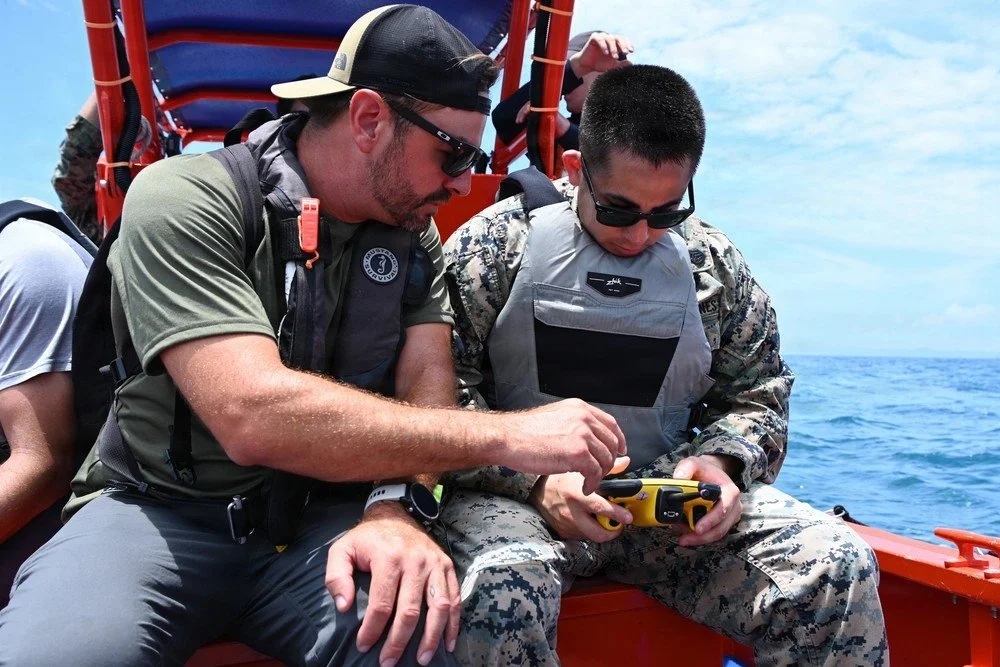
Photo: Ryan Faber, a Naval Surface Warfare Center Carderock civilian, shows U.S. Marine Corps Staff Sgt. Joseph Banuelos, 3rd Marine Logistics Group, how to operate the remote control for an unmanned foam raiding craft during RAMFORCE, an initiative hosted by the Office of the Under Secretary of Defense for Research and Engineering, at Valiant Shield 26, White Beach, Okinawa, Japan, June 29, 2026. U.S. Marine Corps photo by Cpl. Rachel Mason, via DVIDS. The appearance of U.S. Department of War visual information does not imply or constitute DoW endorsement.
Does the Continuing Resolution Mean My SBIR Won’t Be Funded?
No. SBIR is authorized through 2031 and funded as a share of agency R&D budgets that continue under the CR. The real risk is slower award decisions.
No. FY2027 starts October 1 under a continuing resolution, and SBIR and STTR keep running. What can change is how fast agencies make award decisions.
Why this year is different from last year
Last fall, SBIR stopped because the program's legal authorization expired on September 30, 2025. Agencies couldn't issue new solicitations until Congress passed the Small Business Innovation and Economic Security Act, which was signed on April 13, 2026. That law authorizes SBIR and STTR through September 30, 2031.
The CR that starts October 1 is a funding question, not an authorization question. It keeps agencies funded at FY2026 rates through December 11, 2026.
Why SBIR money keeps flowing under a CR
SBIR doesn't have its own appropriation. Every agency with more than $100 million in extramural R&D must set aside 3.2% of that budget for SBIR. Agencies above $1 billion also set aside 0.45% for STTR. The 2026 reauthorization left those percentages unchanged.
So the SBIR budget follows the agency's R&D budget. Under the CR, that budget continues at the FY2026 rate, and the SBIR share continues with it. That applies to DoW, NIH, NSF, DOE, NASA and the other participating agencies.
The CR also blocks agencies from starting projects that had no FY2026 funding. SBIR isn't a new program, so that restriction doesn't stop it.
Where you may feel it
The practical risk is timing. Agencies often hold back on new commitments until they know their full-year budget. During last year's CR, NIH told grantees its institutes could issue continuing awards below the committed level.
For a founder, that can mean a longer gap between a positive review and a signed award, or a later start date than you planned.
The CR also ends on December 11. Congress will need to pass full-year funding or another CR by then.
What to do now
Keep submitting. Open solicitations remain open. The current DoW SBIR/STTR release, for example, closes October 21.
Ask about timing on pending awards. Ask your program officer whether they expect to fund your award before or after December 11.
Plan cash around the later date. If a delay of a month or two would put your company in trouble, line up bridge options now rather than in December.
Check whether you depend on anything new. A follow-on that requires a brand-new federal program or a larger production buy is more exposed than an SBIR award, because the CR bars those new starts.
The short version: a CR is a reason to plan for slower decisions, not a reason to stop applying.
This article is general information, not legal or financial advice.
Sources
Crowell & Moring, "SBIR/STTR Programs Reauthorized After Six-Month Lapse," April 14, 2026: https://www.crowell.com/en/insights/client-alerts/sbirsttr-programs-reauthorized-after-six-month-lapse
The White House, "Congressional Bill H.R. 6500 Signed into Law," September 2, 2026: https://www.whitehouse.gov/briefings-statements/2026/09/congressional-bill-h-r-6500-signed-into-law/
Continuing Appropriations and Extensions Act, 2027, enrolled bill text, GovInfo: https://www.govinfo.gov/app/details/BILLS-119hr6500enr
NIH, "NIH Operates Under a Continuing Resolution," NOT-OD-26-011, November 21, 2025: https://www.grants.nih.gov/grants/guide/notice-files/NOT-OD-26-011.html
BW&CO, "DoW SBIR/STTR FY26 Release 6 Topics": https://www.bwcoconsulting.com/programs/dow-sbir-sttr-release-6
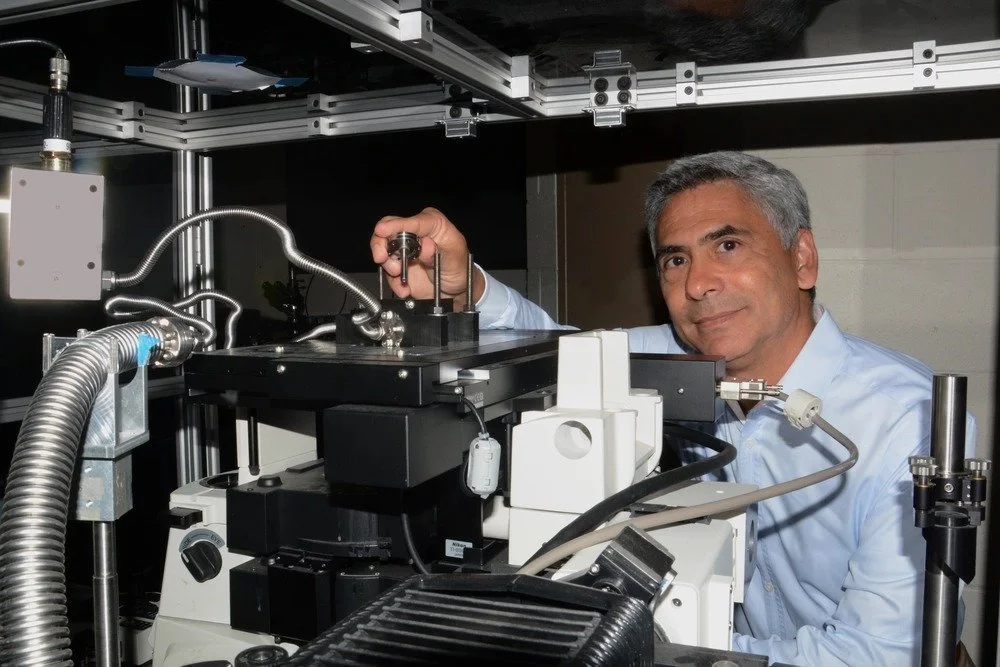
Photo: U.S. Air Force photo by David Dixon, via DVIDS. The appearance of U.S. Department of War visual information does not imply or constitute DoW endorsement.