
Blog
The Navy Wants Help Getting People to Adopt New Technology. That Opens a Door for Non-Defense Startups.
NAWCAD says technology adoption fails when workforce adoption comes second. Its new challenge is open to small businesses and nontraditional companies, and it fits far more of them than a typical Navy topic.
The prototype challenge the Naval Air Warfare Center Aircraft Division (NAWCAD) posted on September 25 is about people more than hardware. NAWCAD wants better ways to help its workforce adopt new technology.
What NAWCAD is asking for
NAWCAD delivers research, development, test, evaluation and sustainment for naval aviation. Its challenge, the Workforce Innovation and Capability Integration Challenge, describes what happens when an organization tries to adopt new technologies, processes and structures quickly. According to NAWCAD, the workforce faces "simultaneous capability, identity, cultural, and operational shocks," and the problem is that "the pace of change exceeds the pace of support."
The conclusion is stated plainly: "technology adoption fails when workforce adoption is treated as secondary." NAWCAD wants "practical, evidence-based ways to close the gap between the pace of change and the pace of support, so that new technologies and processes are adopted as quickly as they are introduced."
The critical focus areas are interdisciplinary collaboration, systems thinking and "learning as a part of daily performance." The listing is tagged Collaboration Tools. NAWCAD says it wants to work with "nontraditional defense contractors, nonprofit research institutions, and small businesses" to "develop and prototype novel methods."
NAWCAD already works on this problem itself. In August it described a new standardized training and certification process that it says expands the Navy's in-house fiber optic repair capability by 400 percent. The challenge asks outside organizations to help it do that kind of work faster and more broadly.
Who fits
This is my reading, not NAWCAD's list. The challenge fits companies whose product or method measurably shortens the time between "we bought a new tool" and "people use it well." That includes:
learning and training platforms, including adaptive learning and microlearning
XR, simulation and digital twins used for training
AI assistants and performance-support tools that guide people inside a task
collaboration, knowledge-management and expertise-finding software
digital adoption and change-management platforms
nonprofit research groups working on organizational behavior and learning science
A company can fit without any defense history if it has evidence that its approach changes adoption outcomes.
How the process works
The challenge is posted on the GoColosseum Marketplace, run by One Nation Innovation (ONI), a 501(c)(3) nonprofit. ONI describes the marketplace as free. In July 2025, Army Contracting Command-Rock Island posted a notice saying it had awarded ONI an OT-based marketplace award, with a period of performance of June 4, 2025 to June 3, 2030. The notice describes the marketplace as "a single location for the Government to issue challenges and make awards utilizing OTA, Commercial Solution Openings (CSO) and other acquisition authorities." Federal award data shows OT actions to ONI funded by NAWCAD and several other DoW offices.
In at least one recent challenge on the platform, selected respondents became ONIX consortium members and performed under ONI's Other Transaction Agreement. If that holds here, your agreement would be with ONI. Ask for ONI's member terms on IP, data rights, fees and payment timing before you commit significant effort.
The challenge closes October 15. HigherGov lists the close time as 1:00 p.m. ET, which is noon Central. Confirm the time on the live listing after you register. The listing does not publish an award amount.
How to build a strong response
Anchor on one realistic scenario. NAWCAD's workforce includes engineers, scientists, testers and maintainers. Pick one adoption problem, such as engineers moving to a new digital engineering tool or technicians learning a new repair and certification process. Show how your method works there.
Name the metric before the method. Evaluators need to see what gets better. Time to proficiency, error rates, rework, usage and certification pass rates are all measurable.
Bring evidence. NAWCAD asks for evidence-based approaches. Results from a commercial deployment, a pilot or published research carry weight, even if they come from outside defense.
Keep the prototype small and measurable. A bounded pilot with one team, a baseline and a comparison is easier to approve than an enterprise transformation.
Show how it scales. Explain how the approach would move from one team to the rest of the command, and what NAWCAD staff would need to run it themselves.
Checklist
Register your organization on GoColosseum.
Request ONI's member terms.
Choose one NAWCAD scenario and one adoption metric.
Assemble your strongest evidence.
Draft a small prototype plan with a measurement approach.
Submit before October 15.
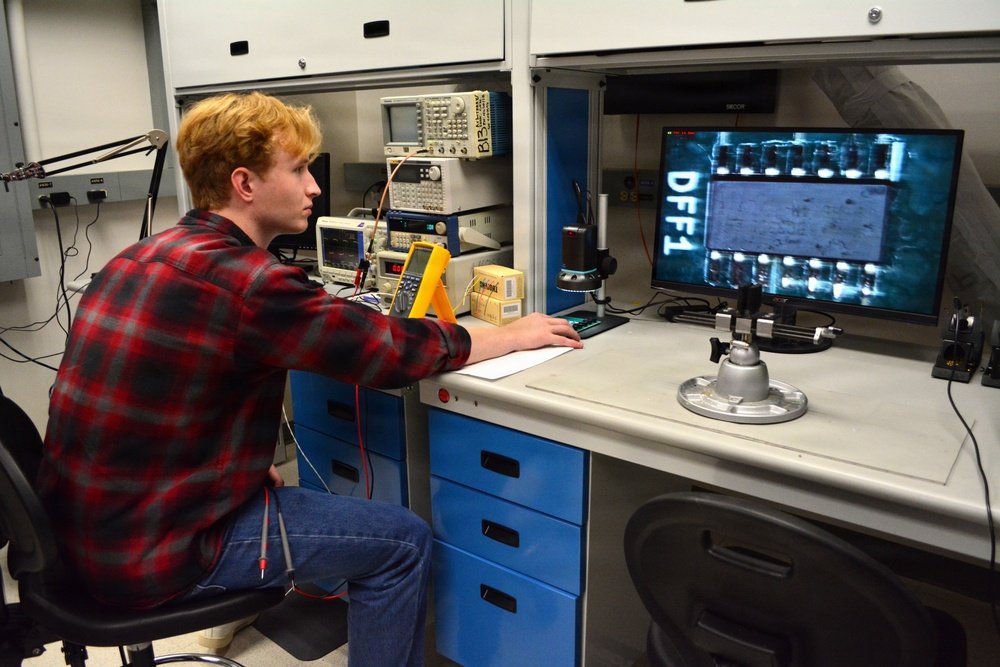
Photo: U.S. Navy photo by Jacob Moore, Naval Air Warfare Center Aircraft Division, via DVIDS. The appearance of U.S. Department of War visual information does not imply or constitute DoW endorsement.
Sources
GoColosseum, NAWCAD Workforce Innovation and Capability Integration Challenge: https://marketplace.gocolosseum.org/public/challenges/5d92b4a3-b78c-41db-a0f2-50892a2e2eb7
HigherGov mirror of the challenge text and dates, posted 2026-09-25, due 2026-10-15 13:00 ET: https://www.highergov.com/contract-opportunity/nawcad-workforce-innovation-and-capability-integ-5d92b4a3-b78c-41db-a0f2-50892a2e2eb7-o-d8fff
SAM.gov, ACC-RI Special Notice, "Open National Innovation Exchange - Open opportunities," posted 2025-07-21: https://sam.gov/opp/ab096d6b8c1c4c409aed6961c326c12b/view
One Nation Innovation: https://onenationinnovation.org/
HigherGov, One Nation Innovation awardee profile (FPDS OT actions): https://www.highergov.com/awardee/one-nation-innovation-265266797/
DVIDS, "Navy bringing fiber optic repair in-house to expand fleet capability by 400 percent," NAWCAD, 2026-08-05: https://www.dvidshub.net/news/571633/navy-bringing-fiber-optic-repair-house-expand-fleet-capability-400-percent
“Capability in 24 Months or Less”: How Deep-Tech Founders Can Build a Minimum Viable Capability
A Pentagon official says his office delivers capability in 24 months or less, or it's a science project. How can deep tech meet that clock? Build a minimum viable capability.
"We deliver capability in 24 months or less. If you don't fit in my construct, that's a science project."
Mike Dodd, Assistant Secretary of Defense for Critical Technologies, said that to Federal News Network in an interview published September 25, 2026. For deep-tech founders, it raises a hard question: how do you deliver capability in 24 months when the breakthrough behind it needs five years or more?
Some context on the quote. Dodd oversees three of R&E's six critical technology areas: contested logistics, quantum and battlefield information dominance, and scaled directed energy. The interview ran as sponsored content, and the 24-month rule is his description of how his office works, not a department-wide policy. The tension it exposes is familiar to most deep-tech founders: the customer wants something useful in two years, and the technology is rarely finished that fast.
The answer I would give founders borrows a phrase the Pentagon already uses.
The Pentagon's own term
On February 21, 2024, then-Deputy Secretary of Defense Kathleen Hicks announced that CJADC2, the department's effort to connect sensors and command systems across the services, had reached a "minimum viable capability." She said it was "real and ready now." CDAO chief Craig Martell described the approach as figuring out how to "get something in front of the warfighter quickly, but do it in such a way that we can sustain it and make it grow."
That CJADC2 capability was software, data and networks. The idea transfers well to deep tech with one adjustment. Here is how I define a deep-tech minimum viable capability (MVC). This is my extension of the term, not an official DoD definition.
A deep-tech MVC is the smallest improvement in capability a warfighter can use within about 24 months, built from what already works, with the breakthrough saved for a later block.
Four tests for a deep-tech MVC
1. It is in users' hands. A lab demonstration does not count. Operators should be able to use it in the field, even if only one unit has it.
2. It improves a capability the unit already measures. Range, detection time, equipment downtime, navigation accuracy or cost per engagement. Describe the gain in the user's terms, not your technology's specifications.
3. It is built from what is mature today. Freeze the design on the parts that already work. Put the breakthrough on the Block 1 roadmap instead of the critical path.
4. It has a next owner. Name the service, program office or unit that would keep it and fund what comes next. Without that, a fast prototype still dies after the demo.
Four ways to build one
Narrow the mission. Pick one mission where today's performance already beats what is fielded. The Army's Rapid Capabilities and Critical Technologies Office awarded Epirus $66.1 million in December 2022 for four high-power microwave prototypes to counter drone swarms. The first prototype was delivered within about a year. It was derived from Epirus's existing Leonidas system, which is why it could move that fast.
Ride platforms that are already flying. If your technology has a software or model layer, run it on hardware the services already operate. In August 2024, SandboxAQ's AQNav magnetic navigation system was flight-tested as the primary navigation method on an Air Force C-17.
Use exercises as early evidence. Scheduled exercises put prototypes in front of operators in real conditions. Vector Atomic's optical clocks ran continuously at sea for more than 20 days during RIMPAC 2022. This is evidence, not qualification. It builds user confidence long before a program would.
Run two lanes with two pitches. Keep the long-horizon science in research programs such as SBIR Phase I where topics exist, NSF, DARPA and the service labs. Pitch the MVC separately to the offices that buy near-term capability. Mixing them in one pitch makes the near-term offer look like a science project.
Put the MVC in the contract
A deep-tech MVC is easier to fund when the first agreement says what "done" means. Under 10 U.S.C. 4022(f), a prototype other transaction that was competitively awarded and "successfully completed" can lead to a follow-on production award without a new competition. The statute leaves success to the agreement, so write objective, testable criteria for a first 18 to 24 month increment. That opens a path to production but does not guarantee the money.
What the MVC does not do
Certification still sets its own clock. Airworthiness, safety, nuclear, medical and export approvals cannot be rushed, so the MVC has to be designed around them.
Years of research do not compress into months either. Every example above sits on years of earlier development, and the 24-month clock starts when the program starts.
A customer is still required. The next owner in test four is what separates a capability from a demo.
Where to start
Write one page that answers four questions. What would your MVC be? What capability does it improve, and by how much? Which parts of your technology does it use, and which parts wait for Block 1? Who keeps it after the prototype?
If the answers are clear, you have something to bring to the users and program offices behind the problem. For the offices Dodd oversees, R&E's current entry point is the critical technology area contact form on cto.mil. A consolidated industry "front door" portal is planned but not live.
If the answers are not clear yet, that is useful too. It tells you which lane your next dollar belongs in.
Sources
DefenseScoop, "What's next for the new CJADC2 minimum viable capability," February 26, 2024
C4ISRNet, "Pentagon achieves 'minimum viable' version of CJADC2, Hicks says," February 21, 2024
Office of the Under Secretary of War for Research and Engineering, Critical Technology Areas
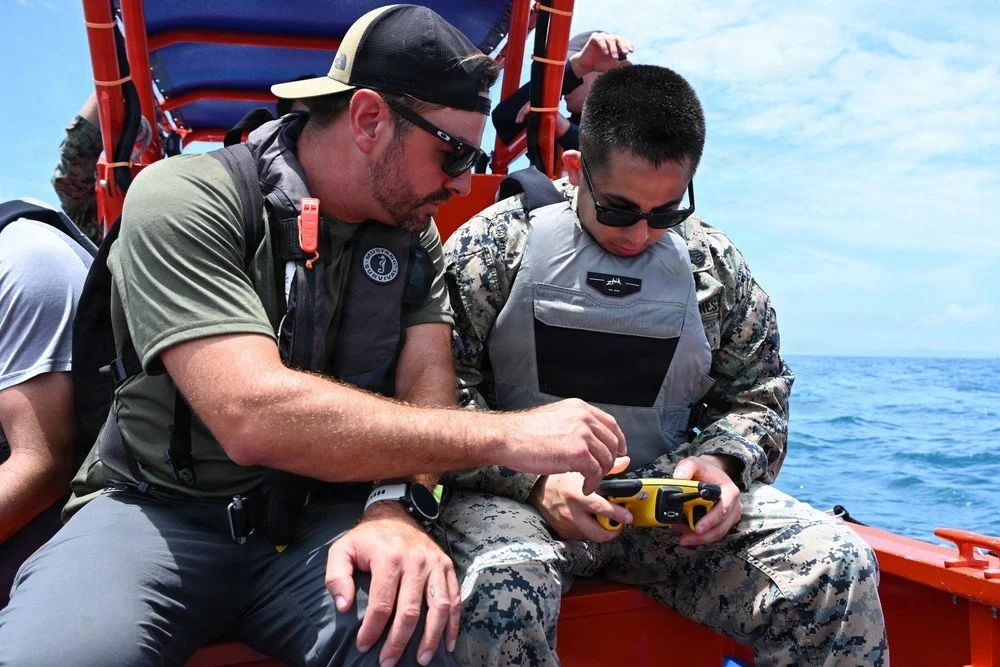
Photo: Ryan Faber, a Naval Surface Warfare Center Carderock civilian, shows U.S. Marine Corps Staff Sgt. Joseph Banuelos, 3rd Marine Logistics Group, how to operate the remote control for an unmanned foam raiding craft during RAMFORCE, an initiative hosted by the Office of the Under Secretary of Defense for Research and Engineering, at Valiant Shield 26, White Beach, Okinawa, Japan, June 29, 2026. U.S. Marine Corps photo by Cpl. Rachel Mason, via DVIDS. The appearance of U.S. Department of War visual information does not imply or constitute DoW endorsement.