
Latest Funding Opportunity Guides
Choose Your Area of Innovation:
Or search the full Non-Dilutive Funding Opportunities Database
Advanced Materials & Manufacturing
Aerospace & Spacetech
Agtech & Foodtech
Artificial Intelligence & Machines Learning
Biotech
Cleantech & Climatetech
Cybersecurity
Defensetech & Dual-Use Tech
eXtended Reality
Healthtech
Medtech
Other Tech
Quantum & Photonics
Robotics & Autonomous Systems
DARPA Atomically Precise Molecules (APM) DARPA-PS-26-141: Complete Guide for Proposers
Deadline: October 27th (abstracts), December 18th (proposals)
Funding Award Size: Not published (OT for Prototype awards)
Description: DARPA seeks revolutionary synthesis methods for programmable precision polymers and nonlinear optical materials, starting with sub-nanosecond electro-optic modulators. See funding fit, phases, and how to apply.
Executive Summary
DARPA's Atomically Precise Molecules (APM) program is soliciting proposals for new ways to synthesize polymeric materials and nonlinear optical (NLO) materials with molecular level control over sequence, orientation, and composition. DARPA calls these programmable precision polymers.
The program's first target application is the sub-nanosecond electro-optic modulator. Teams must show they can scale their synthesis to quantities that matter for integration, and the program culminates in a prototype demonstration of a new NLO material integrated into a functional government-provided electro-optic modulator. DARPA also points to broader defense and commercial uses such as LiDAR and communications.
APM is released as Program Solicitation DARPA-PS-26-141 and uses Other Transaction (OT) for Prototype agreements with milestone payments. This is not an SBIR or STTR topic, and it has no small business set-aside.
DARPA APM at a Glance
- Solicitation number: DARPA-PS-26-141
- Agency: Defense Advanced Research Projects Agency (DARPA), Multi X Office
- Program manager: John M. Hoffman
- Published: September 25, 2026
- Abstract deadline: October 27, 2026
- Proposal deadline: December 18, 2026, 1:00 PM Eastern
- Award instrument: Other Transaction for Prototype, paid against milestones
- Program length: 36 months across two phases
- Set-aside: None
- NAICS: 541715, Research and Development in the Physical, Engineering, and Life Sciences
- Contact: APM PS Coordinator, apm@darpa.mil
What DARPA Wants to Fund
DARPA is looking for revolutionary advances in material synthesis, not refinements of today's materials. Strong proposals will show a credible path to:
- New chemistries that give precise control over polymer sequence, orientation, and composition
- NLO materials that outperform the current state of the art for high speed electro-optic modulation
- Synthesis that scales to quantities relevant for device integration
- A prototype NLO material integrated into a functional government-provided electro-optic modulator
What Is Out of Scope
The solicitation is explicit about what it will not fund:
- Research that mainly produces evolutionary improvements to the existing state of practice
- Proposals built on exceptional claims that cannot be technically justified
- Approaches that use only inorganic materials with no polymeric component
- Modifying or repurposing existing NLO materials for incremental gains
How the Two-Phase Program Works
Phase 1: New Chemistries (12 months)
Teams develop new chemistries capable of producing programmable precision polymers and prove out the level of molecular control they claim.
Phase 2: Materials and Devices (24 months)
Teams apply those chemistries to synthesize advanced NLO materials at useful quantities and integrate them into functional electro-optic modulator devices.
Who Should Apply
APM rewards multidisciplinary teams. The strongest proposers will bring together polymer synthesis, computational chemistry and materials simulation, characterization, microfabrication, and photonics. Prior NLO experience helps but is not required. Startups with a novel synthesis platform should consider teaming with a university lab or a photonics partner to cover device integration.
How to Apply
- Step 1, abstract: Submit an abstract using the provided template (Attachment A) by October 27, 2026. An abstract is a low-effort way to get DARPA's read on fit before you invest in a full proposal.
- Step 2, full proposal: Submit Volume I (Technical) and Volume II (Price) by December 18, 2026 at 1:00 PM Eastern, along with the proposal summary slide, Task Description Document, price detail spreadsheet, schedule of milestones and payments, and OT certifications.
- Step 3, submission: Proposals go through the DARPA BAA Tool (BAAT) submission portal. Register early, since portal access can take time.
Funding and Award Terms
The notice on SAM.gov does not publish a total program budget or a per-award ceiling. Awards are made as Other Transaction for Prototype agreements, which means payments are tied to milestones you propose in your schedule. Your price volume and milestone plan carry real weight, so build them alongside the technical approach rather than at the end.
Controlled Unclassified Information
The solicitation includes a program CUI guide (Attachment J). Expect some program information and deliverables to be handled as Controlled Unclassified Information, and make sure your organization can meet those safeguarding requirements before you submit.
How to Prepare Now
- Read the full solicitation and every attachment on SAM.gov, including the proposer checklist
- Write a one-page technical concept that states why your chemistry is revolutionary, not incremental
- Line up partners for any gaps in synthesis, modeling, characterization, or photonics integration
- Draft milestones that map cleanly to the two phases and to measurable NLO performance
- Register for the DARPA BAAT portal and confirm your SAM.gov registration is active
Frequently Asked Questions
What is DARPA-PS-26-141? It is the Program Solicitation for DARPA's Atomically Precise Molecules (APM) program, which funds new synthesis methods for programmable precision polymers and nonlinear optical materials, starting with sub-nanosecond electro-optic modulators.
When is the deadline? Abstracts are due October 27, 2026. Full proposals are due December 18, 2026 at 1:00 PM Eastern.
Is APM an SBIR or STTR opportunity? No. It is a DARPA Program Solicitation awarded through Other Transaction for Prototype agreements, and it has no small business set-aside.
How much funding is available? DARPA has not published a total budget or award ceiling in the SAM.gov notice. Funding is paid against the milestones in each awarded agreement.
How long is the program? 36 months. Phase 1 runs 12 months and focuses on new chemistries. Phase 2 runs 24 months and focuses on materials synthesis and device integration.
What will DARPA not fund? Incremental improvements, purely inorganic approaches with no polymeric component, repurposed existing NLO materials, and claims that cannot be technically justified.
Who should I contact with questions? The APM PS Coordinator at apm@darpa.mil.
Sources
- SAM.gov: Atomically Precise Molecules (APM), DARPA-PS-26-141
- DARPA: Atomically Precise Molecules program page
Get Your APM Abstract Ready
DARPA programs move fast, and the abstract window is short. BW&CO helps deep-tech teams test fit, shape a revolutionary technical story, and build milestone plans that hold up under DARPA review. Book a free strategy call with our team to see if APM is right for you.
Army Advanced Manufacturing (AdvM) Commercial Solutions Opening W9124P26SC001: Complete Guide for Startups
Deadline: Open until canceled (Calls for Solutions have short individual deadlines)
Funding Award Size: Not published (firm-fixed-price awards)
Description: The Army Advanced Manufacturing CSO accepts white papers on 18 capability gap areas at any time, from robotics and additive manufacturing to predictive maintenance. See what it buys, how to submit, and how to prepare for short Calls.
Executive Summary
The Army Advanced Manufacturing (AdvM) Commercial Solutions Opening asks for innovative commercial solutions that establish and advance manufacturing capability across the Army's Organic Industrial Base (OIB) and out to the tactical edge.
The CSO was first issued on July 15, 2026. Amendment 1 was posted on SAM.gov on August 27, 2026. It is an umbrella CSO with no deadline, and the document says it "will remain open and accept submissions continuously" until the Army cancels it.
Companies can respond in two ways:
- General submission. Submit at any time against one of 18 Active Capability Gap (ACG) areas of interest.
- Call for Solutions. Respond to a specific Call, which addresses a defined need and has its own short deadline.
Phase 1 is a one-page quad chart and a five-page white paper sent by email. Awards are firm-fixed-price only.
For a startup with a commercial manufacturing, automation, inspection or industrial software product, this is one of the broadest Army entry points open right now. The main thing to understand: a general submission gets you on file, and a Call usually means the Army has already identified a specific need.
Army AdvM CSO at a Glance
- Solicitation number: W9124P26SC001 (W9124P-26-S-C001), Amendment 1
- Issuing office: Army Contracting Command-Redstone Arsenal (ACC-RSA), Redstone Services and Information Technology Solutions Branch
- Customer: Headquarters U.S. Army Materiel Command (HQ AMC)
- Status: Open in perpetuity until canceled. Individual Calls for Solutions carry their own deadlines.
- Authorities:
- The CSO document cites Section 803 of the FY2022 NDAA.
- The SAM.gov notice also lists 10 U.S.C. § 3458 with DFARS RFO 212.70, 10 U.S.C. § 4022 prototype OTs, RFO 6.101(b)(3), and the Employee Stock Ownership Pilot Program.
- Areas of interest: 18 Active Capability Gap areas, and the CSO "is open to any novel advanced manufacturing solution"
- Phase 1 submission: One-page quad chart plus white paper of up to five pages, emailed as two separate PDFs
- Award type: Firm-fixed-price only, per DFARS RFO 212.7002(b)
- Instruments: RFO Part 12 purchase orders and BPAs, Part 12 and 15 contracts, Part 16 IDIQs and BOAs, or prototype OTs under 10 U.S.C. § 4022
- Eligibility: Industry, academia and nontraditional partners. Small businesses are generally nontraditional defense contractors under 10 U.S.C. § 3014. Active SAM.gov registration is required for award.
- Submission and questions: usarmy.redstone.acc.mbx.acc-rsa-advm-cso@army.mil (primary POC on SAM.gov: Stephanie Dillon)
The 18 Active Capability Gap Areas
The CSO says it is open to any novel advanced manufacturing solution. It names these 18 areas of particular interest:
- Robotics and Automation. Automating manual manufacturing and depot maintenance processes, such as robotic welding, automated material handling and cobots for assembly.
- Additive Manufacturing. On-demand polymer, metal or composite parts, including large-format and multi-material printing and quality assurance and certification for critical components.
- Advanced Materials. High-strength alloys, composites, self-healing materials and other materials that improve performance, weight or corrosion resistance.
- Digital Twin and Digital Thread. Virtual models of assets and processes for predictive maintenance, process optimization and lifecycle management.
- Smart and Connected Factories (IIoT). Sensors, analytics and IIoT to monitor equipment health, track production and optimize the factory floor.
- Advanced Non-destructive Testing and Inspection. Advanced ultrasonics, thermography, automated computer-aided inspection and similar methods.
- Workforce Development and Manufacturing Skills. Training material, concepts or methods for a digital manufacturing workforce.
- Supply Chain Risk Management. Tools to identify and address strategic manufacturing value chain vulnerabilities in the defense industrial base.
- Cybersecurity. Tools to build DoW Risk Management Framework requirements into processes, product design and documentation.
- Enterprise Data Integration. A centralized AdvM data repository for qualified part data, technical data packages and IP, with data exchange with the Defense Logistics Agency.
- AdvM at the Tactical Edge. The right mix of AdvM capability in expeditionary and tactical environments, including point-of-need solutions.
- Army AdvM Consortium. Managing an alliance of government, industry, nonprofits and academia to qualify AdvM vendors, processes and parts.
- OIB and AdvM Innovation Centers. Machines, tooling, technology and talent for a network of innovation hubs.
- Metrology. Advanced measurement systems, such as optical or blue light scanning, to verify machines and parts meet tolerances.
- Qualification and Certification. Technologies and methods to qualify and certify manufacturing processes and parts.
- Advanced Electronics Manufacturing. Flexible hybrid electronics and additively manufactured electronics.
- Advanced Coatings and Surface Engineering. Coatings and surface modifications for durability, corrosion resistance, thermal management and signature management.
- Predictive Maintenance Analytics. AI and machine learning models that predict component failures, optimize maintenance schedules and forecast sustainment needs.
The CSO's general invitation to "any novel advanced manufacturing solution" acts as a catch-all beyond these named areas.
Not sure which area your technology fits, or whether it fits at all? We can tell you on a short call.
What Recent Calls for Solutions Looked Like
The CSO says the Army "may issue specific 'Calls for Solutions' as amendments" to address focused gaps. In practice, recent Calls were posted as separate SAM.gov notices titled "AdvM Call for Solutions" and linked from the CSO page:
- Modern Radar Systems Organic Capability Development (PANRSA-26-P-0000-039852): closed August 14, 2026.
- Expeditionary Additive Manufacturing (EAM) Systems (PANRSA-26-P-0000040885): posted August 24, due August 31 at noon CT. Seven days to respond.
- Modernized Paint Line at Tobyhanna Army Depot (PANRSA-26-P-0000-040601): posted August 27, due September 16 at noon CT after amendment. The Army asked for a complete system: hardware, automated parts handling and open-architecture SCADA software for paint application, curing and shop operations.
- Automated Parts Handling for Plating at Tobyhanna Army Depot (PANRSA-26-P-0000-040599): posted August 27, due September 16 at noon CT after amendment.
No AdvM Call was active on SAM.gov as of October 1, 2026.
Two lessons stand out. The windows are short: seven days at the low end, about three weeks with extensions. And the Calls can ask for an integrated, working system. A startup that owns one piece of that system may be better positioned as a supplier or teammate to an integrator.
The SAM notice also says RFIs posted under the CSO are for market research only, and the government has no obligation to follow one with a Call.
How the Three-Phase Process Works
Phase 1: White paper and quad chart. You submit both as two separate PDFs by email to usarmy.redstone.acc.mbx.acc-rsa-advm-cso@army.mil. Use the subject line "CSO Submission – Advanced Manufacturing – [Your Company Name]". Content past the page limits will not be read.
The quad chart is one page and follows Attachment 1. Its four quadrants are:
- Objective and Description: objective, description of effort and commerciality.
- Graphic or Illustration.
- Benefits and Challenges: benefits, challenges and current maturity (TRL/MRL).
- Execution Plan: milestones, deliverables, proposed funding, period of performance and contact information.
The white paper follows Attachment 2: up to five pages, 8.5 x 11 inches, one-inch margins, single-spaced, 12-point Times New Roman. It has eight sections:
- Project title, offeror, and area of interest or Call number
- Executive summary
- Description of effort, including why it is commercial in nature
- Benefits to the Army
- Technical challenges, with risks and mitigation
- Rough order of magnitude cost and schedule
- Corporate and personnel qualifications
- Data rights
Phase 2: Oral presentation or demonstration. This happens at the government's discretion. Offerors with meritorious white papers may be invited to present or demonstrate to a panel of government subject matter experts. The government may skip Phase 2 and go directly to Phase 3.
Phase 3: Request for Solution Proposal. Offerors who are evaluated successfully may be invited to submit a full written proposal with technical, price and contractual portions. An award may follow a favorable evaluation.
The government does not pay for preparing or submitting documents or presentations in any phase.
How Submissions Are Evaluated
The government first checks compliance with the format rules in Section 4.1 and Attachments 1 and 2. A submission that fails the check may be excluded before technical review.
Submissions are evaluated on their own merit, not against each other. The factors, in descending order of importance, are:
- Technical merit and relevance: applicability to the area of interest or Call, technical feasibility, and potential to enhance Army readiness and manufacturing capability.
- Innovation and uniqueness: how new, underused or uniquely applied the solution is.
- Company viability: relevant corporate experience in advanced manufacturing, industrial operations or commercializing similar technology, plus personnel qualifications and a sound business model.
- Price and affordability.
All non-price factors combined are significantly more important than price.
After Phase 1, every submission gets one of three outcomes:
- Selected for Further Consideration: invited to the next phase.
- Retained for Future Consideration: the submission meets the criteria, and "will be retained in a repository for future consideration into the next phase once a Government need, manpower, and funding is available."
- Not Selected for Further Consideration.
The middle outcome matters most for general submissions. A strong white paper against an area of interest can sit in the repository until a depot need and funding line up.
Funding: What You Can and Cannot Expect
The CSO publishes no award ceiling or funding pool. It states, "Any award is subject to the availability of funds." The government may award some, all or none of the proposals. FY2027 began October 1 under a continuing resolution through December 11, 2026, which can slow new obligations.
The quad chart asks you to state proposed funding and a period of performance. The white paper asks for a rough order of magnitude cost and schedule. A scope the Army can fund and execute quickly is easier to move than a large multi-year program.
Depot modernization CSOs do produce real awards. In March 2026, Red River Army Depot awarded Hadrian $39.2 million, with up to $80 million in cumulative value, to establish advanced automation manufacturing at the depot. That award came through Red River's own OIB modernization CSO, not the AdvM CSO. It is not a ceiling or a typical award size, but it shows how quickly a depot can move once a need and funding align.
Data Rights
The government says it wants only the data rights it needs. Identify any data rights restrictions clearly in the proposal, and use section 8 of the white paper for a preliminary list. Negotiations follow DFARS data and software rights clauses.
How to Prepare Before the Next Call
- Pick one problem. Choose one area of interest and one depot or field problem your technology solves. Describe it in measurable terms: throughput, turnaround time, labor hours, hazardous exposure, scrap, inspection backlog or downtime.
- Build the package to the templates. Follow Attachments 1 and 2 exactly. The compliance check comes before technical review.
- Submit against the general area now. Even a "Retained for Future Consideration" result puts your solution in the repository the Army draws on when a need is funded.
- Make it reusable. Write the package so it can be tailored to a Call within 48 hours. Include the ROM, the period of performance and an implementation plan covering installation, training, cybersecurity and sustainment at a government facility.
- Watch for Calls. Save a SAM.gov search for "AdvM Call for Solutions" and follow W9124P26SC001.
- Decide your role early. If a likely Call needs a full system, line up the integrator or partner now.
- Look at the depot CSOs too. See our guides to the Sierra Army Depot CSO and the Anniston Army Depot CSO.
Frequently Asked Questions
What is solicitation W9124P26SC001? The Army Advanced Manufacturing Commercial Solutions Opening, issued by ACC-Redstone for Headquarters Army Materiel Command, to acquire innovative commercial manufacturing solutions for the Organic Industrial Base and the tactical edge.
What is the deadline? The CSO itself has none. It is open in perpetuity until canceled. Each Call for Solutions has its own deadline, and recent Calls closed between seven days and about three weeks after posting.
Is there an open Call right now? No AdvM Call for Solutions was active on SAM.gov as of October 1, 2026.
What do I submit? A one-page quad chart and a white paper of up to five pages in 12-point Times New Roman, as two separate PDFs, emailed to usarmy.redstone.acc.mbx.acc-rsa-advm-cso@army.mil with the subject line "CSO Submission – Advanced Manufacturing – [Your Company Name]."
How much funding is available? No amount is published. Any award is subject to the availability of funds, and only firm-fixed-price arrangements can be awarded.
Can a startup with no government contracts apply? Yes. The CSO invites industry, academia and other nontraditional partners, and small businesses are generally nontraditional defense contractors. You need an active SAM.gov registration to receive an award.
What happens if my white paper is good but there is no funding? It can be marked "Retained for Future Consideration" and held in a repository until a government need, manpower and funding are available.
Does the government pay proposal costs? No. The government does not pay for preparation or submission in any phase.
Sources
- SAM.gov, Army Advanced Manufacturing (AdvM) CSO, W9124P26SC001, updated August 27, 2026, verified October 1, 2026: https://sam.gov/opp/7f9b0cd559494155a50c7e5af0f11bbd/view
- ACC-RSA, "Commercial Solutions Opening (CSO) Solicitation Number W9124P-26-S-C001 Amendment 1 for Advanced Manufacturing" (attachment on SAM.gov)
- SAM.gov, AdvM Call for Solutions, Expeditionary Additive Manufacturing Systems: https://sam.gov/opp/69a143cc118243b48a82fb5cfea2a3b8/view
- SAM.gov, AdvM Call for Solutions, Modernized Paint Line in SOD: https://sam.gov/opp/ab97e088933e40a5bf2289daed14d4b4/view
- SAM.gov, AdvM Call for Solutions, Automated Parts Handling for Plating in SOD: https://sam.gov/opp/64f3745e095c4cedb8d066f6da1bba33/view
- U.S. Army, "Army accelerates advanced manufacturing with contracting award at Red River," March 18, 2026: https://www.army.mil/article/291165
Get Ready Before the Next Call
AdvM Calls can close in seven days. BW&CO helps deep tech and dual-use founders pick the right area of interest, build a quad chart and white paper that follow the CSO templates, and tailor the package fast when a Call drops. We have helped clients secure more than $350 million in non-dilutive funding.
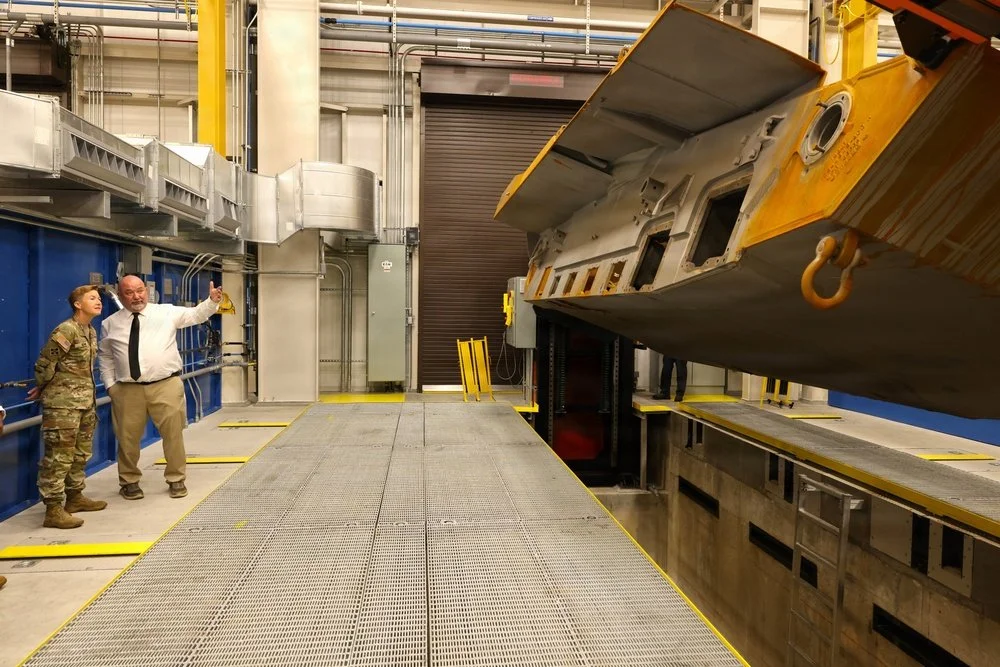
Featured image: U.S. Army photo by Mark Cleghorn. The appearance of U.S. Department of War visual information does not imply or constitute DoW endorsement.
Golden Dome for America - Department of War CSO
Deadline: Rolling until September 30, 2035
Funding Award Size: $500k - $10m
Description: Apply to the Golden Dome for America Commercial Solutions Opening. Rolling submissions through 30 September 2035 for innovative defense technologies, prototypes, and mission-critical capabilities.
Below is a brief summary. Please check the full solicitation before applying (link in resources section).
Executive Summary:
The Office of the Secretary of War (Golden Dome for America) is seeking innovative commercial technologies, services, and capabilities to defend the U.S. homeland against advanced threats including ballistic missiles, hypersonics, cruise missiles, and other aerial systems. This is a long-term, continuously open Commercial Solutions Opening (CSO) designed to rapidly fund and deploy breakthrough solutions using flexible contracting.
This opportunity is open from the date of CSO posting through 30 September 2035. There is no single deadline—submissions can be made on a rolling basis, and additional Calls may define specific due dates.
How much funding would I receive?
Funding is expected to range from $500k - $10m.
There is no restriction on the number, type, value, or frequency of awards
Awards may vary widely in scope, duration, and price
The Government may fund all, part, or none of any submission
Awards may be incrementally funded at the Government’s discretion
What could I use the funding for?
Funding can be used to support:
Prototype projects directly relevant to DoD systems, platforms, components, or materials
Development of innovative commercial technologies and services
Solutions that:
Close capability gaps
Accelerate mission effectiveness
Introduce breakthrough technological advancements
The program prioritizes:
Rapid testing and proof-of-concept efforts
Technologies addressing urgent and complex threats
Applications that significantly improve or transform existing capabilities
Are there any additional benefits I would receive?
Yes. This CSO provides:
Access to Other Transaction (OT) agreements and FAR-based contracts
Opportunity for follow-on prototype or production agreements
Flexible acquisition pathways using streamlined procedures
Ability to collaborate at higher security levels when required
Potential for one-step awards directly from white papers
What is the timeline to apply and when would I receive funding?
The CSO is open from the date of CSO posting through 30 September 2035
White papers may be submitted at any time during this period
Specific deadlines will only be provided in individual Calls or RFPs
Submissions close to the end of the CSO period may not be reviewed in time
Timing for funding decisions is not specified, but:
Reviews are intended to be streamlined and expedient
The Government may communicate for clarification during evaluation
Awards may be made directly from white papers or after an RFP process
Where does this funding come from?
Funding comes from:
Office of the Secretary of War (Golden Dome for America)
Authorized under:
DFARS 212.70 – Commercial Solutions Opening
10 USC 4022 (Other Transaction Authority)
10 USC 3458 (Commercial acquisition authority)
Who is eligible to apply?
Eligible applicants include:
All sources capable of addressing the objectives of the CSO
Traditional defense contractors
Nontraditional defense contractors
Non-profit research institutions
Applicants must comply with:
Applicable security requirements
Conflict of interest disclosures
Note: Entities providing SETA or similar support to GDA may not simultaneously act as performers without prior approval.
What companies and projects are likely to win?
The Government prioritizes:
Breakthrough technologies over incremental improvements
Solutions that address urgent and high-priority mission needs
Proposals that enable:
Rapid testing
Proof-of-concept demonstrations
Accelerated deployment
Evaluation is based on:
Technical merit
Price (must be fair and reasonable)
Overall value relative to mission impact and portfolio balance
Are there any restrictions I should know about?
Yes. Key restrictions include:
White papers:
Must not exceed 10 pages
Proposals (if requested):
Technical volume: max 20 pages
Price volume: max 10 pages
Submissions must:
Be in English
Meet security requirements
Properly mark proprietary information
Additional constraints:
The Government may:
Modify scope, price, or terms
Use one-step or two-step evaluation processes
Select partial proposals
How long will it take me to prepare an application?
White papers are designed to be uncomplicated and limited to 10 pages
A one-step award may be possible if sufficient detail is included
Additional effort may be required if invited to submit a full proposal
How can BW&CO help?
BW&CO can support you by:
Identifying where your technology aligns with GDA mission priorities
Developing a compliant, high-impact white paper
Structuring your submission for one-step award consideration
Positioning your solution as a breakthrough capability
Supporting follow-on proposals if an RFP is issued
How much would BW&CO Charge?
We have both fractional engagements ($250 an hour) and full engagements ($15,000 + 5%) available.
Additional Resources
AIR COMBAT COMMAND HEADQUARTERS (ACC HQ) ACQUISITION MANAGEMENT INTEGRATION CENTER (AMIC) COMMERCIAL SOLUTIONS OPENING (CSO)
Deadline: Rolling until September 2026
Funding Award Size: $500k - $5m
Description: The Air Force AMIC Commercial Solutions Opening (FA4890-CSO-0001-24) seeks innovative commercial technologies for AI, cybersecurity, communications, counter-UAS, and data systems. Submissions accepted until September 5, 2026.
Below is a brief summary. Please check the full solicitation before applying (link in resources section).
Executive Summary:
The Air Combat Command Headquarters (ACC HQ) Acquisition Management Integration Center (AMIC) has released Commercial Solutions Opening (CSO) Solicitation FA4890-CSO-0001-24 seeking innovative commercial technologies that address specific operational needs of the U.S. Air Force.
This CSO invites companies to propose commercial technologies or services that could close capability gaps or advance Air Force mission capabilities across areas such as AI/ML, cybersecurity, counter-UAS, data aggregation, cross-domain security, and communications.
The program uses a two-phase submission process beginning with a short quad chart and white paper. Selected companies may then be invited to submit a full proposal for potential contract award.
This CSO is open for two calendar years from the original publication date on SAM.gov (5 September 2024) and submissions may be made at any time during that period.
Companies developing innovative commercial solutions aligned with the listed technology topics should consider submitting early while the solicitation remains open.
How much funding would I receive?
The solicitation does not specify award amounts, award ranges, or total program funding. Typical awards range from $500k to $5m.
What could I use the funding for?
Funding would support development, demonstration, or deployment of innovative commercial technologies that address Air Combat Command capability gaps.
Proposals must align with one of the solicitation topics listed in Attachment 7, including:
Target custody data systems
Cross-domain security solutions
Automated coordinate mensuration
Counter-UAS detection and defeat systems
Aircraft sunshade sustainment management solutions
AI/ML for cyber threat detection and response
Cyber risk analysis using AI
Data aggregation systems for cybersecurity
AI lifecycle management and observatory platforms
Zero Trust security solutions
Deployed communications capabilities
Automation of cyber documentation processes
On-demand communications squadron network enhancements
Solutions may include:
Existing commercial technologies
New technology or methods not currently used by the U.S. Air Force
Research and development related to innovative technologies
Are there any additional benefits I would receive?
Awards resulting from this CSO may be issued as:
FAR Part 12 commercial contracts, or
Other Transaction (OT) agreements under 10 U.S.C. § 4022.
Additional benefits may include:
Opportunity to deploy technology with the U.S. Air Force
Potential to address mission-critical defense capability gaps
Ability to pursue follow-on development and deployment opportunities
What is the timeline to apply and when would I receive funding?
Submission Window
The CSO is open for two calendar years from the original publication date on SAM.gov (5 September 2024).
Application Process
Phase I submission:
Quad Chart (1 page)
White Paper (maximum 5 pages)
Phase II submission (by invitation only):
Technical proposal
Price proposal
Statement of Work
Companies invited to submit Phase II proposals will have 30 calendar days to submit the full proposal.
Estimated Award Timing
The solicitation states that companies should assume a contract start date approximately 90 days after proposal submission.
Where does this funding come from?
Funding would come from the Air Combat Command Headquarters (ACC HQ) through the Acquisition Management Integration Center (AMIC).
ACC is responsible for:
Organizing and equipping combat-ready forces
Operating fighter, reconnaissance, battle-management, and electronic-combat aircraft
Providing command, control, communications, and intelligence systems to support national security missions.
Who is eligible to apply?
The solicitation does not specify eligibility restrictions by organization type.
However, to receive an award, offerors must:
Be registered in the System for Award Management (SAM.gov)
Be considered responsible contractors under FAR Part 9.1
Have a satisfactory performance record
Be eligible for award under federal law and regulation
The CSO seeks commercial technologies and services, and all solutions acquired through the program will be treated as commercial items.
What companies and projects are likely to win?
Proposals are evaluated based on three equally weighted criteria:
Technical merit and applicability
Importance to agency programs
Funding availability
During Phase I, the Government reviews quad charts and white papers to determine:
Whether the company demonstrates technical understanding of the topic
Whether the solution represents a viable innovative capability
The Government may also conduct peer or scientific review panels as part of the evaluation process.
Are there any restrictions I should know about?
Key restrictions and requirements include:
Phase I submissions must be unclassified.
Phase I submissions must include:
1-page Quad Chart
White Paper not exceeding 5 pages.
Phase II technical proposals are limited to 10 pages.
Statement of Work documents are limited to 10 pages.
All proposed solutions must be commercial technologies or services.
The Government may also negotiate data rights clauses depending on the technology and contract terms.
How long will it take me to prepare an application?
Preparation time depends on the phase.
Phase I submission
Quad Chart (1 page)
White Paper (≤5 pages)
Companies can typically prepare this type of submission relatively quickly, though the solicitation does not specify preparation timelines.
Phase II submission
If invited, companies will have 30 calendar days to prepare the full proposal package.
How can BW&CO help?
BW&CO can support companies pursuing this CSO by:
Assessing fit with AMIC technology topics
Developing the quad chart and white paper
Structuring the technical proposal and Statement of Work
Preparing the price proposal
Positioning the project around ACC mission needs and evaluation criteria
Our team has experience preparing submissions for defense innovation programs and Commercial Solutions Openings.
How much would BW&CO Charge?
We have both fractional engagements ($250 an hour) and full engagements ($15,000 + 5%) available.
Additional Resources
COMET Defense Intelligence Agency Missile and Space Intelligence Center
Deadline: April 3rd, 2026
Funding Award Size: $14m
Description: The Defense Intelligence Agency (DIA) is seeking contractors for the COMET IDIQ supporting missile evaluation, testing, and intelligence analysis at the Missile & Space Intelligence Center. Proposals due APR 03, 2026 04:00 PM
Below is a brief summary. Please check the full solicitation before applying (link in resources section).
Executive Summary:
The Defense Intelligence Agency (DIA) is seeking contractors to support Contract Operations for Missile Evaluation and Testing (COMET) for the Missile & Space Intelligence Center (MSIC) at Redstone Arsenal, Alabama. The work supports intelligence analysis, testing, modeling, and technical assessment of missile systems and related technologies.
The solicitation establishes a Multiple Award Indefinite Delivery/Indefinite Quantity (IDIQ) contract through which task orders will fund specific analytical and technical services supporting MSIC missions.
Proposals must be submitted by APR 03, 2026 04:00 PM local time. Companies interested in supporting DIA missile intelligence missions should begin preparing now to meet the submission deadline.
How much funding would I receive?
The solicitation states:
Estimated maximum quantity of services the Government may order: $14,068,028.96.
The contract will be structured as a Multiple Award IDIQ, meaning funding will be distributed through task orders issued after contract award.
What could I use the funding for?
Funding would support services required to perform offensive missile system analysis and intelligence support for MSIC. The Statement of Work includes activities such as:
Technical and intelligence analysis of missile systems
Foreign materiel exploitation
Information technology and systems support
Modeling and simulation of missile technologies
Business process and program support
Testing and evaluation support
Data analysis and intelligence production
The contract supports multiple intelligence domains including:
Air Domain
Ground Domain
Space/Near-Space Domain
The work supports several MSIC disciplines such as:
Anti-air guided missile systems
Ground-based defense systems
Ballistic missile systems
Directed energy systems
Foreign materiel exploitation
Command, control, communications, and computer systems (C4) analysis
Are there any additional benefits I would receive?
Additional benefits described in the solicitation include:
Opportunity to receive task orders under a Multiple Award IDIQ contract
Work directly supporting Defense Intelligence Agency missions
Participation in intelligence analysis programs supporting national security
What is the timeline to apply and when would I receive funding?
Proposal deadline
APR 03, 2026 04:00 PM local time
Contract ordering structure
Base ordering period: 1 year
Four option periods: 1 year each
Period of performance for base contract services
07/05/2026 – 07/04/2031
Additional option ordering periods may extend performance through 07/04/2036.
Funding will be distributed through task orders issued during the ordering periods.
Where does this funding come from?
The funding originates from:
Defense Intelligence Agency (DIA)
Missile & Space Intelligence Center (MSIC)
Redstone Arsenal, Alabama
The contract supports DIA’s mission to analyze foreign missile systems, space systems, and related technologies.
Who is eligible to apply?
The contract is issued through a federal procurement solicitation for contractor support services, and contractors must meet the requirements outlined in the solicitation and associated federal acquisition regulations.
What companies and projects are likely to win?
The solicitation indicates that the government is seeking contractors capable of supporting:
Offensive missile system analysis
Intelligence analysis and technical exploitation
Modeling, simulation, and data analysis
Information technology and analytic infrastructure
Program and mission support for DIA missile intelligence operations
Companies with experience in:
Defense intelligence
Missile systems analysis
Modeling and simulation
Advanced technical intelligence (TECHINT)
Foreign materiel exploitation
are likely to be competitive.
Are there any restrictions I should know about?
Several restrictions are identified in the solicitation:
Work involves classified environments and sensitive compartmented information facilities (SCIFs).
Contractors may need access to Top Secret / Sensitive Compartmented Information (TS/SCI) environments.
Work may require operation in U.S. and OCONUS locations, including sensitive facilities.
Contractors must comply with federal acquisition regulations and intelligence community security requirements.
How long will it take me to prepare an application?
The solicitation does not specify the expected preparation time for proposals.
However, due to the size and complexity of federal IDIQ proposals—particularly those involving classified work—preparing a compliant submission may require significant proposal development effort.
How can BW&CO help?
BW&CO can support your team throughout the proposal process, including:
Interpreting DIA solicitation requirements
Building a compliant proposal structure
Drafting technical narratives aligned with the Statement of Work
Preparing pricing and cost narratives
Ensuring compliance with federal acquisition regulations
Managing proposal development timelines
How much would BW&CO Charge?
We have both fractional engagements ($250 an hour) and full engagements ($15,000 + 5%) available.
Additional Resources
DARPA’s STO: Strategic Technology Office-wide Innovation Solutions Opening
Deadline: Rolling until October 31, 2027
Funding Award Size: $500k - $2m
Description: DARPA is funding revolutionary research through the Strategic Technology Office Innovation Solutions Opening (DARPA-PS-26-09). Submit a short abstract for breakthrough technologies in AI, autonomy, sensing, robotics, space systems, and defense innovation. Abstracts accepted until October 31, 2027 at 11:59 PM ET.
Below is a brief summary. Please check the full solicitation before applying (link in resources section).
Executive Summary:
The DARPA Strategic Technology Office-wide Innovation Solutions Opening (DARPA-PS-26-09) invites companies, universities, and other organizations to submit revolutionary research ideas that could create breakthrough technologies for U.S. national security.
This is a long-term open call that funds high-risk, high-impact research across a wide range of defense technology areas including AI, autonomy, communications, sensors, robotics, directed energy, space systems, and more.
The solicitation is structured as a two-step process: applicants first submit a short abstract. If DARPA determines the idea is promising, the agency will invite the team to submit a full proposal.
Applications are accepted on a rolling basis until the closing deadline.
Final application deadline: October 31, 2027 at 11:59 PM ET.
Because DARPA reviews submissions continuously and may fund projects at any time during the open period, early submission significantly increases the likelihood of consideration.
How much funding would I receive?
The solicitation states:
Multiple awards are anticipated.
Individual award sizes are not specified in the solicitation.
Applicants must include a Price / Rough Order of Magnitude (ROM) estimate in their abstract submission.
Funding may be structured through several possible award mechanisms.
What could I use the funding for?
Funding supports research and development that creates revolutionary advances in science, devices, or systems. Incremental improvements to existing technologies are specifically discouraged.
Areas of interest include (but are not limited to):
Advanced computing
Applied artificial intelligence
Autonomy and control algorithms
Communications and networking
Electromagnetic warfare
Radar and sensing technologies
Robotics
Directed energy systems
Space systems and sensors
Human-machine collaboration
Signal processing
System-of-systems engineering
Undersea technologies
Logistics and supply chain analytics
The Strategic Technology Office focuses on technologies that enable new mission systems for air, space, sea, and land warfare environments.
Projects may include:
Short-duration analytical studies
Proof-of-concept experiments
Early-stage research that informs future DARPA programs
Are there any additional benefits I would receive?
Awardees may receive:
Funding through Other Transaction Agreements (OTAs), cooperative agreements, or procurement for experimental purposes.
The opportunity to transition technologies into U.S. national security applications and industry.
Access to DARPA program managers and defense technology ecosystems.
The program is designed to seed new DARPA programs and mission systems, making it a potential entry point for future defense funding.
What is the timeline to apply and when would I receive funding?
Posting date: December 19, 2025.
The solicitation uses a two-phase submission process:
Step 1 — Abstract submission
Abstracts may be submitted on a rolling basis until October 31, 2027 at 11:59 PM ET.
Step 2 — Full proposal (by invitation only)
DARPA reviews abstracts first.
If the idea is considered promising, DARPA will invite the team to submit a full proposal.
Final closing date:
October 31, 2027 at 11:59 PM ET.
DARPA may request proposals at any time after abstract review, so timing for awards is not specified in the solicitation.
Where does this funding come from?
Funding comes from:
Defense Advanced Research Projects Agency (DARPA)
Strategic Technology Office (STO)
U.S. Department of Defense
The program operates under authorities including:
10 U.S.C. § 4001
10 U.S.C. § 4021
10 U.S.C. § 4022
10 U.S.C. § 4023
These authorities allow DARPA to fund research using flexible contracting mechanisms such as OTAs and cooperative agreements.
Who is eligible to apply?
The solicitation states that all responsible sources capable of meeting the Government’s needs may submit a proposal, including:
U.S. companies
Universities
Research institutions
Non-U.S. organizations
Individuals
Government entities (with additional justification)
Small businesses, minority institutions, and historically Black colleges and universities are encouraged to participate.
However:
University-Affiliated Research Centers (UARCs)
Federally Funded Research and Development Centers (FFRDCs)
are highly discouraged from applying unless an exception is granted by DARPA.
What companies and projects are likely to win?
DARPA evaluates submissions primarily on:
Scientific and technical merit
Potential contribution to the DARPA mission
Price realism
Successful projects typically:
Propose innovative and feasible technical approaches
Offer revolutionary advances rather than incremental improvements
Demonstrate clear national security relevance
Show credible plans to transition the technology into U.S. defense or industry applications.
DARPA notes that short-duration exploratory projects, such as studies or proof-of-concept experiments, may receive priority during abstract evaluation.
Are there any restrictions I should know about?
Key restrictions include:
Proposals must not duplicate existing DARPA programs.
Work that results primarily in evolutionary improvements to existing technologies is excluded.
A written abstract must be submitted before any proposal submission.
A full proposal can only be submitted after receiving a DARPA invitation.
Additional requirements include:
Disclosure of potential organizational conflicts of interest
Compliance with export control laws and security regulations
Possible cybersecurity compliance with NIST SP 800-171
Restrictions preventing organizations from simultaneously serving as technical performers and SETA/A&AS support contractors.
How long will it take me to prepare an application?
The initial submission is designed to be low-burden.
The required abstract:
Maximum 3 pages
Must describe the concept, technical approach, and estimated cost (ROM).
For most companies, preparing the abstract typically requires several days to a few weeks, depending on the complexity of the technology and team coordination.
If DARPA invites a full proposal, preparation time will increase significantly.
How can BW&CO help?
BW&CO helps companies:
Identify DARPA-appropriate technology concepts
Translate commercial technology into DARPA-relevant national security applications
Write compelling 3-page DARPA abstracts
Develop strong technical narratives aligned with the Heilmeier Questions
Build teams and structure proposal submissions
Prepare full proposals after DARPA invitations
Our team has experience helping companies navigate DARPA’s two-step abstract-to-proposal process.
How much would BW&CO Charge?
We have both fractional engagements ($250 an hour) and full engagements ($15,000 + 5%) available.
Additional Resources
DARPA’s I2O: Bordeaux Program
Deadline: May 15, 2026 (proposals)
Funding Award Size: $500k - $2m
Description: DARPA’s Bordeaux program funds innovative research in AI cybersecurity, AI models, and AI hardware. Proposals due May 15, 2026 at 1:00 PM ET.
Below is a brief summary. Please check the full solicitation before applying (link in resources section).
Executive Summary:
DARPA’s Information Innovation Office (I2O) released the Bordeaux program (Funding Opportunity Number DARPA-PS-26-20) seeking innovative research proposals focused on cyber security performance in artificial intelligence (AI), including AI models and AI hardware. The program aims to produce revolutionary advances rather than incremental improvements and support national security technology development.
Multiple awards are anticipated under Other Transaction (OT) for Prototype Agreements to develop and demonstrate new approaches to AI cybersecurity performance. The program is expected to run 36 months, including two technical phases.
Companies and research teams capable of delivering novel, high-impact AI security technologies should strongly consider applying.
Proposal Due Date: May 15, 2026, at 1:00 PM Eastern Time.
How much funding would I receive?
The solicitation states:
Multiple awards are anticipated.
Individual award size is not specified in the solicitation.
Proposers must submit a cost proposal aligned with the scale and complexity of their technical approach, including detailed milestone pricing and cost breakdowns.
What could I use the funding for?
Funding is intended to support research and prototype development related to cyber security performance in AI.
Proposed work may include:
Development of new cybersecurity approaches for AI systems
Research involving AI models and AI hardware
Proof-of-concept systems or processes
Prototype demonstrations
Agile development and novel applications of commercial technologies for defense purposes
DARPA specifically encourages high-risk, high-reward research that produces revolutionary advances, not incremental improvements to existing methods.
Are there any additional benefits I would receive?
Potential benefits include:
Prototype OT agreements, which provide more flexible terms and conditions than traditional federal contracts.
Potential follow-on production awards without additional competition if the prototype effort is successful, under 10 U.S.C. § 4022.
Opportunity to contribute technology that supports U.S. national security and defense missions.
What is the timeline to apply and when would I receive funding?
Key dates listed in the solicitation include:
Posting Date: March 2, 2026
Proposers Day: March 16–17, 2026
Classified Addendum Request Cutoff Date: March 27, 2026, at 5:00 PM
Question Submission Deadline: April 3, 2026, at 1:00 PM
Q&A Responses Released: April 10, 2026, no earlier than 9:00 AM
Proposal Due Date: May 15, 2026, at 1:00 PM Eastern Time
Program structure:
Security Startup Period: 3 months
Phase 1: 18 months
Phase 2: 18 months
Total program duration: 36 months
A 12-month Transition Phase estimate may also be requested for planning purposes, but it is not being solicited for funding at this time.
Where does this funding come from?
Funding comes from the:
Defense Advanced Research Projects Agency (DARPA)
Information Innovation Office (I2O)
The program is issued under 10 U.S.C. § 4022, which authorizes Other Transaction (OT) agreements for prototype projects.
Who is eligible to apply?
DARPA encourages proposals from:
Large businesses
Small businesses
Nontraditional defense contractors
Research institutions
Historically Black Colleges and Universities (HBCUs)
Minority institutions and disadvantaged businesses
However:
Non-U.S. organizations and individuals cannot participate.
Additional eligibility considerations include:
Organizations must be capable of handling TOP SECRET // Special Access Required (TS//SAP) material.
Participants must meet personnel, facility, and information system security requirements.
What companies and projects are likely to win?
DARPA will evaluate proposals based on three primary criteria:
1. Scientific and Technical Merit (most important)
Winning proposals will demonstrate:
Innovative and feasible technical approaches
Strong technical teams
Clear task structure and deliverables
Identified risks and mitigation strategies
2. Contribution to the DARPA Mission
Technology that strengthens the U.S. national security technology base
Solutions capable of transitioning to military or defense use
3. Cost Realism
Budgets that match the proposed work scope
Well-justified costs and supporting documentation
DARPA also notes that proposals should leverage prior research and existing capabilities where appropriate.
Are there any restrictions I should know about?
Key restrictions include:
Non-U.S. organizations or individuals may not participate.
Work involves TOP SECRET // Special Access Required (TS//SAP) information.
Proposals must follow classified submission procedures described in the classified addendum.
Human or Animal Subjects Research (HSR or ASR) is not anticipated and proposals including it will not be reviewed.
Organizations providing System Engineering Technical Assistance (SETA) or similar support to DARPA may be restricted from participating as technical performers.
Proposers must meet SAM registration and federal eligibility requirements before award.
How long will it take me to prepare an application?
The application requires:
A technical proposal (up to 25 pages)
Team qualifications and prior work summaries
A detailed Task Description Document
A comprehensive cost proposal with supporting documentation
Because the program requires classified proposal materials and security clearances, preparation time may depend on an organization’s existing security infrastructure.
How can BW&CO help?
BW&CO can support companies pursuing this opportunity by helping with strategy, proposal writing, editing, administrative support, and other deliverables.
How much would BW&CO Charge?
We have both fractional engagements ($250 an hour) and full engagements ($13,000 + 5%) available.
Additional Resources
AFRL’s Materials & Manufacturing Directorate: Endless Forge
Deadline: Rolling until February 19, 2028
Funding Award Size: $500k - $5m
Description: The Air Force Research Laboratory Endless Forge solicitation offers access to a $149M funding program for materials and manufacturing technologies. White papers accepted until 1400 EST on 19 February 2028.
Below is a brief summary. Please check the full solicitation before applying (link in resources section).
Executive Summary:
The Air Force Research Laboratory (AFRL) Materials and Manufacturing Directorate is seeking white papers for the Endless Forge solicitation under MAA FA2394-24-R-B003. This is a two-step Open Period Solicitation designed to fund research and prototype development in materials and manufacturing technologies relevant to Air Force needs.
Companies first submit a white paper. If the Air Force determines the concept meets program needs, they will invite the company to submit a full proposal.
WHITE PAPER DUE DATE AND TIME: This solicitation is open and effective until 19 February 2028. White Papers will be considered if received anytime prior to 1400 EST on 19 February 2028. Only white papers are due at this time.
Total program funding is estimated at $149 million, and the Air Force anticipates making multiple awards.
How much funding would I receive?
The solicitation states:
Total Program Estimated Cost: $149 million
Multiple awards anticipated
Estimated funding profile (subject to change):
FY26: $3.5M
FY27: $30M
FY28: $50M
FY29: $50M
FY30: $15.5M
The Air Force reserves the right to award zero, one, or multiple contracts depending on proposals received and available funding.What could I use the funding for?
Funding supports research, development, integration, testing, and evaluation of technologies that improve information sharing across security domains and heterogeneous networks at the tactical edge.
The BAA focuses on three technical areas:
Technical Area 1 — Next Generation Cross Domain Solution Broker
Develop a discoverable and reconfigurable broker service that enables data exchange across multiple security domains using certified cross-domain solutions.
Technical Area 2 — Highly Dynamic Red/Black Networking
Develop networking capabilities that enable resilient routing and prioritization of encrypted data across dynamic networks.
Technical Area 3 — Modeling, Simulation, and Analysis (MS&A)
Develop a non-proprietary modeling and simulation testbed to evaluate technologies from Technical Areas 1 and 2.
The program will advance technologies through a phased development approach to reach TRL 5 and TRL 6 demonstrations.
What could I use the funding for?
The Air Force is soliciting research aligned with the following technical areas:
Manufacturing and Industrial Technologies
Composite, Ceramic, Metallic, and Materials Performance
Integration and Operations
Projects may include development activities that produce:
Data deliverables (CDRL reports)
Software deliverables (if applicable)
Hardware deliverables (if applicable)
Other deliverables based on the proposed work
Specific Areas of Interest are described in Attachment 1 of the solicitation.
Are there any additional benefits I would receive?
Awards may be issued through several potential mechanisms depending on the project:
Other Transaction (OT) for Prototype
Cost Plus Fixed Fee (CPFF) contracts
Grants
Cooperative agreements
Other research agreements authorized under federal statute
The government will select the instrument best suited to the proposed research effort.
What is the timeline to apply and when would I receive funding?
Step 1 – White Paper
WHITE PAPER DUE DATE AND TIME: This solicitation is open and effective until 19 February 2028. White Papers will be considered if received anytime prior to 1400 EST on 19 February 2028.
White papers are submitted electronically to the listed Air Force contacts.
Step 2 – Full Proposal
Full proposal deadlines will be provided in Requests for Proposals sent to offerors whose white papers are selected.
Awards
Award dates will vary.
White papers will be accepted for review through 19 February 2028.
Period of Performance
Approximately 36 months per award
33 months technical performance
3 months reporting period
Where does this funding come from?
Funding is provided by:
Air Force Research Laboratory (AFRL)
Materials and Manufacturing Directorate (RX)
The solicitation is issued under:
MAA FA2394-24-R-B003
Federal Acquisition Regulation and supplements
10 U.S.C. 4021, 4022, and 4023 authorities for research and prototype projects
32 CFR 22.205 for grants and cooperative agreements
Who is eligible to apply?
This is an unrestricted Open Period Solicitation, meaning:
Companies of any size may apply
Small businesses are encouraged to propose
Additional eligibility requirements include:
Contractors must be registered and certified with the Defense Logistics Agency Joint Certification Program (JCP).
Proposals must include an approved DD Form 2345, Militarily Critical Technical Data Agreement.
Foreign participation:
Foreign participation is not authorized at the prime contractor level.
What companies and projects are likely to win?
The solicitation states the Air Force is seeking research proposals aligned with its materials and manufacturing mission areas, specifically:
Manufacturing and industrial technologies
Composite, ceramic, and metallic materials performance
Integration and operational technologies
Projects must address Areas of Interest described in Attachment 1.
White papers will be invited to submit full proposals if they meet the needs of the Air Force.
The solicitation does not specify evaluation criteria beyond those referenced in the RX MAA Industry Guide.
Are there any restrictions I should know about?
Key restrictions include:
Foreign participation
Not authorized at the prime contractor level.
Export control
The research may involve export-controlled information under:
ITAR (22 CFR 120-131)
EAR (15 CFR 710-774)
Security requirements
Some Areas of Interest may require:
TOP SECRET facility security clearance
SCI access
Accounting system
Cost reimbursement contracts require an adequate accounting system for cost tracking.
How long will it take me to prepare an application?
The application is a two-step process:
Submit a white paper.
If selected, submit a full proposal after receiving a Request for Proposal from the Air Force.
White paper preparation requirements are described in the RX MAA Industry Guide referenced in the solicitation.
How can BW&CO help?
BW&CO can support companies pursuing the Endless Forge solicitation by:
Determining whether your technology aligns with the Areas of Interest.
Developing a competitive white paper aligned with AFRL expectations.
Structuring a proposal strategy for the two-step submission process.
Preparing the full proposal package if your white paper is selected.
Ensuring compliance with requirements such as export control documentation and DD Form 2345.
How much would BW&CO Charge?
We have both fractional engagements ($250 an hour) and full engagements ($4,000) available.
Additional Resources
AFRL: “Networking the Fight” Broad Agency Announcement (BAA) FA8750-24-S-7002
Deadline: Rolling until February 14, 2029
Funding Award Size: $500k - $5m
Description: The Air Force Research Laboratory’s “Networking the Fight” BAA offers up to $24M per award for technologies enabling secure cross-domain data sharing and resilient networking at the tactical edge.
Below is a brief summary. Please check the full solicitation before applying (link in resources section).
Executive Summary:
The Air Force Research Laboratory (AFRL) is seeking innovative technologies that improve secure information sharing across multiple security domains and networks at the tactical edge through the “Networking the Fight” Broad Agency Announcement (BAA) FA8750-24-S-7002. The goal is to enable mission-critical data to move across air, space, and ground networks while maintaining security across “red-black” boundaries.
This program supports the future Joint All-Domain Command and Control (JADC2) vision by developing software-defined networking capabilities that enable resilient, dynamic information transport in contested environments.
Companies will submit a 3–5 page white paper first, and only those invited by the government will be asked to submit a full proposal.
White papers will continue to be accepted until 11:59 PM EST on 14 FEB 2029.
How much funding would I receive?
Total anticipated funding across the program is approximately $70M.
Individual awards:
Typically $1M to $24M
Period of performance normally up to 36 months
Estimated program funding by fiscal year:
FY26: $24M
FY27: $17M
The government reserves the right to award zero, one, or multiple awards, depending on funding availability and proposal quality.
For the initial technical areas, AFRL anticipates:
3 awards for Technical Area 1
3 awards for Technical Area 2
1 award for Technical Area 3
What could I use the funding for?
Funding supports research, development, integration, testing, and evaluation of technologies that improve information sharing across security domains and heterogeneous networks at the tactical edge.
The BAA focuses on three technical areas:
Technical Area 1 — Next Generation Cross Domain Solution Broker
Develop a discoverable and reconfigurable broker service that enables data exchange across multiple security domains using certified cross-domain solutions.
Technical Area 2 — Highly Dynamic Red/Black Networking
Develop networking capabilities that enable resilient routing and prioritization of encrypted data across dynamic networks.
Technical Area 3 — Modeling, Simulation, and Analysis (MS&A)
Develop a non-proprietary modeling and simulation testbed to evaluate technologies from Technical Areas 1 and 2.
The program will advance technologies through a phased development approach to reach TRL 5 and TRL 6 demonstrations.
Are there any additional benefits I would receive?
Possible benefits include:
Opportunity to transition prototype projects to follow-on production contracts or transactions if prototypes are successfully completed.
Potential awards in several forms depending on the proposed work, including:
FAR-based procurement contracts
Grants or cooperative agreements
Other Transactions (OTs) under 10 U.S.C. 4021 and 4022
Opportunity to collaborate with AFRL and other performers through shared testbed environments.
What is the timeline to apply and when would I receive funding?
This BAA operates as a two-step process:
Step 1 — Submit a White Paper
White papers will continue to be accepted until 11:59 PM EST on 14 FEB 2029.
Step 2 — Submit a Full Proposal (Invitation Only)
Evaluation timeline:
Offerors will receive white paper evaluation results within 45 days of submission.
Program duration:
Phase 0: 9 months
Phase 1: 12 months
Phase 2: 15 months
Total potential period of performance: 36 months
Where does this funding come from?
Funding comes from the Department of the Air Force, specifically:
Air Force Research Laboratory (AFRL)
Information Directorate
Rome Research Site (Rome, New York)
The program supports AFRL’s mission to develop advanced warfighting technologies for air, space, and cyber operations.
Who is eligible to apply?
Eligibility is open to all qualified offerors that meet the requirements of the BAA.
Potential applicants may include:
Small businesses
Large businesses
Universities
Non-profit organizations
However, the BAA includes several participation restrictions:
The program is closed to foreign participation, including foreign ownership and foreign nationals, unless specific exceptions apply.
Contractors requiring access to AFRL facilities or government IT networks must be U.S. citizens, unless a waiver is granted.
What companies and projects are likely to win?
Proposals are evaluated based on four equally weighted criteria:
Scientific and technical merit of the proposed solution
Relevant experience related to Air Force mission needs
Openness, maturity, and assurance of the solution, including use of existing standards and capabilities
Reasonableness and realism of proposed costs
Solutions that demonstrate innovative approaches to secure cross-domain data movement and resilient networking in contested environments are likely to align well with the program’s objectives.
Are there any restrictions I should know about?
Several important restrictions apply:
Foreign participation
The BAA is closed to foreign participation, with limited exceptions for fundamental research or approved mitigation structures.
Security requirements
Personnel may require SECRET or TOP SECRET clearances depending on the work performed.
Compliance requirements
Applicants must disclose current and pending research support for key personnel.
Proposals will undergo a security risk review to assess potential foreign influence risks.
Registration requirements
Offerors must be registered in System for Award Management (SAM) before receiving an award.
How long will it take me to prepare an application?
The initial submission requirement is a 3–5 page white paper, which is designed to minimize preparation effort before the government determines interest.
If invited to submit a full proposal, additional documentation and cost details will be required.
How can BW&CO help?
BW&CO can support your application through:
Assessing whether your technology fits Technical Areas 1, 2, or 3
Developing a competitive white paper aligned with AFRL evaluation criteria
Structuring your proposal for BAA compliance and technical clarity
Managing the full proposal preparation process if invited
How much would BW&CO Charge?
We have both fractional engagements ($250 an hour) and full engagements ($13,000 + 5%) available.
Additional Resources
DIBC: Domestic Processing Capabilities of Critical Minerals
Deadline: March 20th
Funding Award Size: $1m - $10m
Description: DIBC RPP-CM-26-01 funds domestic processing, refining, recycling, and supply chain expansion for critical minerals including arsenic, graphite, hafnium, nickel, tungsten, and zirconium. OT authority. Closes March 20, 2026, at 5:00 PM (ET).
Below is a brief summary. Please check the full solicitation before applying (link in resources section).
Executive Summary:
The Defense Industrial Base Consortium (DIBC) has released RPP-CM-26-01: Domestic Processing Capabilities of Critical Minerals to strengthen U.S. defense supply chains.
The RPP closes: March 20, 2026, at 5:00 PM (ET). Late submissions may not be reviewed or considered.
This opportunity supports projects that establish, expand, or scale domestic processing capabilities for critical minerals essential to national defense. Awards will be issued through Other Transaction (OT) authority under 10 U.S.C. § 4021 (Research) or 10 U.S.C. § 4022 (Prototype).
If your company operates anywhere across the mineral value chain — from extraction to refining to recycling — and addresses at least one in-scope mineral, this is a high-priority DoD-backed industrial base investment opportunity.
How much funding would I receive?
The solicitation does not specify award amounts, minimum or maximum funding levels, number of awards, or total program funding.
Phase 2 submissions will include full pricing documentation. The Government will evaluate cost reasonableness and feasibility.
For projects:
Over $100M but not $500M, additional cost feasibility standards apply.
Over $500M, use of authority must be essential to meet critical national security objectives.
All agreements are generally expected to be fixed-price with milestone payments, although other award types may be proposed and negotiated.
What could I use the funding for?
Projects must address at least one of the following minerals:
Arsenic
Bismuth
Gadolinium
Germanium
Graphite
Hafnium
Nickel
Samarium
Tungsten
Vanadium
Ytterbium
Yttrium
Zirconium
And must align with at least one of six Areas of Interest (AOIs):
AOI 1 – Raw Mineral Sourcing and Beneficiation
Feasibility studies
Infrastructure improvements
Capital investments
Productivity enhancements
Expansion of mining capacity
AOI 2 – Separation and Processing
Conversion to intermediate chemical forms (e.g., oxides, chlorides, salts)
AOI 3 – Metal Production, Metallization, Refining, and Upscaling
Smelting
Metal purification and refining
AOI 4 – Alloying and Finish Processing
Alloy production
Coating or plating
Production of materials ready for integration into supply chains
AOI 5 – Recycling, Recovery, and Alternative Sourcing
Recovery from mine tailings, scrap, industrial waste, end-of-life materials
AOI 6 – Supporting Supply Chains
Production of chemical reagents, key inputs, tooling, production equipment
Qualification of materials for DoD systems
Projects may span multiple stages of the value chain and may include co-products if at least one in-scope mineral is produced.
Are there any additional benefits I would receive?
This opportunity is structured under Other Transaction (OT) authority, which:
Is not subject to the FAR
Allows flexible commercial terms
Enables milestone-based payment structures
May support follow-on production without further competition under 10 U.S.C. § 4022(f), if the prototype is successfully completed
Submissions may also be placed in a 24-month “basket” for potential future award consideration.
The Government may also leverage additional financial tools such as:
Direct equity stakes
SAFE instruments
Convertible notes
Revenue share agreements
Offtake agreements
DPA Title III loans, loan guarantees, or purchase commitments
What is the timeline to apply and when would I receive funding?
RPP Release Date: February 27, 2026
RPP Closes: March 20, 2026, at 5:00 PM (ET)
The Government may close the RPP at any time. After closure, submissions will not be accepted.
The solicitation does not specify an award timeline or expected funding start date.
The review process includes:
Phase 1: Quad Chart submission
Evaluated for relevance and feasibility
Selected companies invited to Phase 2
Phase 2: Full proposal package
Includes Project Execution Plan, pricing, certifications, Environmental Assessment Questionnaire
Only selected Phase 1 applicants will move to Phase 2.
Where does this funding come from?
This opportunity is issued by the Washington Headquarters Services, Acquisition Directorate (WHS/AD) under the Defense Industrial Base Consortium (DIBC).
It supports the mission of Industrial Base Policy (IBP) within the Office of the Under Secretary of War for Acquisition and Sustainment (OUSW(A&S)).
Funding is aligned with:
Industrial Base Analysis and Sustainment (IBAS)
Defense Production Act (DPA) Title III authorities
Who is eligible to apply?
Only Defense Industrial Base Consortium (DIBC) Consortium Members may submit.
Additional requirements:
Must submit through ATI’s Business Information Data System (BIDS)
Must be registered in SAM (System for Award Management)
Must not be suspended or debarred
Must meet responsibility determination standards
For Prototype authority under 10 U.S.C. § 4022, eligibility requires one of the following:
Significant participation by a Nontraditional Defense Contractor (NDC) or Nonprofit Research Institution (NRI),
Complete participation by a small business, or
At least one-third resource contribution by a consortium member other than the above.
Foreign investment or control must be disclosed.
What companies and projects are likely to win?
The Government will evaluate proposals based on:
Phase 1:
Relevance to the AOI
Merit and feasibility
Phase 2:
Relevance to the AOI
Technical merit and feasibility
Reasonableness of schedule
Reasonableness and adequacy of cost
Data rights assertions
Projects must clearly demonstrate:
Impact on defense supply chains
Production volumes
Advancement in TRL and MRL
Commercialization pathway
Mitigation of global supply chain vulnerabilities
Holistic, integrated, scalable solutions across multiple value chain stages are encouraged.
Are there any restrictions I should know about?
Key restrictions include:
Submissions must follow mandatory templates.
Files must be unencrypted, under 5MB.
No reimbursement for proposal costs.
Classified material is not allowed.
CUI submissions must comply with NIST SP 800-171r2.
Supply chain reporting is required (including vendor data and part traceability).
Mandatory Government terms apply under the DIBC Base Agreement.
The Government retains broad discretion and may decline any proposal.
How long will it take me to prepare an application?
This is a two-phase process.
Phase 1:
Quad Chart (mandatory template)
Phase 2 (by invitation only):
Cover Page (2 pages)
Project Execution Plan (15 pages)
Affirmation of Business Status Certification
Price proposal and justification
Environmental Assessment Questionnaire
Preparation time will depend on project complexity. The solicitation does not specify an estimated preparation timeline.
How can BW&CO help?
BW&CO can:
Determine alignment with IBAS vs. DPA Title III authorities
Position your project across the mineral value chain
Develop a compliant Quad Chart
Build a defensible milestone-based pricing structure
Align TRL/MRL progression to evaluation criteria
Structure cost share or resource contribution documentation
De-risk data rights assertions
Prepare Phase 2 documentation under strict OT requirements
We ensure your submission aligns precisely with AOI criteria and evaluation factors.
How much would BW&CO Charge?
We have both fractional engagements ($250 an hour) and full engagements ($9,000) available.
Additional Resources
Air Force: AERIAL LAYER NETWORKING & TRANSMISSION TECHNOLOGIES
Deadline: Rolling until September 30, 2027
Funding Award Size: $1m - $10m
Description: AFRL BAA FA8750-23-S-7002 provides approximately $99.5M for Aerial Layer Networking & Transmission Technologies. White papers due by 0500 PM EST on 30 September 2027.
Below is a brief summary. Please check the full solicitation before applying (link in resources section).
Executive Summary:
The Air Force Research Laboratory (AFRL), Information Directorate (Rome Research Site), is soliciting white papers under BAA FA8750-23-S-7002 for advanced research in Aerial Layer Networking & Transmission Technologies.
This is an Open, 2-Step Broad Agency Announcement (BAA) focused on enabling self-forming, self-healing, resilient airborne networks that operate in contested and degraded environments.
White papers will be accepted until 0500 PM EST on 30 September 2027, and this BAA will close on 30 September 2027.
While submissions are accepted on a rolling basis, AFRL recommends aligning to fiscal year targets to maximize funding probability. If this topic aligns with your capabilities, early submission materially improves your chances of selection.
This is a multi-year, $99.5M opportunity with potential awards ranging from $1M to $10M — and up to $49.5M in certain cases.
How much funding would I receive?
Total BAA funding: Approximately $99.5M
Funding by fiscal year:
FY26 – $19.9M
FY27 – $19.9M
Typical individual awards:
Normally range from $1M to $10M
Period of performance typically not to exceed 36 months
Potential exists for awards up to $49.5M
Multiple awards are anticipated. The Air Force reserves the right to award zero, one, or more awards depending on funding availability and proposal quality.
What could I use the funding for?
Funding supports research, development, integration, test, evaluation, and experimentation of technologies for Airborne Network Connectivity and Dissemination, including:
Airborne Network Management & Monitoring
Self-managing and self-healing wireless networks
Software Defined Networking (SDN)
Network Function Virtualization (NFV)
Monitoring and management of tactical data link (TDL) networks
Robust Airborne Networking
Resilient networking in contested environments
Mesh networking technologies
RF front ends, radios, modems
Security and reliability improvements
Apertures and waveforms
Demonstrable Network Technologies
Advanced radios and networking technologies
Proof-of-concept demonstrations
Lower-cost demonstrations leveraging AFRL infrastructure
AESA-Based Tracking Systems
Analog active electronically steered array (AESA) technology
Embedded control solutions for modular AESA panels
Electronic tracking algorithms
Small form-factor RF hardware
Communications system integration and characterization
Both fundamental and non-fundamental research may be awarded. The Government retains sole discretion on instrument type and publication restrictions.
Are there any additional benefits I would receive?
Potential benefits include:
Ability to receive FAR-based contracts, grants, cooperative agreements, or Other Transactions (OTs)
For Other Transaction for Prototype (10 USC 4022) awards:
Potential transition to a follow-on production contract or transaction without further competition if the prototype is successfully completed
Engagement and dialogue with AFRL prior to submission
White paper feedback within 45 days of submission
What is the timeline to apply and when would I receive funding?
This is a rolling, open BAA.
White papers will be accepted until 0500 PM EST on 30 September 2027. The BAA will close on 30 September 2027.
Where does this funding come from?
Funding is provided by:
Department of the Air Force
Air Force Materiel Command
Air Force Research Laboratory (AFRL)
Information Directorate – Rome Research Site
Assistance Listing Number: 12.800
Statutory authorities may include:
10 USC 4021
10 USC 4022
10 USC 4023
Who is eligible to apply?
All qualified offerors who meet BAA requirements may apply.
What companies and projects are likely to win?
White papers and proposals are evaluated in descending order of importance based on:
Overall Scientific and Technical Merit
Related Experience relevant to USAF and Joint DoD missions
Openness, Maturity, and Assurance of Solution
Reasonableness and Realism of Costs
Projects that:
Advance resilient airborne networking in contested environments
Demonstrate operational transition potential
Leverage existing standards and capabilities
Present technically sound and executable plans
are aligned with stated priorities.
Are there any restrictions I should know about?
Key restrictions include:
Foreign participation is prohibited except as explicitly permitted for fundamental research
Classified work may require SECRET or TOP SECRET facility clearance
Export control registration (DD Form 2345) may be required
SBIR data rights are non-negotiable
Non-SBIR data rights are subject to negotiation
Cost sharing is not required and is not a selection factor
Certified cost and pricing data required for contracts exceeding $2M ($7.5M for small businesses or nontraditional defense contractors)
Human subject research requires IRB and AFRL-level approval
Security Risk Review required for Senior/Key Personnel and Covered Individuals
GAAP compliance required for OTs
SPRS Basic NIST SP 800-171 DoD Assessment required
AFRL supplemental OCI restrictions prohibit concurrent SETA/A&AS support and technical performance
Failure to follow white paper formatting instructions may result in rejection.
How long will it take me to prepare an application?
Step One requires a 3–5 page white paper including:
Title, period of performance, estimated cost
Task objective
Technical summary and deliverables
Formatting must comply with BAA instructions (double-spaced, 12-point font minimum).
If invited to Step Two, a full technical and cost proposal will be required per the AFRL BAA Guide and RI-Specific Proposal Preparation Instructions (latest versions).
Preparation time will depend on complexity. The solicitation does not specify expected preparation duration.
How can BW&CO help?
BW&CO can:
Assess strategic fit before submission
Refine your white paper to align precisely with AFRL evaluation criteria
Position technical merit and transition potential clearly
Structure cost strategy for FAR-based or OT pathways
Identify and mitigate OCI, FOCI, and S&T Protection risks
Support full proposal development if invited to Step Two
We ensure your submission is compliant, competitive, and aligned to Air Force mission priorities.
How much would BW&CO Charge?
We have both fractional engagements ($250 an hour) and full engagements ($4,000) available.
Additional Resources
Air Force: AFRL/RX Functional Materials Open BAA
Deadline: Rolling until October 26, 2028
Funding Award Size: $500k - $5m
Description: The AFRL/RX Functional Materials Open BAA (FA8650-22-S-5002) provides approximately $48M in Air Force R&D funding through 28 October 2026 3:00 PM Wright-Patterson AFB, OH Local time. Submit a White Paper to compete for photonic, nanoelectronic, quantum, soft matter, and biomaterials research funding.
Below is a brief summary. Please check the full solicitation before applying (link in resources section).
Executive Summary:
The Air Force Research Laboratory (AFRL), Materials & Manufacturing Directorate, is seeking white papers under the AFRL/RX Functional Materials Open BAA (FA8650-22-S-5002). This is a two-step, rolling Broad Agency Announcement focused on innovative functional materials that enable new warfighting capabilities and improve size, weight, power (SWaP), reliability, maintainability, and lifecycle cost.
White Papers may be submitted at any time upon issuance of this BAA until 28 October 2026 3:00 PM Wright-Patterson AFB, OH Local time . Early submission is encouraged.
Total anticipated funding under this BAA is approximately $48,000,000. Multiple awards are anticipated, but the Air Force reserves the right to award zero, one, or more contracts.
If you are developing advanced photonic materials, nanoelectronic materials, quantum materials, soft matter, biomaterials, or related enabling technologies aligned with AFRL/RX core competencies, this is an open, flexible vehicle to secure non-dilutive federal R&D funding through 28 October 2026 3:00 PM Wright-Patterson AFB, OH Local time .
How much funding would I receive?
This BAA has total anticipated funding of approximately $48M across FY22–FY26 .
FY26: ~$8.5M
The solicitation does not specify minimum or maximum award sizes per project.
The Air Force anticipates awarding multiple awards but reserves the right to award zero, one, or more contracts .
Each award is anticipated to be between 12 to 60 months for the technical effort plus an additional 3 months for reporting .
All funding is subject to availability and Government discretion .
What could I use the funding for?
Funding supports research aligned with the AFRL/RX Functional Materials mission, including:
Photonic Materials Core Competencies
Optical materials and processes
Hardened materials and processing
Electro-Optic/Infrared (EO/IR) sensor protection
Laser materials and structural protection
Nanoelectronic Materials Core Competencies
Nanoscale transport materials and processes
Ultra-wide bandgap semiconductors
2D materials
Magnetoelectric and memristor materials
Heterogeneous integration
Quantum Semiconductor Materials and Processes
Quantum-enabled sensors and electronics
Infrared sensing and hyperspectral imaging
Secure communications and electronic warfare
Quantum memory or transduction systems
Soft Matter and Biomaterials
Stimuli-responsive polymers
Flexible/stretchable electronics
Wearable sensors
Bioelectronics and biofunctionalization
Biomanufacturing and biodegradation
Synthetic biology for materials development
Work may include studies, research, experiments, characterization, processing, modeling, software, proof-of-concept development, and prototype hardware and software .
Deliverables may include data, software, prototypes, demonstration components/systems, and material samples, as required .
Are there any additional benefits I would receive?
Potential benefits include:
Flexible award instruments: FAR-based contracts, Other Transactions (OT) for Prototype, OT for Research, grants, or cooperative agreements
Anticipated use of Cost Plus Fixed Fee (CPFF) contracts
Opportunity to transition technologies to future Government needs (explicitly evaluated in proposal review)
Direct engagement and dialogue with AFRL prior to proposal submission
The Government will receive Unlimited Rights in noncommercial technical data and software developed exclusively with Government funds , which is important to consider in your IP strategy.
What is the timeline to apply and when would I receive funding?
This is a two-step process.
Step 1: White Paper
White Papers may be submitted at any time upon issuance of this BAA until 28 October 2026 3:00 PM Wright-Patterson AFB, OH Local time .
Government review is anticipated to take 30 working days .
Offerors will be notified whether they are recommended to submit a full proposal on or about 30 days after receipt .
Step 2: Full Proposal
Only offerors who submitted a White Paper are eligible for award .
Full proposals must be submitted within 30 working days of the proposal request .
Award timing is not specifically stated and depends on funding availability and successful negotiations.
The BAA remains open and effective until 28 October 2026 .
Where does this funding come from?
Funding comes from the Air Force Research Laboratory (AFRL), Materials and Manufacturing Directorate, Functional Materials Division (AFRL/RXA) .
Broad Agency Announcement Number: FA8650-22-S-5002
CFDA Number: 12.800 Air Force Defense Research Sciences Program .
Who is eligible to apply?
This is an unrestricted solicitation .
Small businesses are encouraged to propose .
There are no limits on the number of white papers/proposals an offeror may submit .
Cost sharing is not required .
Foreign participation:
AFRL is authorized to exclude all foreign participation at the prime contractor level .
Foreign contractors are advised to notify the Contracting Officer before responding .
Export control laws may apply, and a Certified DD Form 2345 may be required .
Government agencies must pursue participation outside this announcement .
What companies and projects are likely to win?
White Papers are evaluated (equal importance) on:
Whether the technical approach is consistent with the technologies listed in the BAA
Whether the research is of interest to the Government
Whether appropriate funding is available
Full Proposals are evaluated primarily on Technical merit, including:
Unique and innovative approach
Advances in knowledge and state of the art
Transition potential to future Government needs
Understanding of scope
Sound technical approach and risk mitigation
Qualifications of personnel
Availability of necessary facilities
Cost/Price is a substantial factor but ranked second to technical merit .
Projects that demonstrate innovation, transition potential, and alignment to AFRL functional material core competencies are most competitive.
Are there any restrictions I should know about?
Key restrictions include:
Strict White Paper page limit: 4 pages plus 1 Quad Chart (5 total pages) .
Strict Technical Proposal page limit: 20 pages plus 1 Quad Chart (21 total pages), plus separate 10-page SOW .
Export control requirements (ITAR/EAR) may apply .
Program security classification may be up to and including SECRET .
Data rights: Government receives Unlimited Rights in noncommercial technical data and software developed exclusively with Government funds .
GFP is not anticipated .
Late submissions due to installation security delays will be considered “late” .
How long will it take me to prepare an application?
White Paper (Step 1):
4 pages plus 1 Quad Chart
Requires technical summary and Rough Order of Magnitude (ROM) cost estimate .
Full Proposal (Step 2):
20-page technical/management volume + 1 Quad Chart
Separate 10-page Statement of Work
Detailed cost/business proposal with full cost element breakdown .
The solicitation does not estimate preparation time. Preparation time will depend on complexity, internal cost systems, and whether certified cost or pricing data is required.
How can BW&CO help?
BW&CO can support you by:
Aligning your technology to the correct AFRL/RX core competency
Shaping your White Paper to pass peer/scientific review criteria
Structuring your Quad Chart for clarity and impact
Developing a compliant 20-page technical proposal and 10-page SOW
Building a defensible cost model aligned with FAR and DFARS requirements
Managing data rights assertions and export control positioning
We focus on positioning your innovation for Selectable categorization under AFRL’s technical-first review process.
How much would BW&CO Charge?
We have both fractional engagements ($250 an hour) and full engagements ($4,000) available.
Additional Resources
Navy: Autonomous Systems to Reduce Risk Warfighters Encounter
Deadline: March 30th
Funding Award Size: $500k - $5m
Description: NSWC Crane (NAVSEA) RFI N0016426SNB34 seeks Uncrewed System (UxS) solutions (UGV, UAV, USV, UUV) weighing 45 lbs or less with 30-minute runtime. Responses due Mar 30, 2026 2:00 PM EDT.
Below is a brief summary. Please check the full solicitation before applying (link in resources section).
Executive Summary:
The Department of the Navy, Naval Sea Systems Command (NAVSEA), Naval Surface Warfare Center (NSWC) Crane Division has released Special Notice N0016426SNB34 titled “Autonomous Systems to Reduce Risk Warfighters Encounter.”
This is a Request for Information (RFI) seeking input from industry on Uncrewed System (UxS) solutions (UGV, UAV, USV, UUV) that reduce risk to warfighters.
The Government may issue a future Request for Solutions (RFS) and award a Project Order under the Expeditionary Missions Consortium (EMC2) Other Transaction Agreement (OTA) in accordance with 10 U.S.C. § 4022.
The Response Date is Mar 30, 2026 2:00 PM EDT.
If you have a relevant UxS platform, you should evaluate this immediately.
How much funding would I receive?
Although the solicitation does not explicitly state a funding amount, contract opportunities typically follow within the range of $500k to $5m.
What could I use the funding for?
Funding is not specified at this stage.
However, the RFI is focused on autonomous Uncrewed System (UxS) solutions (UGV, UAV, USV, UUV) that reduce risk to warfighters and meet the following required criteria:
REQUIRED (must meet Questions 1–3):
Total system weight: 45 lbs or less
Battery life: Minimum 30-minute run time after deployment
Minimum speed: Must keep pace with a human (between 2.5 and 4 mph)
The RFI also requests additional information on:
Carrying capacity
Safety features (redundant safety, deployment delay timers)
Cost and production rate
Blue UAS status
TRL
ATAK compatibility
Autonomy capabilities
Operation in contested environments
Emission profile (auditory, visual, thermal)
Kinetic/non-kinetic launcher integration
Are there any additional benefits I would receive?
The notice states:
Responses may be shared with other partner organizations for additional use cases.
Submission could potentially lead to contact from NSWC Crane personnel for further information.
Participation positions you for potential future EMC2 RFS opportunities.
What is the timeline to apply and when would I receive funding?
RFI Release Date: 10 February 2026
Response Date: Mar 30, 2026 2:00 PM EDT
Inactive Date: Apr 14, 2026
Where does this funding come from?
Department of Defense
Department of the Navy
Naval Sea Systems Command (NAVSEA)
Naval Surface Warfare Center (NSWC) Crane Division
Issued under the Expeditionary Missions Consortium (EMC2)
Potential awards under Other Transaction Agreement (OTA) authority in accordance with 10 U.S.C. § 4022
Who is eligible to apply?
The RFI is issued to the general public and industry.
All interested parties should visit https://emccrane.org/ to become a member of the consortium to view future possible RFS opportunities.
What companies and projects are likely to win?
While no evaluation criteria are provided, the RFI clearly prioritizes systems that:
Weigh 45 lbs or less
Provide at least 30 minutes of run time
Move at 2.5–4 mph
Demonstrate autonomy capabilities
Potentially integrate with ATAK
Can operate in contested environments
Have known TRL levels
Provide clear cost and production scalability
Are there any restrictions I should know about?
Key restrictions include:
Submissions must be non-proprietary
Do not submit classified information
No marketing/advertising pictures
No hyperlinks allowed
File types limited to Microsoft Word, PDF, or PowerPoint
File size must not exceed 10MB
Page limits:
Word/PDF: Not to exceed 5 pages
PowerPoint: Not to exceed 5 slides
Font: Times New Roman 10 (or larger)
Must answer required questions in numbered format
Must clearly indicate “N/A” where applicable
How long will it take me to prepare an application?
The submission is limited to:
5 pages (Word/PDF) or
5 slides (PowerPoint)
Formatting requirements are strict but concise.
For a company with an existing UxS platform that meets the REQUIRED criteria, preparation time is likely moderate. The exact time required is not specified in the notice.
How can BW&CO help?
BW&CO can:
Assess whether your UxS meets the REQUIRED criteria
Position your technology clearly against the numbered RFI questions
Frame autonomy, TRL, ATAK, and contested-environment capabilities strategically
Ensure compliance with formatting and non-proprietary requirements
Prepare you for a potential future EMC2 Request for Solutions (RFS)
How much would BW&CO Charge?
We have both fractional engagements ($250 an hour) and full engagements ($13,000 + 5%) available.
Additional Resources
Vulcan: Position, Navigation, & Timing at the Tactical Edge
Deadline: April 30th
Funding Award Size: $500k - $5m
Description: Submit a Scout Card by 30 Apr 2026 : 17:59 GMT-6 for Cyber & Specialist Operations Command’s Market Research call on Assured and Alternate Position, Navigation, & Timing (APNT) technologies for GNSS denied, contested, or degraded environments.
Below is a brief summary. Please check the full solicitation before applying (link in resources section).
Executive Summary:
Cyber & Specialist Operations Command is seeking Assured and Alternate Position, Navigation, & Timing (APNT) technologies to enable Force Elements to operate in GNSS denied, contested, or degraded environments.
This opportunity is structured as a Scout Card submission for Market Research purposes.
The submission deadline is 30 Apr 2026 : 17:59 GMT-6. The call opened on 22 Jan 2026 : 18:00 GMT-6. If your technology supports dismounted soldiers, vehicles, maritime mobility, or uncrewed systems in contested PNT environments, you should assess fit and prepare a submission before 30 Apr 2026 : 17:59 GMT-6.
How much funding would I receive?
Although the solicitation does not explicitly state a funding amount, contract opportunities typically follow within the range of $500k to $5m.
What could I use the funding for?
Funding use is not specified in the solicitation.
The description indicates interest in APNT technologies for:
Dismounted Soldiers
Maritime Mobility (Surface and Sub-Surface)
Land Mobility Vehicles
Uncrewed Vehicles (in all domains)
Technologies may be:
Hardware based
Software based (e.g., data fusion engines)
Technologies should be compatible with existing systems (plug and play).
Are there any additional benefits I would receive?
Additional benefits are not specified in the solicitation.
What is the timeline to apply and when would I receive funding?
Open Date: 22 Jan 2026 : 18:00 GMT-6
Deadline: 30 Apr 2026 : 17:59 GMT-6
The deadline to submit a Scout Card is 30 Apr 2026 : 17:59 GMT-6.
Where does this funding come from?
The opportunity is issued by Cyber & Specialist Operations Command.
Who is eligible to apply?
The posting does not state whether applicants must be small businesses, non-traditional contractors, primes, academic institutions, or other entities.
What companies and projects are likely to win?
The solicitation indicates interest in technologies that:
Enable operation in GNSS denied, contested, or degraded environments
Support dismounted soldiers or vehicle platforms (static and on-the-move)
Are compatible with existing systems (plug and play)
Can be hardware-based or software-based (including data fusion engines)
Are there any restrictions I should know about?
Restrictions, cost share requirements, intellectual property terms, and compliance requirements are not specified in the solicitation.
How long will it take me to prepare an application?
Preparation time will depend on the amount of technical detail required in the Scout Card. Specific page limits or format instructions are not specified.
How can BW&CO help?
BW&CO can:
Assess alignment of your APNT technology with the stated use cases
Refine positioning for GNSS denied, contested, or degraded environments
Translate technical capabilities into mission-aligned language
Prepare and structure your Scout Card submission
We focus on clearly articulating operational value, system compatibility, and deployment readiness.
How much would BW&CO Charge?
We have both fractional engagements ($250 an hour) and full engagements ($13,000 + 5%) available.
Additional Resources
Mojave Falcon 27: Technology Assessment Event
Deadline: March 20th
Funding Award Size: $500k - $5m
Description: The U.S. Army S-FCD is assessing sustainment and logistics technologies during Mojave Falcon 27 (14–27 August 2027). Apply by 20 Mar 2026 : 22:59 GMT-6 to participate.
Below is a brief summary. Please check the full solicitation before applying (link in resources section).
Executive Summary:
The U.S. Army’s S-FCD is conducting current assessments on sustainment and logistics technologies during Mojave Falcon 27, taking place 14–27 August 2027 at Ft Hunter-Liggett, Camp Roberts, and Ft Irwin, California.
If you are building technology that advances Army Sustainment operations in contested, dispersed, and geographically isolated Large-Scale Combat Operations (LSCO) environments, this is a live assessment opportunity.
The submission deadline is 20 Mar 2026 : 22:59 GMT-6. Late submissions will not be accepted.
This is not a traditional grant with stated funding amounts. It is an opportunity to have your technology assessed during a major Army event. If your solution aligns with sustainment priorities, you should consider applying before 20 Mar 2026 : 22:59 GMT-6.
How much funding would I receive?
Although the solicitation does not explicitly state a funding amount, contract opportunities typically follow within the range of $500k to $5m.
What could I use the funding for?
Follow on contract awards can be used to optimize technology for a defense mission need and begin an engagement with the Army for further development or use.
Are there any additional benefits I would receive?
If selected, your technology would be assessed during Mojave Falcon 27 (14–27 August 2027).
The event will be conducted between:
Ft Hunter-Liggett, CA
Camp Roberts, CA
Ft Irwin, CA
This provides:
Direct exposure to Army sustainment stakeholders
Operational assessment in LSCO-relevant environments
Evaluation in contested, dispersed, and geographically isolated scenarios
What is the timeline to apply and when would I receive funding?
Open Date: 20 Feb 2026 : 10:00 GMT-6
Deadline: 20 Mar 2026 : 22:59 GMT-6
The assessment event (Mojave Falcon 27) will take place approximately 14–27 August 2027.
The solicitation does not specify:
Selection notification dates
Contract award dates
Funding disbursement timing
The application deadline remains 20 Mar 2026 : 22:59 GMT-6.
Where does this funding come from?
The notice references S-FCD and the U.S. Army.
Who is eligible to apply?
Eligible applicants include:
Traditional defense contractors
Non-traditional defense contractors (as defined in 10 U.S.C. 2302(9))
Foreign-owned businesses (independently or via teaming with U.S.-owned businesses)
Requirements:
Registration in SAM.gov
Registration in WAWF for invoicing
Ability to meet export control requirements (if applicable)
What companies and projects are likely to win?
The Army requires integrating current functional technology to advance Army Sustainment operations that:
Create significant advantages across the force
Operate in contested environments
Function in dispersed and geographically isolated LSCO environments
Extend operational reach of units
Prolong endurance during operations
Enable freedom of action using new technology
Technologies aligned to these sustainment objectives are most consistent with the stated priorities.
Are there any restrictions I should know about?
If your technology is chosen for participation, you will be required to provide:
Pictures of the technology
Drawings or electronic renderings will not be accepted in place of photographs.
How long will it take me to prepare an application?
The solicitation does not specify application length, required attachments (beyond the photo requirement if selected), or submission complexity.
Based on the limited information provided, preparation time is not specified in the solicitation.
How can BW&CO help?
BW&CO can:
Assess whether your sustainment or logistics technology aligns with LSCO operational priorities
Translate your technical capability into Army-relevant language
Position your solution around operational reach, endurance, and freedom of action
Prepare a concise, compliant submission aligned to the stated assessment criteria
How much would BW&CO Charge?
We have both fractional engagements ($250 an hour) and full engagements ($13,000 + 5%) available.
Additional Resources
H92240-26-S-C001 Naval Special Warfare Command Commercial Solutions Opening (CSO)
Deadline: April 7, 2026 (AOI 1), December 31, 2026 (AOI 2 through 6)
Funding Award Size: TBD
Description: NSWC Commercial Solutions Opening for UxS as a Service and FPV ISR/Kinetic systems. AOI deadlines: 9 Jan 2026 and 25 Jan 2026.
Below is a brief summary. Please check the full solicitation before applying (link in resources section).
Executive Summary:
Naval Special Warfare Command (NSWC) has released Commercial Solutions Opening (CSO) H92240-26-S-C001 to rapidly acquire innovative unmanned systems (UxS) capabilities for Special Operations Forces (SOF).
NSWC intends to award FAR-based Firm-Fixed-Price contracts and/or Other Transaction (OT) Agreements under 10 U.S.C. §§ 4021–23 to support:
“UxS as a Service” subscription-based solutions
First Person View (FPV) ISR operations
FPV Kinetic operations
This is a multi-phase competitive process running throughout 2026/2027.
Deadlines:
AOI 1 submissions are due 25 January 2026.
AOI 2 and AOI 3 submissions are due 9 January 2026, 9 April 2026, 9 July 2026, and 9 October 2026.
If you have a deployable UxS platform, FPV ISR capability, or FPV kinetic solution with strong production readiness and compliance posture, this is an active acquisition pathway—not just research funding. Early submission increases the likelihood of engagement and Phase II selection.
How much funding would I receive?
The solicitation does not specify award amounts, funding ceilings, number of awards, or total program value.
Awards may be made as:
FAR Part 12 Firm-Fixed-Price contracts
Other Transaction (OT) Agreements under 10 U.S.C. 4022–23
Multiple awards may be made if solutions meet technical criteria and funds are available.
If an OT Prototype Project is awarded, there is potential for a noncompetitive follow-on production agreement under 10 U.S.C. 4022(f), subject to successful prototype completion.
What could I use the funding for?
Funding is intended to deliver operational unmanned system capabilities to NSWC and SOF operators.
AOI 1: “UxS as a Service”
Subscription-based models providing:
Complete UxS systems
Platforms and payloads
Communications and data transfer equipment
Software, AI, PED systems
Command and Control (C2) software and AI
Launch/recovery systems
Attachments and modular components
Updates, upgrades, training, maintenance, and spare parts
Offerors must clearly define:
Number of systems available
Delivery speed and replenishment rate
Interoperability with C2 systems
Modular Open Systems Approach compliance
Regulatory and compliance posture
AOI 2: FPV ISR Operations
Solutions that improve individual operator situational awareness using FPV systems capable of:
Locating, identifying, and reporting targets
Multi-mission ISR configurations
Advanced ease-of-use and operational capability
AOI 3: FPV Kinetic Operations
FPV systems that enable operators to kinetically engage targets, including:
Configurable ISR/kinetic capability
Payload flexibility
Advanced control modes
Technical characteristics of interest include:
0m–50K operational distance
45–60 minute duration
Autonomous capability
Swarm and saturation capability
GNSS resilience
EMI resilience
Maritime launch capability
Waterproof ISR sUAS sub-surface launch
Modular payload integration
Ability to supply at least three (3) prototypes (if applicable)
The period of performance should generally be no greater than 12 months unless otherwise negotiated.
Are there any additional benefits I would receive?
This CSO offers:
Direct access to NSWC and USSOCOM experimentation venues
Potential collaborative Statement of Work development
Eligibility for OT prototype awards
Potential follow-on noncompetitive production agreements
Possible external Venture Capital interest from strategic Government partners
Solutions are treated as commercial items under DFARS 212.70.
What is the timeline to apply and when would I receive funding?
Phase I – Solution Brief (White Paper / Scout Card)
Submit via Vulcan.
Deadlines:
AOI 1: 25 January 2026
AOI 2 & AOI 3: 9 January 2026, 9 April 2026, 9 July 2026, 9 October 2026
Government aims to provide:
Phase I evaluation response within 45 days after submission
Phase II evaluation notification within 30 calendar days of the demonstration/experimentation
Phase II – Demonstration / Pitch
Conducted at NSWC or USSOCOM venues
At offeror’s expense
Must provide ROM pricing and schedule
May require at least three (3) operational units and two (2) trained operators
Phase III – Proposal
Invitation-only
Collaborative SOW development
Contract/OT negotiation
The solicitation does not specify award issuance timing beyond these evaluation targets.
Where does this funding come from?
Funding comes from:
Naval Special Warfare Command (NSWC)
United States Special Operations Command (USSOCOM)
Department of War (DoW) (as referenced in the solicitation)
Awards are made under:
FAR Part 12
10 U.S.C. §§ 4021–23 (Other Transaction Authority)
Who is eligible to apply?
Eligible applicants include:
Traditional defense contractors
Non-traditional defense contractors (as defined in 10 U.S.C. 2302(9))
Foreign-owned businesses (independently or via teaming with U.S.-owned businesses)
Requirements:
Registration in SAM.gov
Registration in WAWF for invoicing
Ability to meet export control requirements (if applicable)
All Phase I submissions must be unclassified
Note: Some Phase II discussions may require personnel clearances depending on venue.
What companies and projects are likely to win?
Solutions will be evaluated individually based on:
Technical
Merit and feasibility
Relevance to AOI
Ability to address vulnerabilities
Innovation (as defined under DFARS 212.7001)
Importance to Agency Programs
Operational relevance
Business viability
Commercial viability
Affordability
Price and budgetary considerations
Strong candidates will demonstrate:
Production readiness
Supply chain transparency
Compliance with NDAA and regulatory requirements
Modular, interoperable architectures
Clear operational utility to SOF
The Government reserves the right to move directly to award without demonstration.
Are there any restrictions I should know about?
Phase II participation is at the offeror’s expense.
Costs of preparing submissions are not reimbursed.
Technical data may require export approvals.
Compliance may include:
NDAA compliance
Remote ID
FAA/ICAO/DoW compliance
Cybersecurity
Insurance/liability
Submissions must not exceed five (5) pages for Phase I Solution Brief (12-point font).
Only a warranted Contracting or Agreements Officer can obligate the Government.
How long will it take me to prepare an application?
Phase I submission requirements:
Maximum five (5) pages
12-point font
Concise, substantive response
Technical and business overview
Capability differentiators
Readiness timeline
Rough Order of Magnitude schedule and budget
For companies with a mature UxS product and clear business model, preparation time is typically measured in weeks rather than months.
How can BW&CO help?
BW&CO can:
Position your UxS or FPV capability against the correct AOI
Refine your five-page Solution Brief to align with NSWC evaluation criteria
Strengthen innovation framing under DFARS 212.7001
Develop ROM pricing strategy
Prepare you for Phase II demonstration requirements
Support OT negotiation strategy and Phase III proposal development
This is an operational acquisition pathway. Positioning and clarity matter.
How much would BW&CO Charge?
We have both fractional engagements ($250 an hour) and full engagements ($13,000 + 5%) available.
Additional Resources
OUSW-R&E/P&E Joint Rapid Fielding Activity
Deadline: Rolling Submission
Funding Award Size: TBD
Description: One Nation Innovation and the Joint Rapid Fielding Activity (JRFA) seek vendors to deliver program management and technical support to accelerate prototyping, experimentation, and rapid fielding. OTA-based prototype with potential follow-on production.
Below is a brief summary. Please check the full solicitation before applying (link in resources section).
Executive Summary:
One Nation Innovation, in coordination with the Joint Rapid Fielding Activity (JRFA), is seeking qualified vendors to deliver prototype organizational, technical, and operational support services to accelerate emerging warfighting capabilities from prototyping through fielding to the Joint Force .
This opportunity focuses on building a scalable program management and technical support framework that enables rapid prototyping, experimentation, assessment, and transition of technologies aligned with Department of War (DoW) modernization and rapid capability development priorities .
The solicitation does not specify an application deadline.
If your firm can operate in classified environments, manage complex technical integrations, and accelerate technology transition at speed, this is a strategically positioned prototype opportunity with potential follow-on production or scaling awards.
How much funding would I receive?
It states that:
This prototype will be awarded leveraging the One Nation Innovation Other Transactional Agreement (OTA) vehicle .
The initial award may be augmented with additional prototype or production awards pending successful evaluation, operational fit, and government need .
Multiple awards may be made based on technical merit, readiness, and mission alignment .
A Rough Order of Magnitude (ROM) cost estimate is required as part of the proposal .
What could I use the funding for?
Funding supports delivery of integrated organizational, technical, and operational support services to JRFA .
Activities may include:
Disciplined program management and mission-engineering–informed planning
Technology identification, maturation planning, and documentation
Development of feasibility refinements, requirements clarification, and risk identification artifacts
Preparation of technologies for operationally relevant testing, including safety, RMF, spectrum, airworthiness, logistics, and operator-facing materials
Support for prototyping and experimentation events (planning, synchronization, data collection, troubleshooting, coordination)
Integration risk identification and interoperability gap resolution
Knowledge management systems, templates, taxonomies, and digital collaboration environments
Outreach support to grow and nurture the defense industrial and innovation ecosystem
Support for innovation burden sharing and experimentation with allies and security partners
Expected deliverables include:
Monthly status reports
Planning, maturation, and evaluation artifacts
Readiness and integration materials
Knowledge-management tools and repeatable processes
Final report with metrics, lessons learned, and transition recommendations
Other deliverables as required by the JRFA mission owner
Are there any additional benefits I would receive?
The solicitation states:
The initial award may be augmented with additional prototype or production awards pending successful evaluation, operational fit, and government need .
Successful solutions and prototypes may transition to follow-on task orders or scaling activities .
This creates a potential pathway beyond the initial prototype effort.
What is the timeline to apply and when would I receive funding?
This is an Open Challenge.
Submissions remain open for extended durations.
Submissions are generally reviewed biweekly.
There is no specified application deadline in the solicitation.
The solicitation does not specify a defined award decision timeline or funding disbursement schedule.
Offerors must include a Schedule outlining prototype delivery, deployment, and phased demonstration.
Where does this funding come from?
Awards will be made leveraging the One Nation Innovation Other Transactional Agreement (OTA) vehicle.
One Nation Innovation is a 501(c)(3) nonprofit intermediary for rapid government acquisition and innovation.
Who is eligible to apply?
The solicitation does not explicitly define eligibility restrictions.
Proposals must include:
Organization name
Lead point of contact
Contact information
Proposals must also address readiness for classified work and ability to operate within government-managed prototype environments.
No additional eligibility limitations are specified in the solicitation.
What companies and projects are likely to win?
Based on the stated evaluation priorities, competitive applicants will demonstrate:
Ability to mature technologies in pre-requirement environments aligned with DoW priorities
Demonstrated skill in structured prototyping, experimentation planning, and data collection
Capacity to produce test-readiness artifacts (safety, certification, interoperability, logistics) at speed and rigor
Strength in generating bodies of evidence from technical and operational data
Capability to field a stable, high-competence, cross-functional team that can manage complexity and resolve integration challenges rapidly
Past performance demonstrating rapid deployment or technical advisory support in DoD or dual-use adjacent environments is required .
Are there any restrictions I should know about?
Proposal length is limited to 10 pages (12pt Arial font).
A separate cover page is required.
Required proposal sections are explicitly defined (Technical Overview, Integration Path, ROM Cost Estimate, Past Performance, Schedule, Proposed Personnel Outline).
Solutions must meet defined mechanical, operational, safety, environmental, and integration criteria.
Security Requirements: None.
No cost share requirement is specified.
No defined funding cap is specified.
How long will it take me to prepare an application?
The solicitation does not specify preparation timelines. However, the required 10-page proposal must include:
Technical approach
Integration readiness
ROM cost estimate
Relevant past performance
Delivery schedule
Personnel outline
For teams with an existing launcher solution or prototype, preparation time may be shorter. For earlier-stage concepts requiring detailed integration and cost modeling, preparation may require additional internal coordination.
How can BW&CO help?
BW&CO can:
Translate this JRFA Support challenge into a tightly aligned, evaluator-focused 10-page proposal
Position your firm against the stated evaluation priorities
Structure your technical narrative around rapid maturation, experimentation readiness, and transition acceleration
Develop a compliant ROM cost estimate narrative
Package past performance to directly address rapid deployment and advisory credibility
Ensure security positioning is clearly articulated up to TOP SECRET requirements
This is a rolling, biweekly review opportunity. Speed and clarity matter.
How much would BW&CO Charge?
We have both fractional engagements ($250 an hour) and full engagements ($13,000 + 5%) available.
Additional Resources
OUSW-R&E/PE Unmanned Aerial System (UAS) Launcher Challenge
Deadline: Rolling Submission
Funding Award Size: TBD
Description: Open, rolling OTA prototype opportunity for modular, portable UAS launcher systems supporting Group 2–3 platforms. Biweekly reviews. Multiple awards possible.
Below is a brief summary. Please check the full solicitation before applying (link in resources section).
Executive Summary:
The OUSW-R&E/PE Unmanned Aerial System (UAS) Launcher Challenge is an open, rolling prototype opportunity seeking solutions to design and develop a launcher system capable of reliably, safely, and efficiently deploying Group 2–3 UAS platforms.
This is an Open Challenge, meaning submissions remain open for extended durations and are reviewed biweekly. There is no specified application deadline in the solicitation.
Multiple awards may be made. Successful prototypes may transition to follow-on task orders or scaled production. If you have a modular, portable, and field-ready launcher system that meets mechanical, operational, and safety requirements outlined in the Challenge, this is a live pathway into government prototype and potential production work.
How much funding would I receive?
The solicitation does not specify a defined award amount, ceiling, or funding range.
Key funding notes:
Awards will be made under the One Nation Innovation Other Transactional Agreement (OTA) vehicle.
The initial award may be augmented with additional prototype or production awards pending successful testing and government need.
Multiple awards may be made.
Offerors must provide a ROM Cost Estimate covering prototype execution, integration, and optional production.
What could I use the funding for?
Funding supports development and demonstration of a UAS launcher prototype that meets the Challenge objectives.
The launcher must:
Mechanical Requirements
Withstand repeated launches and environmental stresses
Allow angle and direction modifications
Be portable and field-deployable
Deliver sufficient launch force without damaging the UAS
Operational Requirements
Enable rapid setup and tear-down
Include intuitive controls
Operate on battery, generator, or manual power with backup options
Function in wind, rain, and temperature extremes
Safety Requirements
Prevent accidental launches
Protect operators and UAS
Include an emergency stop or abort feature
Adhere to relevant safety standards and regulations
Environmental and Maintenance Requirements
Use corrosion-resistant materials
Be easy to inspect and maintain
Minimize noise and environmental impact
Integration and Future-Proofing
Integrate with ground control stations and telemetry systems
Allow software and hardware upgrades
Include data logging capability
Are there any additional benefits I would receive?
Beyond the initial prototype award:
Potential for additional prototype or production awards
Opportunity to transition to follow-on task orders or scaled production
Engagement through the One Nation Innovation OTA vehicle, designed for rapid government acquisition
What is the timeline to apply and when would I receive funding?
This is an Open Challenge.
Submissions remain open for extended durations.
Submissions are generally reviewed biweekly.
There is no specified application deadline in the solicitation.
The solicitation does not specify a defined award decision timeline or funding disbursement schedule.
Offerors must include a Schedule outlining prototype delivery, deployment, and phased demonstration.
Where does this funding come from?
Awards will be made leveraging the One Nation Innovation Other Transactional Agreement (OTA) vehicle.
One Nation Innovation is a 501(c)(3) nonprofit intermediary for rapid government acquisition and innovation.
Who is eligible to apply?
The solicitation does not explicitly define eligibility restrictions.
Proposals must include:
Organization name
Lead point of contact
Contact information
Proposals must also address readiness for classified work and ability to operate within government-managed prototype environments.
No additional eligibility limitations are specified in the solicitation.
What companies and projects are likely to win?
Awards may be made based on:
Technical merit
Delivery readiness
Mission alignment
Competitive solutions will demonstrate:
Ability to accommodate Group 2–3 UAS platforms
Modular, portable design
Compliance with mechanical, operational, safety, environmental, and integration requirements
Readiness for integration into government-managed prototype environments
Past performance from DoD or dual-use adjacent work demonstrating rapid deployment or technical advisory support is required.
Are there any restrictions I should know about?
Proposal length is limited to 10 pages (12pt Arial font).
A separate cover page is required.
Required proposal sections are explicitly defined (Technical Overview, Integration Path, ROM Cost Estimate, Past Performance, Schedule, Proposed Personnel Outline).
Solutions must meet defined mechanical, operational, safety, environmental, and integration criteria.
Security Requirements: None.
No cost share requirement is specified.
No defined funding cap is specified.
How long will it take me to prepare an application?
The solicitation does not specify preparation timelines. However, the required 10-page proposal must include:
Technical approach
Integration readiness
ROM cost estimate
Relevant past performance
Delivery schedule
Personnel outline
For teams with an existing launcher solution or prototype, preparation time may be shorter. For earlier-stage concepts requiring detailed integration and cost modeling, preparation may require additional internal coordination.
How can BW&CO help?
BW&CO can:
Translate your existing launcher technology into a government-aligned Technical Overview
Position your solution against the stated mechanical, operational, and safety criteria
Structure your Integration Path for prototype environment readiness
Develop a defensible ROM Cost Estimate narrative
Highlight relevant DoD or dual-use past performance
Ensure strict compliance with page limits and required sections
This is a rolling, biweekly review opportunity. Speed and clarity matter.
How much would BW&CO Charge?
We have both fractional engagements ($250 an hour) and full engagements ($13,000 + 5%) available.
Additional Resources
DIU: AI Assisted Triage & Treatment Challenge
Deadline: March, 2nd 2026
Funding Award Size: $999k
Description: DIU AI Assisted Triage & Treatment Challenge. $999,000 prize pool. Responses due by 2026-03-02 23:59:59 US/Eastern Time. Potential Prototype OT.
Below is a brief summary. Please check the full solicitation before applying (link in resources section).
Executive Summary:
The AI Assisted Triage & Treatment Challenge is a Defense Innovation Unit (DIU) prize challenge seeking portable, network-capable hemodynamic monitoring systems for forward combat medical environments. The goal is to enable real-time triage and predictive warning of dangerous physiological conditions in austere and Denied, Disrupted, Intermittent, and Limited (DDIL) settings.
Up to eight (8) finalists will share a $999,000 total prize pool and demonstrate at Sword 2026. Top performers may be invited to pursue a Prototype Other Transaction (OT) under 10 U.S.C. § 4022 without further competition.
Responses Due By: 2026-03-02 23:59:59 US/Eastern Time.
How much funding would I receive?
$999,000 total prize pool, split among up to eight (8) finalist companies.
Exact distribution per company is not specified.
DIU has approved a budget and execution plan to negotiate Prototype Other Transaction (OT) projects pursuant to 10 U.S.C. § 4022 following Sword 26.
The amount of any future OT award is not specified.
What could I use the funding for?
Prize funds are awarded through the Challenge.
If selected for a Prototype OT under 10 U.S.C. § 4022, funding would support development and prototyping of:
Portable, network-capable hemodynamic monitoring devices
Hardware, software, and networking components
Demonstration and battlefield testing (up to 30 systems expected for Phase 3 testing)
Specific allowable cost categories are not detailed in the announcement.
Are there any additional benefits I would receive?
Selected teams may receive:
Invitation to submit a Prototype OT proposal without further competition
Participation in Sword 2026 (May 8–12, 2026)
Engagement with DoW stakeholders and mission partners
Potential participation in future exercises
Consideration for scaling solutions into operational capabilities
DIU may assist in accelerating timelines for research approvals, subject to applicable processes and approvals.
What is the timeline to apply and when would I receive funding?
Responses Due By: 2026-03-02 23:59:59 US/Eastern Time.
All dates are tentative and subject to change.
Prize Challenge Phases 1–3
Feb 17, 2026: Open Call Release
Feb 26, 2026: AMA Session (11:00 AM ET)
Mar 2, 2026: Open Call Submission Window Closes
Week of Mar 9, 2026: Semi-finalists Notified
Apr 7–8, 2026: Virtual Pitches & Interviews
Apr 10, 2026: Finalists Notified
May 8–12, 2026: Sword 2026 Demonstration Event
Week of Jun 8, 2026: Winners Announced
Prototype OT Phase
June 2026: Top performers from Sword 2026 may be invited to submit a proposal for a Prototype OT pursuant to 10 U.S.C. § 4022, without further competition.
Prize payment timing is not specified.
Where does this funding come from?
This Challenge is issued by the Defense Innovation Unit (DIU) in partnership with Project Manager Soldier Medical Devices and other Department of War (DoW) stakeholders.
Who is eligible to apply?
Eligibility includes:
Any U.S. or International Participants (subject to security screening before acceptance to finals)
Ability to demonstrate capabilities at a Department-determined test site in Europe by May 2026
Small businesses and non-traditional defense vendors are encouraged to apply
If advancing to Phase 4 (Prototype OT), teams must either:
Include at least one non-traditional defense contractor or non-profit research institution with significant participation, or
Ensure at least one-third of total OT costs are paid by parties other than the government
Companies must:
Register in SAM and obtain a CAGE code (if selected for a Prototype agreement)
Non-Traditional Defense Contractor definition is provided in accordance with 10 U.S.C 2302(9).
What companies and projects are likely to win?
The DoW seeks:
Portable, ruggedized, lightweight hemodynamic monitoring devices
Minimum 72-hour operation without recharge
Wireless data transmission
Predictive warning indicators for dangerous hemodynamic status
Usability by medical and non-medically trained personnel
Integration with DoW and allied systems (e.g., electronic health record, BATDOK, ATAK)
Cloud and on-premise functionality
Internal data logging for DDIL environments
Additional favorable attributes:
Extensibility to TCCC, CASEVAC, MEDEVAC, resupply
Rapid fielding capability and exportability to allies
Existing ATO or system-of-record certification
FedRAMP Moderate and DISA IL-5 (PA), with final product compliant with FedRAMP High
U.S. National Security Facility Clearance
Manufacturing capacity for up to 15,000 units in first production year
White papers are judged on:
Introduction
System Effectiveness
Technical Feasibility
System Scalability/Economics
Commercial Viability
Submission Quality
Are there any restrictions I should know about?
White paper limited to five (5) pages, 11-point Calibri, single-spaced
Must use provided template
Submit as PDF
Footnotes not permitted
References must be within page limit
Must acknowledge familiarity with DoW Ethical Principles for AI and DIU Responsible AI Guidelines
Must comply with 32 CFR 219 and DoDI 3216.02 if human subjects research is required
Medical devices must seek FDA 510(k) clearance (minimally in trauma patients) and receive clearance before procurement and fielding
Vendors with cloud solutions must meet FedRAMP and DISA IL requirements as stated
DIU reserves the right to cancel, suspend, or modify the Challenge
How long will it take me to prepare an application?
Preparation time will depend on:
Maturity of your technical solution
Readiness to address regulatory (FDA), security (FedRAMP, DISA IL-5), and manufacturing scale requirements
Ability to align with Responsible AI Guidelines
How can BW&CO help?
BW&CO can support you by:
Assessing eligibility and OT strategy
Structuring your white paper against the six evaluation criteria
Positioning your solution for both prize selection and follow-on Prototype OT
Clarifying Responsible AI, regulatory, and security alignment narratives
Preparing you for the April 7–8, 2026 pitch event
Our goal is to help you compete not just for the prize pool, but for the potential 10 U.S.C. § 4022 Prototype OT without further competition.
How much would BW&CO Charge?
We have both fractional engagements ($250 an hour) and full engagements for submitting application ($9,000) available.